What Is a Hoist Cover and How Do You Choose One?
A hoist cover is a fitted barrier that helps protect a hoist from dust, moisture, abrasion, and everyday grime. Its design can range from a simple fabric sleeve to a more tailored enclosure with openings for controls or moving parts. Protection varies. A cover suited to an indoor workshop may not withstand outdoor exposure, frequent washing, or contact with oils. That distinction matters when equipment operates near open doors, beneath a roof, or in a dusty production area. Still, a cover is not a complete solution. It cannot replace proper maintenance, inspection, or the hoist’s rated safety components.
Choosing a hoist cover starts with the exact hoist model and its dimensions. Check the manufacturer’s guidance, including any restrictions on covering the motor, brake, controls, or ventilation openings. Consider the working environment, temperature range, cleaning routine, and how often workers need access. Material choice matters, but fit matters too. A loose edge could snag; an overly tight cover could obstruct use or trap heat. Look for secure attachment points and practical access where needed. Before ordering, confirm compatibility with the equipment supplier or a qualified service professional. I would not choose by appearance alone. Even a durable-looking cover may not suit the job, and that is worth reconsidering before installation. A thoughtful choice supports equipment care while keeping normal operation and inspection in view.
What a Hoist Cover Is and What It Protects
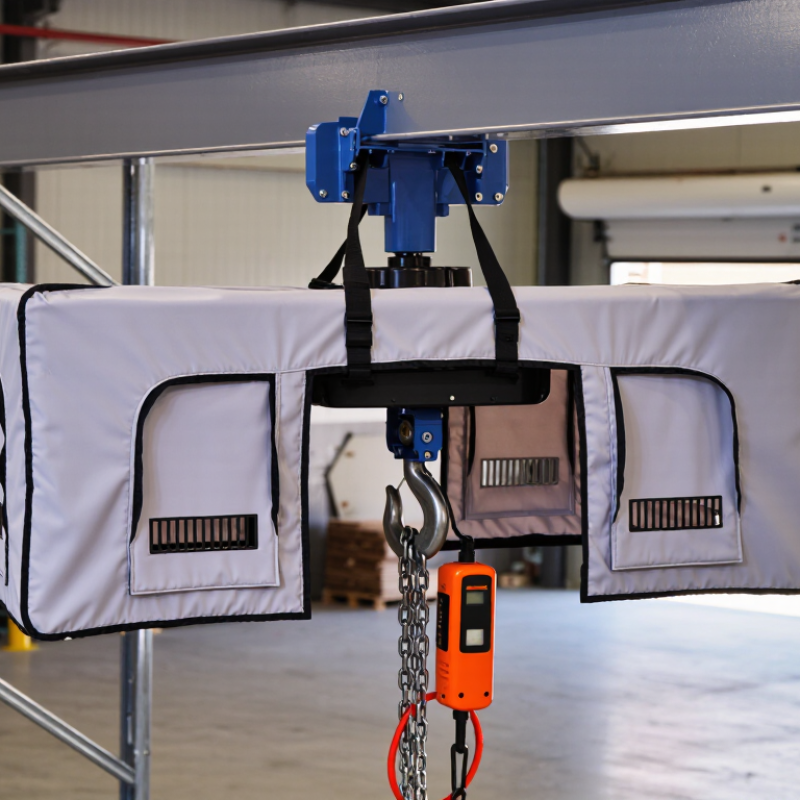
A hoist cover is a fitted sleeve or enclosure that shields exposed hoist components. It can help keep dust, rain, oil mist, and loose debris away from the chain, motor, brake, and controls. On an outdoor hoist, it may also reduce direct sun exposure and weathering.
Small barrier. Useful difference.
The International Electrotechnical Commission’s IEC 60529 standard defines IP5X as dust-protected, not dust-tight; IPX4 tests resistance to water splashes from any direction. These ratings apply to enclosures, not fabric covers, so a cover alone does not provide an IP rating.
Choose a cover that fits without snagging moving parts or blocking inspection points. Check its material against the actual exposure: abrasion, heat, chemicals, or frequent washing may call for different fabrics.
A waterproof cover can also hold condensation inside, which is easy to overlook. Remove it during inspections and look for trapped moisture, fraying, and damaged fasteners.
A cover helps limit exposure; it cannot replace routine hoist inspection or correct maintenance.
Common Hoist Cover Designs and Materials
Hoist covers vary from simple sewn sleeves to rigid, multi-panel guards. A fabric sleeve can shield a chain or wire rope from dust, splash, and light abrasion. PVC-coated polyester suits many general industrial settings because it resists moisture and wipes clean. For hot areas, silicone-coated fiberglass may be a better fit, but check its rated temperature and keep it clear of sharp edges. No cover is universal.
Rigid covers offer more impact protection around exposed mechanisms, while segmented designs can open for inspection. That access matters. A fully enclosed cover may hide wear, corrosion, or a leaking lubricant seal. The U.S. Bureau of Labor Statistics reported 5,283 fatal work injuries across all industries in 2023; this figure is not hoist-specific, but it underlines why maintenance visibility matters. Choose a cover that leaves inspection points accessible and does not obstruct the brake, limit switch, or moving parts. A snug fit helps, but tight seams can trap moisture. That trade-off is easy to miss. Before ordering, compare the hoist’s dimensions, operating temperature, washdown exposure, and inspection routine with the cover maker’s material specifications. A cover protects components; it does not replace regular hoist inspection.
How Work Conditions Affect Cover Requirements
A hoist cover should match the conditions around the equipment, not just its dimensions. An indoor hoist in a clean, dry workshop may need protection from dust and occasional drips. A unit near an open loading bay faces wind-driven rain, grit, and changing temperatures. Those details affect fabric choice, seams, closures, and how securely the cover stays in place.
Movement matters too. If the hoist operates while covered, the cover must be designed for that use and must not snag on the chain, hook, trolley, or controls. Check that it leaves required openings clear and does not trap heat around the motor. For a hoist exposed to welding sparks, oily residue, or cleaning chemicals, verify that the cover material is suitable for those specific hazards. “Weather-resistant” alone is not a complete specification. Conditions vary.
Think about contact and access. A cover beside a busy workbench may need abrasion-resistant panels, while one used outdoors should shed water without collecting it in folds. Operators still need to inspect the hoist, so a cover that takes several minutes to remove may discourage routine checks. That matters. Measure the installed hoist, including protruding controls and cable paths, then compare those measurements with the cover’s fit guidance. Site conditions can change, and my first assessment may miss a detail; review the fit after installation and after the first few weeks of use.
How to Choose the Right Hoist Cover
A hoist cover is a fitted enclosure or sleeve that helps shield hoist components from dust, moisture, and debris. The right choice depends on the hoist’s location, operating conditions, and design. A cover should protect without restricting movement or hiding important inspection points.
Measure the hoist carefully, including its body, controls, cables, and available clearance. Fit matters. A loose cover can snag or flap; a tight one may press against moving parts. Choose material suited to the environment: a water-resistant fabric may help outdoors, while a breathable cover can reduce trapped condensation in damp spaces. Consider heat, abrasion, and how often operators need access. Check that controls, labels, and inspection areas remain accessible, and follow the hoist maker’s guidance. There is no universally best cover. In practice, leaving room for inspection can matter more than achieving a perfectly snug appearance.
Tips: Check clearance before ordering. Confirm that the cover stays clear through the hoist’s full range of motion. Remove it for inspections when required, and replace it if seams split or fasteners loosen. A cover is not a substitute for routine maintenance.
What Is a Hoist Cover and How Do You Choose One?
A hoist cover helps shield equipment from environmental exposure. Choose one that fits the hoist, suits the operating conditions, and allows safe access to controls and inspection points.
How to use this chart: Ratings are qualitative planning guidance, not standardized test results. Check the hoist manufacturer’s instructions and confirm the cover material, fit, and clearance are suitable for your actual site conditions.
Checking Fit, Installation, and Ongoing Care
What Is a Hoist Cover and How Do You Choose One?
A good fit starts with the hoist, not the cover. Check the hoist model, overall dimensions, mounting points, and the space needed for chains, cables, and the hook. Measure around guards and projecting controls, too. Measure twice. A cover that looks close may bunch near a moving chain or leave an exposed seam. Consider the work environment: dust, moisture, and heat can affect material choice. If conditions are unusual, confirm suitability with the equipment supplier or a qualified technician.
Before installation, review the hoist maker’s instructions and check that the cover will not block controls, ventilation, inspection points, or moving parts. Secure it using its intended fasteners; loose fabric can snag or wear against the hoist. Follow site procedures before working around powered equipment. Fit is not always obvious from a photo, so compare the installed cover with the actual hoist and its full range of movement. That extra check is easy to skip.
Tips: Inspect seams, fasteners, and contact areas regularly. Look for fraying, water trapped inside, or shiny rub marks where fabric touches the hoist. Clean the cover according to its care instructions, then let it dry fully before refitting. Replace damaged covers rather than relying on a patch near moving parts. A cover can help shield equipment, but it does not replace routine hoist inspection.