7 Tips for Titanium Waterjet Cutting Buyers?

Buying titanium waterjet cutting services looks simple until tolerance, edge quality, and delivery risk enter the discussion. Titanium is light, strong, and highly sensitive to heat. A poor cutting plan can leave rough edges, taper, or costly rework.

Industry reports support this market’s importance. The U.S. Geological Survey’s Mineral Commodity Summaries tracks titanium sponge, mineral concentrates, and global production capacity. Its findings show a supply chain connected to aerospace, medical, chemical, and energy applications. Grand View Research and MarketsandMarkets also report continued growth in waterjet cutting equipment and services. However, market forecasts are estimates, not guarantees. Buyers should test suppliers against real production conditions.

Experience matters here. Mohamed Hashish, a pioneer of abrasive waterjet technology, has described waterjet cutting as “a cold cutting process.” That distinction is valuable when cutting titanium near heat-sensitive features. Yet cold cutting does not mean risk-free cutting. Abrasive selection, nozzle condition, pressure stability, fixturing, and operator judgment still shape the final result.

The following seven tips focus on practical buying decisions. They cover material certification, cutting tolerance, pierce strategy, surface finish, inspection records, pricing, and delivery reliability. Ask for sample coupons. Examine the edge under magnification. Check how the supplier measures taper. Small details matter.

Some buyers focus only on hourly rates. That can be a costly mistake. A cheaper cut may create extra machining, inspection delays, or rejected parts. Titanium waterjet cutting deserves a complete cost review, not a quick quotation comparison. And one uncomfortable truth remains: even experienced buyers sometimes trust specifications without verifying them. Testing is wiser.
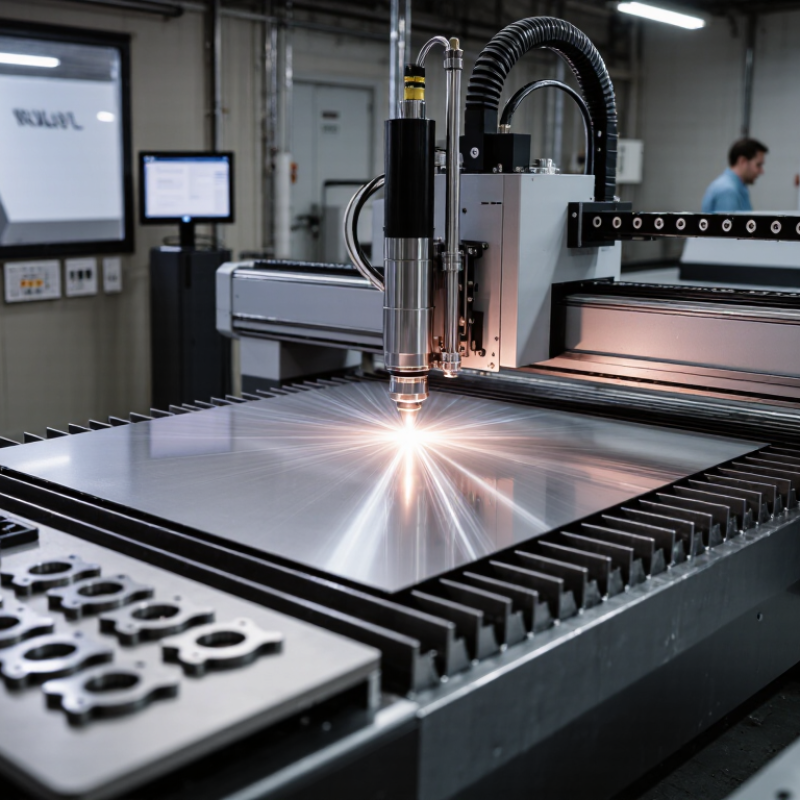
7 Tips for Titanium Waterjet Cutting Buyers?

Understanding Titanium Grades and Waterjet Cutting Requirements

Titanium waterjet cutting starts with the grade, not the machine. Grade 2 offers good corrosion resistance and easier forming. Ti-6Al-4V, or Grade 5, provides higher strength but demands tighter process control. ASM International reports Grade 5 density near 4.43 g/cm³ and thermal conductivity around 6.7 W/m·K. Low conductivity traps heat near the cut. That matters.

Ask for the material certificate before requesting a quotation. ASTM B265 specifies chemical and mechanical requirements for titanium sheet and plate. Verify grade, thickness, surface condition, and heat treatment. A supplier may call material “commercially pure” without stating the exact grade. That wording is too vague. Keep the certificate.

Waterjet parameters should match the thickness and alloy. Abrasive flow, pressure, traverse speed, and nozzle distance affect taper and edge texture. Industry cutting studies commonly report kerf widths around 1 to 1.5 millimeters, but actual results vary by equipment. Request a test coupon for critical parts. Measure the top and bottom dimensions. Do not trust appearance alone.

Include tolerances on the drawing, especially for holes and narrow webs. Grade 5 can show more burr-like edge texture after aggressive cutting. Protect the surface from embedded abrasive and handling marks. Confirm whether secondary deburring is acceptable. I have seen buyers focus on hourly cutting rates, then pay more for rejected parts. The cheaper quote was not cheaper. Get cut samples, inspection records, and a realistic lead time before approval.

Evaluating Machine Power, Precision, and Cutting Capabilities

7 Tips for Titanium Waterjet Cutting Buyers

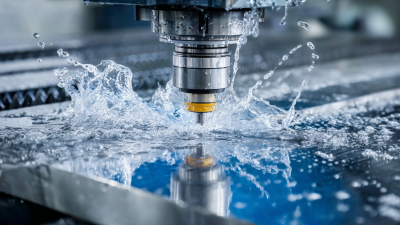
When evaluating a titanium waterjet machine, start with usable cutting power, not the advertised maximum. Pump pressure affects speed, but abrasive flow, nozzle condition, and material thickness matter equally. Power is only one variable. Ask for cutting data on your actual titanium grade and thickness. A machine cutting 6 mm titanium smoothly may struggle with a 25 mm plate. Request a test coupon with holes, corners, and narrow slots. Test before buying.

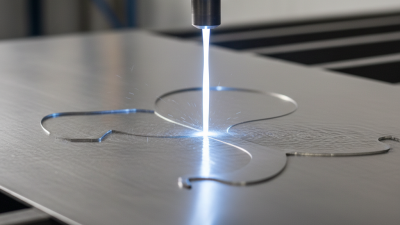
Precision depends on motion control, table stability, and software compensation for taper. Look for repeatability data, not only claimed positioning accuracy. Examine the cut face under light. A clean edge should show limited striation and minimal burr. However, perfection is expensive. For structural parts, a slightly slower cut may be more valuable than extreme tolerance. Confirm tolerances at different table positions. I once saw excellent results near the center, followed by noticeable taper near an outer corner.

Cutting capability also includes pierce performance, small-feature control, and support for thick titanium. Check whether the system handles submerged cutting, because it can reduce noise and splash. Confirm the abrasive delivery system is easy to inspect and clean. A blocked line can quietly damage consistency. Ask how often operators replace orifice parts and mixing tubes. Maintenance estimates are often overlooked. That detail matters. Also review training, calibration records, and service response times before signing a purchase agreement.

7 Tips for Titanium Waterjet Cutting Buyers? – Evaluating Machine Power, Precision, and Cutting Capabilities

Use this comparison table to evaluate a titanium-capable waterjet system. Actual performance depends on titanium grade, thickness, abrasive type, nozzle condition, part geometry, programming, and the required surface finish.

Tip Buying Dimension Practical Data or Typical Range What to Verify Before Purchase Why It Matters for Titanium
1 Evaluate pump pressure and cutting power Industrial abrasive waterjet systems commonly operate around 3,000–6,000 bar (43,500–87,000 psi). Higher pressure can improve cutting speed, but it does not automatically guarantee better accuracy or finish. Request cutting trials using the exact titanium grade and thickness. Compare production speed, edge quality, abrasive consumption, and pump efficiency rather than judging pressure alone. Titanium is strong and relatively difficult to cut. Insufficient effective power may cause slow cutting, excessive taper, striations, or incomplete separation.
2 Match the machine to titanium thickness Many abrasive waterjet tables are used for sheet and plate work from a few millimetres to more than 100 mm, although practical production thickness depends heavily on alloy, geometry, tolerance, and required edge finish. Confirm the recommended thickness range for titanium, not only the machine’s maximum material thickness. Test thin sheet, medium plate, and the thickest intended job. Cutting capability decreases as thickness increases. Thick titanium parts may require slower feeds, multiple passes, or additional finishing operations.
3 Check positioning accuracy and repeatability High-quality industrial waterjet systems may be specified with positioning accuracy and repeatability in the approximately ±0.05–0.10 mm range under defined test conditions. These values are not the same as finished-part accuracy. Ask for documented accuracy tests, axis calibration procedures, thermal compensation details, and results from a titanium test part with measured dimensions. Machine accuracy can be affected by axis alignment, backlash, table condition, thermal changes, jet lag, taper, and the cutting software’s compensation model.
4 Assess taper control and edge quality Standard abrasive cutting can produce a tapered edge, especially in thicker material or at high feed rates. Advanced dynamic-head systems are designed to reduce taper by adjusting the cutting head during motion. Inspect the top, middle, and bottom of trial cuts. Measure taper, striation marks, corner quality, and dimensional variation at the actual production feed rate. Titanium components used in aerospace, medical, and precision applications may require tight fit-up and limited secondary machining. Poor taper control can increase finishing costs.
5 Verify cutting-head and nozzle capability A typical abrasive waterjet uses a small orifice, often made from sapphire, ruby, or diamond, together with a carbide or similar focusing tube. Common focusing-tube internal diameters are roughly 0.8–1.2 mm, depending on the system and application. Confirm nozzle life, focusing-tube replacement time, automatic height sensing, collision protection, alignment procedures, and availability of compatible consumables. Worn or misaligned consumables can enlarge the jet, reduce accuracy, increase taper, and create unstable cutting. Titanium jobs can magnify these effects because cutting speeds are often conservative.
6 Review abrasive delivery and operating cost Garnet is the most widely used abrasive for industrial abrasive waterjet cutting. Abrasive consumption is commonly in the range of approximately 0.3–0.7 kg/min, varying with pressure, nozzle size, material, and feed rate. Calculate total cost per cutting hour, including electricity, water treatment, abrasive, nozzle parts, pump maintenance, disposal, and operator time. Confirm whether abrasive recycling is practical for your workload. Titanium may require lower feed rates and longer cutting times, so abrasive and maintenance costs can become a larger part of the total cost per component.
7 Confirm software, fixturing, and production support Useful capabilities include automatic nesting, lead-in and lead-out control, pierce management, kerf compensation, taper compensation, height sensing, water-level control, and support for common CAD formats. Ask for a complete workflow demonstration: import a CAD file, nest parts, define titanium parameters, manage pierce points, simulate the toolpath, and export a production-ready program. Titanium can be sensitive to heat and surface damage even though waterjet cutting introduces a relatively small heat-affected zone. Good programming and fixturing help prevent part movement, collision, and scrap.

Note: The figures shown are general industry ranges for evaluation purposes, not guaranteed machine specifications. Always validate performance with a documented cutting test using your titanium grade, thickness, tolerance, surface-finish requirement, and intended production volume.

Choosing Abrasives, Nozzles, and Suitable Cutting Parameters

7 Tips for Titanium Waterjet Cutting Buyers

Choosing Abrasives, Nozzles, and Suitable Cutting Parameters

Titanium rewards careful waterjet preparation. Start with a clean, consistent garnet abrasive. An 80-mesh grade often provides a useful balance between edge quality and cutting speed. Check for moisture, dust, and irregular particles before loading. Wet abrasive can interrupt feeding and create unstable cuts. That small fault wastes expensive titanium.

Nozzle condition matters more than many buyers expect. Inspect the orifice and mixing tube before every production shift. A worn mixing tube can widen the jet and produce tapered edges. Keep the stand-off distance steady, usually close to the machine supplier’s recommendation. Even a slight change can affect accuracy. Replace damaged components early. Delaying replacement sometimes costs more than the part itself.

Cutting parameters should match thickness, alloy, and tolerance. Higher pressure may improve speed, but excessive speed can leave rough striations. Begin with conservative traverse settings, then inspect the cut face under bright light. Adjust abrasive flow only after confirming stable water pressure. For thick titanium, use a slower pierce sequence and allow enough clearance around the entry point. Titanium can punish rushed setup. I have found that “fastest” is rarely the most economical setting. Record actual results, including edge taper and abrasive use, rather than trusting default tables. Parameters from another machine may look suitable but still perform poorly.

Comparing Quality Standards, Operating Costs, and Lead Times

Titanium waterjet cutting buyers should compare more than quoted price. Quality starts with certified material, verified thickness, and controlled cutting parameters. Ask for dimensional inspection records, edge photographs, and material traceability documents. A clean edge should show limited taper, minimal abrasive contamination, and no unacceptable burrs. Waterjet cutting avoids a large heat-affected zone, but it cannot eliminate every defect. Tiny pierce marks may remain near entry points. Request a sample cut when tolerances are tight.

Operating costs often hide inside production details. Thick titanium needs slower cutting and longer pierce times. Abrasive consumption also changes with pressure, nozzle condition, and material thickness. Ask whether the quotation includes programming, setup, abrasive, deburring, inspection, and packaging. Compare the complete cost per finished part, not only the cutting rate. Poor nesting can waste expensive titanium sheets. That hurts.

Lead time depends on more than machine availability. Confirm raw material stock, certificate preparation, drawing approval, cutting capacity, and delivery arrangements. A supplier with clear revision control reduces costly misunderstandings. Ask how rejected parts are handled and whether rework affects your schedule. I have found that fast promises can become fragile when specifications remain incomplete. Allow time for first-article inspection, especially for complex profiles or tight tolerances. A realistic supplier should identify risks before accepting the order, even when that makes the schedule less attractive.

Assessing Supplier Expertise, Safety Practices, and After-Sales Support

7 Tips for Titanium Waterjet Cutting Buyers

Tip 1: Verify the supplier’s titanium experience. Ask for recent samples, material grades, thicknesses, and tolerance records. A polished website is not proof. Tip 2: Request a controlled test cut before signing. Review edge taper, kerf width, heat effects, and surface roughness. Titanium can react differently across batches, so one perfect sample may not tell the whole story.

Tip 3: Check technical competence beyond machine ownership. Skilled suppliers should explain abrasive selection, nozzle condition, cutting speed, and pressure settings clearly. They should also maintain inspection records and material traceability. Tip 4: Examine safety practices in person or through documented evidence. Look for splash guards, emergency stops, pressure logs, proper ventilation, and trained operators. Ask how they handle abrasive dust and contaminated water. Small gaps matter.

Tip 5: Confirm quality controls for finished parts. Measurements should use calibrated tools, with reports linked to specific production lots. Tip 6: Clarify after-sales support before production begins. Ask about response times, replacement nozzles, troubleshooting procedures, and technical training. A supplier who disappears after delivery creates expensive delays. Tip 7: Define corrective action in writing. If taper or dimensional variation exceeds the agreed limit, the supplier should investigate, communicate, and repair the process. Buyers sometimes focus too heavily on unit price. That choice can overlook inspection time, rework, and uncertain support. Allow room for honest discussion when the first trial is imperfect.

7 Tips for Titanium Waterjet Cutting Buyers

Use the material data below to confirm that a supplier understands the different cutting requirements of commercially pure titanium and Ti-6Al-4V alloy.

  • Confirm the exact titanium grade: Grade 2 and Ti-6Al-4V Grade 5 have significantly different mechanical properties.
  • Ask for demonstrated titanium experience: Request sample parts, dimensional inspection reports, and tolerance capability.
  • Check abrasive and water quality controls: Consistent abrasive size, clean water, and proper filtration help reduce edge defects and contamination.
  • Review heat-affected-zone claims: Waterjet cutting is a cold-cutting process and does not create a conventional heat-affected zone.
  • Verify safety practices: Confirm guarding, high-pressure equipment inspections, abrasive handling procedures, and operator training.
  • Define quality documentation: Agree on material certificates, inspection records, traceability, and acceptance criteria before production.
  • Evaluate after-sales support: Prioritize suppliers that provide prompt technical responses, replacement-part support, and corrective-action documentation.

Reference values: ASTM B265 minimum tensile-strength requirements for commercially pure titanium Grade 2 and Ti-6Al-4V Grade 5 plate. Actual values vary by product form, thickness, heat treatment, and specification.