What Are the 2026 Top Hoist Cover Types?
As lifting systems become more automated and compact, equipment protection is gaining practical importance. A hoist cover can shield motors, brakes, pendant controls, and exposed cable sections from dust, moisture, sparks, and accidental impact. The right cover also supports inspections, cleaning routines, and longer service intervals.
Industry forecasts show why this topic deserves closer attention. Fortune Business Insights valued the global material handling equipment market at approximately USD 216.7 billion in 2023. It projects continued growth through 2032, driven by warehouses, manufacturing plants, ports, and construction sites. MarketsandMarkets also identifies automation, workplace safety, and equipment reliability as major lifting-equipment trends. These reports do not measure hoist covers directly. However, they reveal a wider demand for practical protection around increasingly valuable machinery.
The leading 2026 hoist cover types will likely include weather-resistant fabric covers, fire-retardant covers, insulated covers, dustproof covers, and custom-fit industrial enclosures. Each serves a different operating condition. A fabric cover may suit an outdoor gantry hoist exposed to rain. A heat-resistant design may perform better near furnaces or welding areas. A sealed cover can help in dusty workshops, but it may trap heat if ventilation is ignored. That detail matters.
Selection should consider material, temperature, water resistance, fastening method, access panels, and inspection visibility. OSHA’s material-handling guidance emphasizes safe operation, maintenance, and inspection practices. Still, no cover replaces scheduled checks. Specifications can look convincing on paper. Field conditions are less predictable. This guide examines the strongest hoist cover options for 2026, while recognizing that the “best” type depends on the hoist, workplace, and maintenance discipline.
What Is a Hoist Cover and Why Does It Matter?
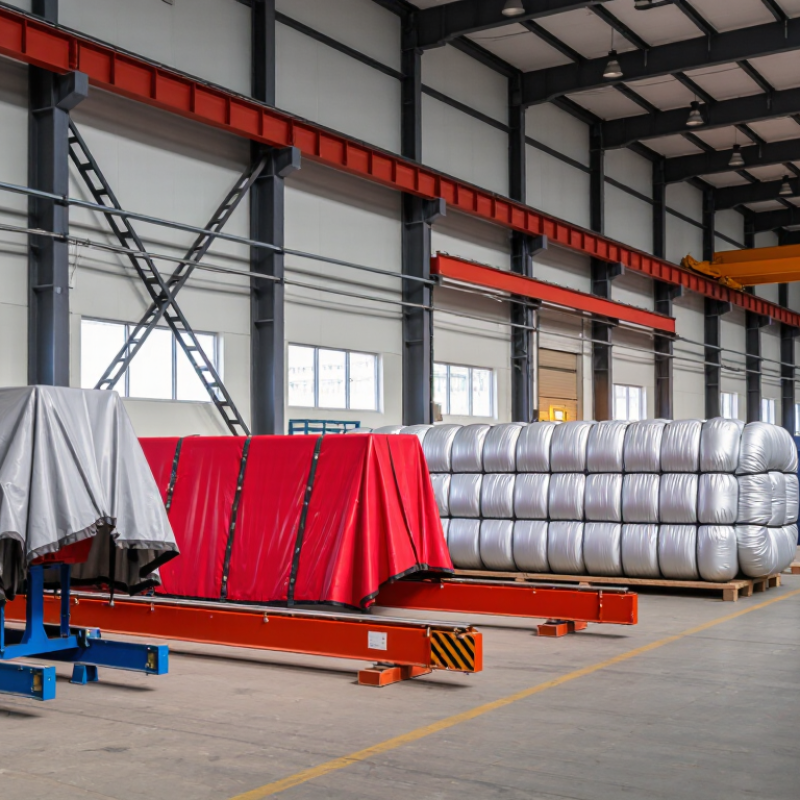
A hoist cover is a fitted protective barrier placed over a hoist, pendant, chain, or wire rope assembly. It helps limit exposure to rain, dust, salt spray, ultraviolet light, and accidental splashes. These contaminants can enter moving parts and accelerate corrosion or wear. The cover does not replace inspection, lubrication, or safe operating procedures. It is a supporting control, not a complete solution.
The leading hoist cover types in 2026 reflect different working conditions. Custom-fitted PVC-coated polyester covers suit outdoor equipment and frequent cleaning. Heavy-duty canvas covers work well in dry, dusty areas where abrasion is the main concern. Flame-resistant fabric covers may be appropriate near heat sources, but the material must match the site assessment and applicable requirements. Insulated covers can help protect equipment in cold storage areas, though they should not trap moisture. Fit matters more than appearance. A loose cover can flap against metal, while a tight cover may restrict movement.
Check the lifting path carefully. The cover should leave controls, emergency stops, labels, and inspection points accessible. Breathable panels may reduce condensation, but they can also admit fine dust. That trade-off is easy to overlook. No cover is perfect.
A reliable maintenance team records tears, dampness, fastening failures, and changes in equipment temperature during routine checks. Replace damaged fabric early. Waiting for visible rust is usually a costly lesson.
How Are Hoist Cover Types Classified in 2026?
In 2026, hoist cover types are mainly classified by application, exposure, lifting movement, and protection level. This approach helps engineers match the cover with real operating conditions. Not appearance alone.
Indoor covers protect hoists from dust, oil mist, and accidental contact during routine handling. Outdoor weatherproof covers use sealed seams, drainage details, and UV-resistant fabrics for rain and sunlight. In coastal areas, corrosion-resistant fasteners become especially important.
Classification also depends on hoist movement. Fixed covers suit equipment with limited travel and predictable access points. Retractable covers work better where operators frequently inspect hooks, chains, or control panels. Flexible bellows-style covers protect moving sections without blocking travel, but they need accurate measurements. Small errors matter.
Material provides another practical category. Coated polyester is light and washable, while reinforced fabric handles abrasion near steel structures. Heat-resistant materials may be required around hot surfaces, but their temperature limits must be checked from technical data. Flame-resistant does not mean fireproof.
Experienced maintenance teams often classify covers by inspection needs as well. Quick-access panels support daily checks, while full enclosures reduce contamination during long idle periods. A fully sealed design can trap moisture if ventilation is overlooked. That mistake is easy to make.
Site records should include load capacity, travel distance, cleaning methods, temperature, and replacement intervals. Photographs help, but measured dimensions are more reliable. The best classification is rarely the most expensive one. It is the one that fits the equipment, environment, and people using it.
What Are the Main 2026 Hoist Cover Types?
In 2026, hoist covers mainly fall into weatherproof, dust-resistant, heat-resistant, and custom-fit types. Weatherproof covers protect electric hoists from rain, snow, and strong sunlight during outdoor lifting work. Their coated polyester or reinforced vinyl often repels water while allowing access to controls. Dust-resistant covers suit workshops, warehouses, and construction areas where cement powder or metal particles may enter moving parts. They should not be fitted over hot equipment immediately after operation.
Heat-resistant covers use treated fabrics near welding zones, foundries, and high-temperature production areas. They help reduce exposure to sparks, radiant heat, and abrasive debris. However, heat resistance has limits. A cover can char or weaken when placed too close to an open flame or molten material. Clear inspection panels are another useful option. They let technicians check labels, hooks, and unusual wear without removing the entire cover.
Custom-fit covers remain important for irregular hoists, pendant controls, and limited-clearance installations. A close fit reduces flapping and prevents snagging around nearby structures. Good field practice includes measuring the hoist body, hook travel, cable exits, and emergency controls before ordering. Covers must never block warning labels, ventilation openings, or inspection points. I have found that fit is often underestimated. A durable fabric still performs poorly when water collects in loose folds. Regular inspections should check seams, fasteners, abrasion, trapped moisture, and heat damage against the equipment maker’s instructions and applicable safety requirements.
What Are the 2026 Top Hoist Cover Types?
This comparison presents common hoist cover types and their typical suitability for key protection requirements. Scores use a 1–5 engineering-fit scale, where 5 indicates the cover type is highly suited to that application. The chart is a practical comparison, not a market-share ranking.
Key takeaway: Wire-rope drum covers and custom bellows are commonly selected where dust and weather protection are important. Chain hoist covers are designed around chain containment and access, while flame-retardant covers are intended for applications involving heat or sparks. Hazardous-area hoists still require properly certified equipment; a cover alone does not provide explosion protection.
How Do Different Hoist Covers Compare in Performance?
In 2026, leading hoist covers are judged by performance, not appearance.
Three types stand out in practical maintenance work:
coated polyester handles rain, oil mist, and daily abrasion well.
Vinyl-coated fabric offers stronger water resistance, but it may stiffen in cold weather.
Fire-retardant fabric performs better near controlled heat sources and welding areas.
Breathable mesh covers reduce condensation, though they provide limited weather protection.
Performance changes with the worksite.
A sealed cover keeps dust and moisture away from gears, yet trapped humidity can promote corrosion. A vented design releases heat around motors and brakes. It may admit fine dust. Insulated covers protect sensitive components during sharp temperature changes. However, they can slow inspections and add bulk around hooks, chains, or wire rope. Fit matters more than extra material. Loose edges catch wind and rub against painted surfaces.
Reliable selection should combine fabric data with a short site trial.
Check UV resistance, tear strength, seam quality, water entry, and access time. Measure surface temperature after repeated lifting cycles. Inspect the cover after cleaning, too. This is where my preference becomes less certain. I often favor coated polyester outdoors, but harsh heat changes that choice. A cheaper cover may last longer when workers remove and store it correctly. That detail is easy to overlook.
How Should You Choose the Right Hoist Cover Type?
Choosing a hoist cover starts with the working environment, not the cover’s appearance. ISO 4301-1 and CMAA Specification No. 70 classify crane duty by operating time and load spectrum. A hoist running several shifts needs a tougher cover than occasional maintenance equipment.
For outdoor lifting, choose a UV-resistant, water-repellent cover with sealed seams and corrosion-resistant fasteners. Check local wind, rain, dust, and temperature records before ordering. The World Meteorological Organization’s State of the Global Climate 2024 report confirms that extreme weather risks are increasing, but climate averages still hide site-specific exposure. Coastal air may demand stronger corrosion protection. Desert dust may require tighter fabric.
Indoor sites need different priorities. A breathable dust cover suits clean workshops, while a flame-retardant cover is more appropriate near welding or heat sources. Confirm the material’s test classification with the supplier and review OSHA 1910.179 requirements for overhead and gantry cranes. The U.S. Bureau of Labor Statistics reported 1,069 fatal injuries in transportation and material-moving occupations in 2023, reinforcing the value of clear inspections and unobstructed controls. Never let a cover hide labels, limit switches, brakes, or inspection points.
Measure twice. Covers that are too loose can catch wind or snag during servicing. Covers that are too tight may split at corners. I would also document the hoist’s duty class, cleaning schedule, and replacement date. That step feels excessive, but forgotten fabric damage is common.
What Are the 2026 Top Hoist Cover Types? - How Should You Choose the Right Hoist Cover Type?
| Hoist Cover Type | Common Construction | Typical Protection | Best-Fit Applications | Main Advantages | Important Limitations | Relative Cost | Selection Priority |
|---|---|---|---|---|---|---|---|
| Coated Polyester Fabric Cover | Woven polyester with PVC, polyurethane, or similar protective coating | Dust, splash water, sunlight, light abrasion, and general outdoor exposure | General industrial lifting equipment, workshops, warehouses, and outdoor storage | Lightweight, flexible, easy to install, widely available, and suitable for custom sewing | The coating can crack, stiffen, or wear when exposed to severe heat, chemicals, or continuous abrasion | Low–Medium | Best general-purpose option when balanced protection and cost are required |
| PVC-Coated Vinyl Cover | PVC-coated fabric, often with welded or reinforced seams | Rain, moisture, oil splash, dirt, and outdoor contaminants | Outdoor hoists, loading areas, construction sites, and equipment exposed to wet conditions | Good waterproofing, easy cleaning, strong availability, and practical abrasion resistance | May become less flexible in cold weather and may degrade under prolonged heat or incompatible chemicals | Low–Medium | Choose when water resistance and simple cleaning are more important than maximum flexibility |
| Neoprene-Coated Fabric Cover | Textile substrate coated with chloroprene rubber or a comparable elastomer | Oil splash, weathering, moisture, moderate abrasion, and selected industrial chemicals | Maintenance areas, marine environments, machine shops, and applications with oily contamination | Good flexibility, weather resistance, and resistance to many oils and greases | Higher cost than basic fabric covers; compatibility must be checked for strong solvents, acids, and elevated temperatures | Medium–High | Use when oil resistance and flexible operation are key requirements |
| Flame-Resistant Fabric Cover | Treated or inherently flame-resistant textile, commonly with a protective coating | Short-term flame exposure, sparks, hot particles, and limited radiant heat, depending on the tested fabric | Welding areas, metal processing, foundries, and facilities with hot-work activity | Reduces ignition risk and helps protect equipment from sparks and hot debris | “Flame-resistant” does not mean fireproof; performance depends on test method, exposure time, fabric design, and condition | Medium–High | Select only when the cover’s documented test performance matches the site’s hot-work hazards |
| Heat-Resistant Cover | High-temperature textile or coated fabric selected for the expected heat exposure | Elevated surface temperatures, radiant heat, sparks, and intermittent hot particles | Steel production, glass processing, heat-treatment areas, and heavy fabrication | Provides better thermal protection than ordinary PVC or standard polyester covers | Temperature ratings vary significantly; direct contact with molten material or prolonged extreme heat may require specialized shielding | High | Choose according to measured radiant, ambient, and contact temperatures—not simply the worksite name |
| Insulated or Thermal Cover | Multiple layers including an outer weather barrier and a heat- or cold-resistant insulating layer | Temperature transfer, condensation, frost, weather, and selected radiant-heat conditions | Cold storage, refrigerated facilities, high-temperature zones, and equipment requiring temperature stabilization | Improves thermal separation and can reduce condensation or heat exposure when properly designed | Bulkier, heavier, and more expensive; ventilation and equipment heat dissipation must not be blocked | High | Use only when temperature control is a documented operating requirement |
| Breathable Mesh or Ventilated Cover | Open-weave mesh, perforated fabric, or ventilated panels | Dust reduction, sunlight, leaves, and light debris while allowing airflow | Dry outdoor storage and equipment that must dissipate heat during standby or operation | Reduces condensation risk and avoids trapping heat around motors or controls | Does not provide reliable rain, fine-dust, oil, or chemical protection because air and moisture can pass through | Low–Medium | Select when ventilation is more important than waterproofing |
| Heavy-Duty Reinforced Cover | Multi-layer coated fabric with reinforced corners, abrasion panels, and heavy-duty fastening points | Abrasion, impact from loose debris, harsh weather, dust, and frequent handling | Mining, quarrying, construction, ports, and high-contamination industrial sites | Improved durability, longer service potential in abrasive environments, and stronger attachment areas | Heavier and less flexible; poor fit or excessive tension can accelerate seam and grommet failure | Medium–High | Choose when abrasion, impact, and repeated installation are major concerns |
Hoist Cover Selection Checklist for 2026
| Decision Factor | What to Check | Recommended Direction |
|---|---|---|
| Environmental exposure | Rain, humidity, salt spray, dust, oil, chemicals, sunlight, or indoor contamination | Match the coating and fabric to the dominant contaminant; do not select from appearance alone |
| Temperature | Ambient temperature, radiant heat, surface temperature, sparks, and possible direct contact | Use documented temperature and flame-performance data; standard vinyl is not suitable for every hot-work area |
| Ventilation | Motor heat, control-panel cooling, condensation, and required airflow | Select mesh or add ventilation panels when a sealed cover could trap heat or moisture |
| Hoist movement | Hook travel, chain or wire-rope movement, trolley travel, controls, and inspection access | Use a tailored pattern with clearance; the cover must not interfere with moving or load-bearing components |
| Fit and dimensions | Overall length, width, height, protruding controls, cable exits, mounting points, and access openings | Measure the installed hoist, allow operating clearance, and confirm the final pattern before fabrication |
| Maintenance frequency | How often the cover must be removed for inspection, lubrication, cleaning, or repair | Choose quick-release straps, zippers, hook-and-loop closures, or split panels where frequent access is required |
| Safety and compliance | Site rules, lifting-equipment procedures, fire requirements, and applicable local regulations | Request traceable material specifications and test documentation where fire, heat, or chemical resistance is required |
Related Posts
-
How to Choose the Right Water Jet Head for Your Needs?
-

Why Choose Waterjet Cutting Utah for Global Sourcing?
-
Why Choose Precision Water Jet Cutting at the 139th Canton Fair?
-

Why You Should Consider a Lift Dock for Your Waterfront Property
-
How to Choose Waterjet Cutting Services in Utah?
-
2026 Top Waterjet Cutting Trends for Global Buyers?