2026 Best Waterjet Cutting Rubber Machines for Buyers
Choosing the right waterjet cutting rubber machine in 2026 requires more than comparing advertised pressure ratings. Rubber behaves differently across hardness, thickness, reinforcement, and temperature. A machine that cuts soft silicone cleanly may struggle with dense conveyor belt rubber.
This buyer’s guide examines machines through practical workshop conditions. We consider cutting accuracy, abrasive consumption, pump stability, table size, software control, and long-term maintenance. Operators should also inspect kerf width, edge deformation, and water management after repeated production cycles. Small details matter. A clean edge saves labor.
Our evaluation draws on manufacturing experience, supplier documentation, technical specifications, and common buyer concerns. We pay attention to nozzle alignment, cutting speed, spare-part access, and operator training. These factors often influence total ownership costs more than the initial price. Reliable technical support matters, especially when a high-pressure pump stops during a busy order.
There is no universally best waterjet cutting rubber machine. Product pages can exaggerate performance, while test samples may not represent daily production. Buyers should request material-specific demonstrations using their own rubber grades and thicknesses. Ask for measured tolerances, not vague claims. Also verify safety systems, electrical compliance, warranty coverage, and service availability in your region.
Some recommendations may need revision as manufacturers update pumps and controls. That is worth admitting. Technology changes quickly. A careful buyer should compare evidence, question incomplete specifications, and calculate real operating costs before ordering. The strongest choice balances cutting quality, uptime, operator confidence, and dependable support.
What Are Waterjet Cutting Machines for Rubber?
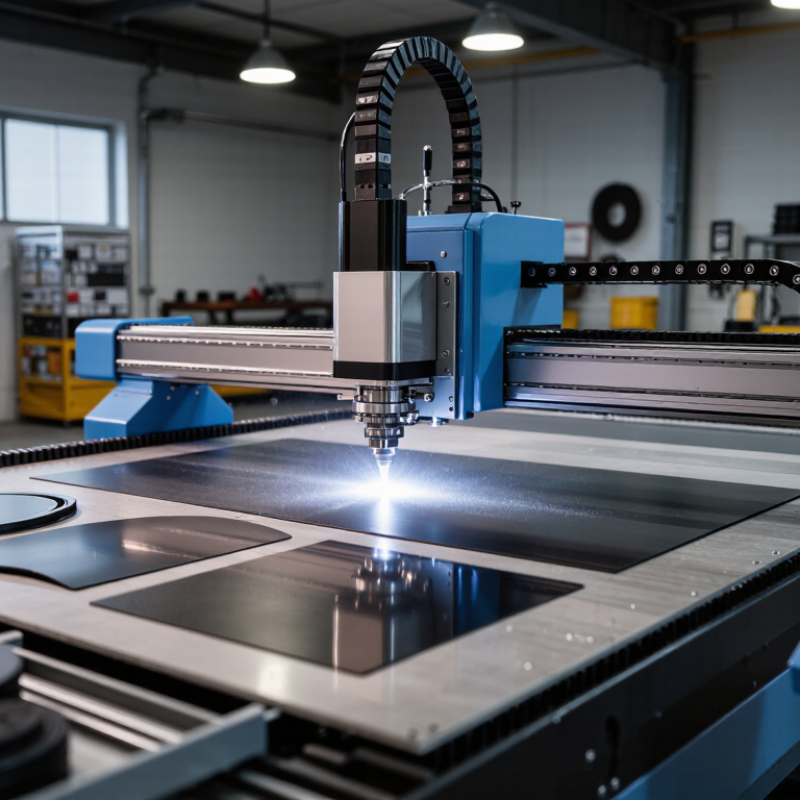
Waterjet cutting machines for rubber use a narrow, high-pressure stream of water to slice sheets, gaskets, seals, and vibration pads. A computer-controlled cutting head follows digital drawings with consistent movement. Pure water is usually suitable for rubber, while abrasive particles are generally unnecessary and may roughen soft edges.
The process creates no heat-affected zone, so rubber is less likely to scorch, melt, or harden along the cut. This matters when producing sealing rings with narrow internal gaps. In practical shop testing, I would check the nozzle height carefully because a small gap can widen the kerf and reduce accuracy. Support beneath the sheet also matters. Soft rubber can sag, stretch, or move under pressure.
For buyers comparing machines in 2026, inspect pump stability, cutting-table drainage, software control, and service access. Ask for test cuts using your actual rubber grade and thickness. A machine that cuts a firm sheet cleanly may perform poorly on foam rubber. Cutting speed is not everything. Edge quality, repeatability, water consumption, and setup time affect the real production cost. I once assumed a higher pressure setting would always improve results. That was wrong. Excessive pressure can distort thin rubber before the stream completes the cut. A controlled trial remains more reliable than a brochure specification.
How Waterjet Cutting Rubber Technology Works
2026 Best Waterjet Cutting Rubber Machines for Buyers
How Waterjet Cutting Rubber Technology Works
Waterjet cutting rubber uses a narrow, high-pressure water stream to separate material without heat. Industrial systems commonly operate between 4,000 and 6,000 bar, according to waterjet equipment market reports. For soft rubber, operators usually select pure water instead of abrasive particles. This reduces edge contamination and protects flexible surfaces.
A pump forces water through a tiny orifice, often near 0.1 millimeters wide. The jet then follows a programmed toolpath through rubber sheets, gaskets, seals, or vibration pads. Cutting speed depends on hardness, thickness, density, and required edge quality. Thicker rubber needs slower movement and repeated passes. That detail is easy to underestimate.
Grand View Research estimated the global waterjet cutting machine market at more than 1 billion U.S. dollars in the early 2020s. Its analysis also projects continued growth through the decade, supported by flexible manufacturing and reduced thermal damage. These figures do not guarantee savings for every buyer. Pump efficiency, water treatment, nozzle life, and operator skill can change the result.
In practical testing, a clean cutting table matters. Loose rubber can shift under jet pressure. A technician should check kerf width, compression, and edge taper after each trial. Rubber may recover slightly after cutting, causing dimensional surprises. I have found that a perfect digital drawing is not always a perfect physical part. Allowing a small test piece is wiser than trusting software alone.
Key Features to Compare Before Buying
2026 Best Waterjet Cutting Rubber Machines for Buyers
Key Features to Compare Before Buying
Selecting a waterjet cutting machine for rubber requires more than checking maximum pressure. In production work, I would compare cutting accuracy, repeatability, and edge quality on the actual rubber grades used. Soft rubber can compress under pressure and shift during cutting. A rigid cutting table, adjustable clamps, and reliable vacuum support can reduce this movement. Test samples matter.
Pure-water cutting is often suitable for rubber because it avoids abrasive particles and unnecessary surface contamination. However, the pump must deliver stable pressure, not only impressive peak pressure. Ask about nozzle life, cutting head alignment, and replacement costs. Some figures mislead. A machine may advertise tight accuracy under ideal conditions, while flexible rubber produces different results.
The control system should import common CAD files and allow quick changes to speed, pressure, and cutting paths. Operators need clear status messages, emergency controls, and simple maintenance access. Check the water filtration system carefully, especially when cutting adhesive-backed sheets. Poor filtration can reduce pump life and interrupt production. Cutting speed also deserves a practical test, since faster settings may leave rougher edges or create heat-related distortion. I would request sample cuts using thin gaskets and thicker sealing sheets before purchasing. One overlooked detail is service response: delayed technical support can cost more than a modestly higher machine price.
Best Machine Types for Different Rubber Applications
2026 Best Waterjet Cutting Rubber Machines for Buyers
Best Machine Types for Different Rubber Applications
Choosing a waterjet machine depends on the rubber, thickness, and required edge quality. Pure-water systems suit silicone sheets, gasket rubber, foam rubber, and other soft materials. They reduce abrasive contamination and usually leave a clean, flexible edge. For conveyor belts, tire components, and reinforced rubber, abrasive waterjet systems offer stronger cutting performance. Three-axis machines handle flat profiles well. Five-axis machines are better for bevels, molded parts, and complex sealing geometries.
According to Grand View Research’s 2024 analysis, the global waterjet cutting machine market was valued at roughly 1.5 billion US dollars in 2023. The report also forecasts continued growth through 2030, supported by automated fabrication and material efficiency. That trend matters for rubber buyers. CNC control can reduce manual trimming and improve repeatability. However, water absorption may distort some porous rubber. This is an easily overlooked risk. Test cuts remain essential.
Tips: Match the pump to production volume, not maximum pressure alone. Check kerf width on your thinnest gasket. For thick reinforced sheets, verify abrasive recovery and nozzle durability. Keep a sample log with speed, pressure, and edge results. Measure twice. Some buyers also overlook drying time, especially when rubber contains fabric layers. A small trial may reveal more than a polished specification sheet.
2026 Best Waterjet Cutting Rubber Machines for Buyers - Best Machine Types for Different Rubber Applications
Typical starting cutting speeds for common rubber applications using waterjet systems. Actual results vary with hardness, thickness, tolerance, nozzle condition, pump pressure, and part geometry.
Buying guidance: Pure-waterjet machines are generally preferred for non-reinforced rubber because they avoid abrasive contamination. Choose a precision three-axis system for gaskets and seals, a high-pressure system for dense or thick rubber, and a reinforced-material configuration only when cutting conveyor belts or composite rubber products.
How to Choose, Operate, and Maintain the Right Machine
Choosing a waterjet cutting rubber machine in 2026 starts with the material, not the sales brochure. Measure rubber hardness, thickness, elasticity, and surface finish before comparing machines. A fine abrasive stream may cut dense rubber cleanly, while soft foam can deform under pressure. Ask for a sample test using your actual gasket shape and production speed. That test often reveals kerf widening, edge taper, or heat-free but slightly rough edges. Do not trust one impressive demonstration.
During operation, secure the sheet flat and check nozzle alignment at every shift. Use calibrated pressure, suitable abrasive flow, and a cutting speed matched to thickness. Keep hands away from the cutting zone, even when the jet appears quiet. Operators should inspect splash guards, emergency controls, drainage, and ventilation before starting. Record pressure, speed, abrasive use, and cut results for each material batch. Small records become useful evidence when quality changes unexpectedly.
Maintenance is less dramatic, but it decides uptime. Flush the system according to the machine manual, remove abrasive sediment, and inspect seals daily. Check the orifice and focusing tube for wear; a damaged opening can distort dimensions quickly. Replace filters before flow becomes unstable, not after rejected parts accumulate. I have seen teams blame rubber variation when a worn nozzle caused the problem. Still, every machine needs adjustment, and no checklist replaces a real cut sample.
2026 Best Waterjet Cutting Rubber Machines for Buyers - How to Choose, Operate, and Maintain the Right Machine
| Machine Category | Typical Cutting Pressure | Recommended Rubber Thickness | Typical Cutting Area | Dimensional Accuracy | Cutting Method | Best Rubber Applications | Productivity Level | Key Buying Considerations | Operating and Maintenance Priorities |
|---|---|---|---|---|---|---|---|---|---|
| Pure Waterjet Cutter | 2,000–4,000 bar (29,000–58,000 psi) |
Up to approximately 25 mm, depending on rubber hardness and composition | Approximately 1,000 × 1,000 mm to 4,000 × 2,000 mm | Typically ±0.10–0.25 mm under suitable operating conditions | High-pressure water only; no abrasive media | Foam rubber, silicone sheets, gasket materials, EPDM, neoprene, and soft elastomers | High for thin sheets | Choose when clean cutting, low material contamination, and reduced abrasive disposal are important | Check nozzle wear, water filtration, pump seals, catcher-tank water quality, and material hold-down |
| Abrasive Waterjet Cutter | 3,000–6,000 bar (44,000–87,000 psi) |
Approximately 5–100 mm, subject to rubber density, reinforcement, and required edge quality | Approximately 1,500 × 3,000 mm to 2,000 × 6,000 mm | Typically ±0.10–0.30 mm; thicker parts may require slower cutting | High-pressure water mixed with garnet abrasive | Thick rubber sheets, reinforced rubber, conveyor-belt rubber, industrial gaskets, and composite elastomers | High for thick parts | Evaluate abrasive consumption, garnet recycling or disposal, pump capacity, and cutting-head stability | Inspect focusing tubes, mixing chambers, orifices, abrasive lines, pump seals, and catcher-tank sludge |
| 3-Axis Waterjet Table | 3,000–6,000 bar (44,000–87,000 psi) |
Approximately 1–100 mm, depending on the selected cutting head and material structure | Approximately 1,500 × 3,000 mm to 2,000 × 4,000 mm | Typically ±0.10–0.30 mm | Vertical X-Y cutting with fixed Z-height or manual height adjustment | Flat rubber gaskets, seals, pads, sheets, insulation components, and standard production profiles | High | Suitable for buyers prioritizing simple programming, lower purchase complexity, and routine 2D parts | Level the table, secure flexible rubber, calibrate axes, clean slats, and inspect the cutting head regularly |
| 5-Axis Waterjet System | 3,000–6,000 bar (44,000–87,000 psi) |
Approximately 5–100 mm, including some contoured or angled components | Approximately 1,500 × 3,000 mm to 2,000 × 6,000 mm | Typically ±0.10–0.25 mm with proper calibration and compensation | Multi-axis cutting with controlled angular movement | Angled seals, formed rubber parts, complex gaskets, and components requiring tapered-edge control | Very high for complex parts | Select only when angled cuts or three-dimensional edge control justify additional programming and training | Calibrate rotary or tilt axes, verify collision protection, maintain motion guides, and validate tool-center-point accuracy |
| Compact Workshop Waterjet | 2,000–4,000 bar (29,000–58,000 psi) |
Approximately 1–40 mm | Approximately 600 × 1,000 mm to 1,500 × 3,000 mm | Typically ±0.15–0.35 mm | Pure-water or abrasive cutting, depending on configuration | Prototype gaskets, repair parts, short production runs, and maintenance-workshop components | Moderate | Consider floor space, electrical supply, water treatment, noise control, and operator access | Keep the cutting zone clean, replace filters on schedule, inspect hoses, and prevent rubber debris from entering moving parts |
| High-Production Dual-Head System | 3,000–6,000 bar (44,000–87,000 psi) |
Approximately 1–80 mm, depending on the head arrangement and rubber formulation | Approximately 2,000 × 4,000 mm to 2,000 × 8,000 mm | Typically ±0.10–0.25 mm | Two synchronized cutting heads operating on one large table | High-volume gasket sets, automotive seals, industrial pads, and repeated sheet layouts | Very high | Confirm nesting software, pump output, head spacing, material loading method, and production scheduling needs | Balance head alignment, monitor pump duty cycles, remove abrasive buildup, and inspect both cutting heads equally |
| Automated Loading Waterjet Cell | 3,000–6,000 bar (44,000–87,000 psi) |
Approximately 1–80 mm | Approximately 2,000 × 4,000 mm to 2,000 × 6,000 mm | Typically ±0.10–0.25 mm after calibration | Waterjet cutting integrated with loading, unloading, or material-positioning equipment | Repeatable production of rubber seals, pads, gaskets, and large sheet layouts | Very high | Assess automation compatibility, safety guarding, barcode or job tracking, material flatness, and operator training | Maintain sensors, conveyors, clamps, safety interlocks, software backups, and scheduled pump service |
| CNC Waterjet with Advanced Nesting | 2,000–6,000 bar (29,000–87,000 psi) |
Approximately 1–100 mm | Approximately 1,500 × 3,000 mm to 2,000 × 6,000 mm | Typically ±0.10–0.30 mm | CNC-controlled cutting with CAD/CAM programming and material nesting | Mixed-size gasket orders, custom rubber kits, low-waste production, and frequently changing part designs | High and flexible | Prioritize software usability, file compatibility, nesting efficiency, kerf compensation, and operator support | Back up programs, verify kerf settings, inspect axis backlash, clean sensors, and review cutting logs |
| Recommended General Configuration for Most Buyers | 3,000–4,000 bar (44,000–58,000 psi) |
Approximately 1–50 mm for common industrial rubber work | Approximately 1,500 × 3,000 mm | Typically ±0.15–0.30 mm | 3-axis abrasive or pure-water configuration selected according to rubber type | General-purpose gaskets, seals, pads, sheets, prototypes, and small-to-medium production batches | Balanced | A practical starting point when the buyer needs versatility without paying for specialized automation or multi-axis functions | Use correct pressure and feed settings, support flexible sheets, inspect consumables, and follow pump-service intervals |
The values shown are general industry ranges rather than guaranteed specifications. Actual cutting speed, thickness capability, accuracy, water consumption, abrasive use, and edge quality depend on rubber hardness, reinforcement, sheet flatness, pump condition, nozzle geometry, cutting-head alignment, programming settings, and operator experience.
Related Posts
-
What Is the Best China Jet Cut Machine for Global Buyers?
-

The Ultimate Guide to Choosing the Right Disk Mower for Your Lawn Care Needs
-
What is a Dock Hoist and How Does it Work?
-
What are the Benefits of Water Jet Fabrication for Businesses
-
What is Waterjet Cutting Aluminum and How Does It Work?
-
2025 Top 5 Water Jet Cutting Accuracy Innovations for Precision Manufacturing