What Is the Best China Jet Cut Machine for Global Buyers?
Choosing the best China jet cut machine for global buyers requires more than comparing prices or catalog photographs. A reliable decision begins with the cutting task. Consider material thickness, edge tolerance, production volume, abrasive consumption, table size, and local service support. A machine cutting stainless steel sheets daily needs different performance from one processing stone, glass, or composite panels.
Dr. Norman Franz, widely recognized as a pioneer of waterjet technology, described the method in one clear sentence: “Waterjet cutting is a cold cutting process.” This principle still matters. A jet cut system creates little heat-affected distortion, helping manufacturers protect delicate materials and complex profiles. However, cold cutting does not guarantee perfect results. Pump stability, nozzle alignment, abrasive quality, motion control, and operator training remain critical.
Global buyers should inspect the pump brand, cutting head design, software compatibility, spare-parts availability, and installation support. Ask for sample cuts using your own materials. Look closely at the edge taper, corner quality, surface finish, and cutting speed. A polished demonstration sample may hide slower production settings. That deserves scrutiny.
Price matters, but downtime costs more.
A trustworthy supplier should provide transparent specifications, realistic tolerance data, safety documentation, warranty terms, and documented customer references. Local technical partners can reduce delays when seals, orifices, or abrasive-delivery components require attention. Still, every supplier has limitations. Some machines offer excellent value but weaker software support. Others provide advanced automation at a higher ownership cost.
The best China jet cut machine is therefore not one universal model. It is the system that matches your materials, workflow, compliance needs, and long-term service expectations. Forecasting those needs is difficult, but honest testing makes the decision safer.
China Jet Cut Machine Types: Waterjet Pressures from 60,000 to 94,000 PSI
What Is the Best China Jet Cut Machine for Global Buyers?
China Jet Cut Machine Types: Waterjet Pressures from 60,000 to 94,000 PSI
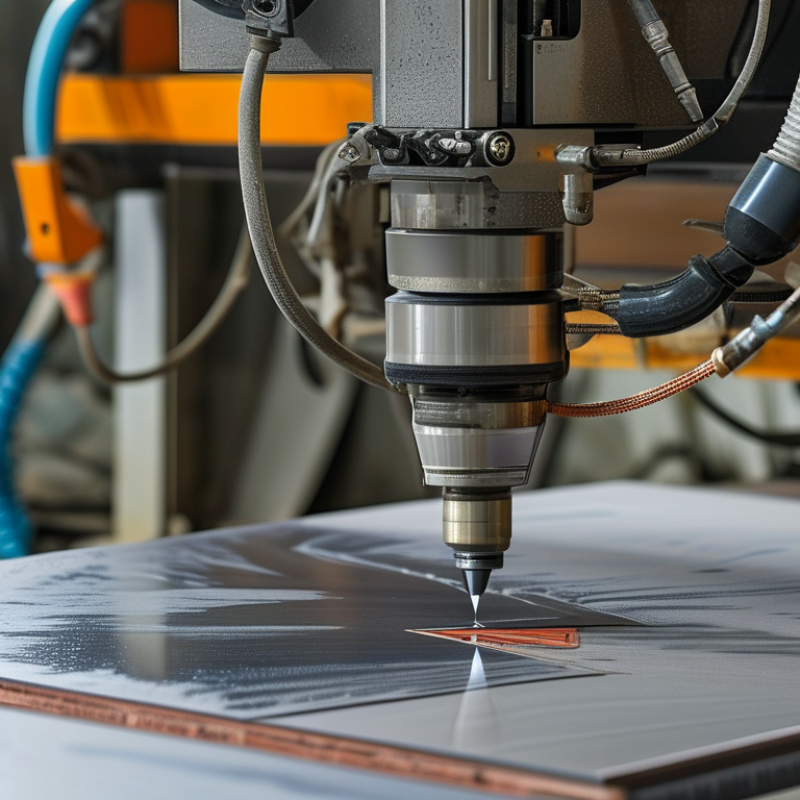
China jet cut machines usually fall into three pressure groups: 60,000, 80,000, and 94,000 PSI. Pressure affects speed, abrasive use, pump stress, and cutting thickness. The U.S. Department of Energy’s industrial guidance describes waterjet cutting as a cold process without a heat-affected zone. That benefits stainless steel, glass, stone, and layered composites. A 60,000 PSI system suits routine fabrication and controlled budgets. An 80,000 PSI model offers a practical balance. A 94,000 PSI system may improve throughput, but maintenance becomes less forgiving. I would not choose pressure alone.
A 2024 market assessment by Grand View Research identifies automation and precision as major waterjet investment drivers. MarketsandMarkets reports also indicate rising demand for flexible cutting across metal and nonmetal applications. These forecasts help, but they are not factory results. Request cut samples, pump efficiency data, nozzle life, and measured taper. Check whether quoted speed includes garnet abrasive and acceptable edge quality. Otherwise, the comparison may look better than reality. PSI is only one part of the decision.
Tips:
Request a witnessed cutting test. Record thickness, feed rate, abrasive flow, edge taper, and restart accuracy. Confirm electrical standards, filtration, spare-part access, training, and remote support. Leave room for doubt. A cheaper machine may cost more when downtime reaches your production floor.
Cutting Accuracy, Speed, and Materials: Evaluating ±0.1 mm Precision
Global buyers often ask which China jet cut machine is best. The answer depends on verified accuracy, cutting speed, and material compatibility. A claimed ±0.1 mm tolerance sounds impressive, but buyers should request measured results, not only catalog figures. On a 500 mm test line, even a small nozzle offset can create visible errors at the corners. Reliable suppliers should explain calibration routines, table stability, and inspection methods clearly.
Material testing matters just as much.
A machine cutting thin stainless steel may behave differently with glass, rubber, stone, or layered composites. Operators should examine edge taper, heat effects, surface chipping, and pierce marks.
Cutting faster can reduce production time, but it may weaken edge quality. Slow cutting is not always better either. It can increase costs and create rougher surfaces on some materials.
Practical trials reveal more than specifications.
I once saw a sample meet ±0.1 mm near the center, then lose precision close to the table edge. That result required further alignment checks. It was not a failure, but it showed why full-table testing matters. Buyers should compare repeated cuts, measure several points, and review maintenance records. A dependable machine should provide stable results after routine nozzle replacement, software updates, and long production shifts. Small details matter.
Safety and Compliance: ISO 12100, CE Marking, and Global Standards
What Is the Best China Jet Cut Machine for Global Buyers?
For global buyers, cutting speed is only one purchasing factor. Safety documentation matters just as much. ISO 12100 requires manufacturers to identify hazards, estimate risks, and apply protective measures throughout the machine’s life cycle. A reliable jet cut machine should include guarded moving parts, emergency stops, pressure relief systems, and clear maintenance instructions. Small details matter. A loose hose can become a serious hazard.
CE marking is not a quality award or a government endorsement. It shows that the manufacturer declares conformity with applicable European requirements. Buyers should request the EU Declaration of Conformity, technical documentation, risk assessment records, and test evidence. IEC 60204-1 supports electrical safety, while ISO 13849 can guide safety-related control systems. The European Commission’s Machinery Regulation 2023/1230 will replace the current machinery framework from January 20, 2027, so export planning must consider this transition.
Market data also deserves careful reading. Fortune Business Insights estimated the global waterjet cutting machine market at about USD 1.2 billion in 2023, with continued growth expected through the decade. That growth may increase supplier choices, but it does not prove equal compliance. My practical concern is simple: many buyers compare price before reviewing safety files. That order should change. Ask for real operating records, inspection intervals, training materials, and evidence that the delivered machine matches the tested configuration. Some documents look complete but remain difficult to verify.
How to Select the Best Chinese Jet Cut Machine by Application and ROI
What Is the Best China Jet Cut Machine for Global Buyers?
How to Select the Best Chinese Jet Cut Machine by Application and ROI
For global buyers, the best China jet cut machine is not automatically the cheapest quotation. Selection should begin with the job, not the catalog. Record material, thickness, sheet size, edge tolerance, daily cutting hours, and expected abrasive use. A machine cutting 20 mm steel needs different pump capacity from one cutting thin glass. Ask for sample cuts from your own material. Inspect edge taper, piercing marks, and dimensional accuracy under workshop lighting. That test reveals more than a polished brochure.
ROI depends on usable output, not maximum pressure. Compare cutting speed, uptime, nozzle life, abrasive consumption, electricity, water treatment, and labor. Include freight, installation, operator training, spare parts, and local technical support. A larger table may look expensive, yet it can reduce repositioning and handling time. An economical pump may lower the purchase price but increase downtime. Calculate cost per finished part over three to five years. My first estimate would be too optimistic if it ignored maintenance delays. Leave room for reality.
Reliability requires evidence. Request factory test records, electrical specifications, safety documentation, and references from similar applications. Confirm compatibility with your local power supply and workplace requirements. Check whether technicians can diagnose pressure loss, abrasive blockage, or cutting-head wear remotely. Clear manuals matter. Choose a supplier that explains limitations, not only strengths. If your workload may change, select modular options carefully, rather than paying for unused capacity. A smaller, well-supported machine can outperform a larger machine that waits for parts. Run the numbers against last month’s production records.
What Is the Best China Jet Cut Machine for Global Buyers?
Application-based comparison of indicative three-year ROI and typical payback period for Chinese waterjet cutting machine configurations.
Higher ROI index indicates stronger expected return from throughput, material fit, consumable control, and machine utilization. Payback estimates assume regular industrial use, abrasive waterjet operation where required, and do not include shipping, taxes, financing, or installation costs. Actual results vary by material thickness, labor rates, utilization, and local energy prices.