What Are the Top Water Jet Fabrication Types in 2026?
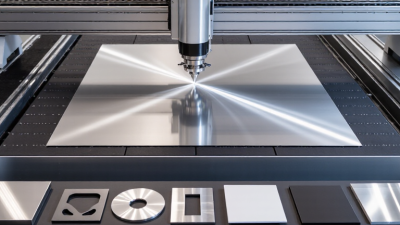
Water jet fabrication covers several cutting approaches, each suited to different materials, shapes, and production needs. In 2026, the main types include pure water cutting, abrasive waterjet cutting, multi-axis and 3D cutting, and precision micro-cutting. The names can overlap. Some machines combine multiple capabilities, so a label alone rarely tells the whole story.
Pure waterjets use a focused stream to cut softer materials such as foam, rubber, and textiles. Abrasive systems add garnet or another suitable abrasive to cut metals, stone, glass, and composites. A shop choosing between them should consider material thickness, edge quality, tolerance, and expected output. Nozzle condition and abrasive feed matter, too. Small details matter.
Multi-axis systems can angle the cutting head, helping produce bevels and more complex edges. Micro-waterjets handle smaller features, while robotic setups can follow curved or irregular paths. These capabilities are useful, but not automatically better. A tight corner may need slower cutting; a thick plate may require a different setup. Even experienced operators can misjudge how a finish will look until they test the actual material.
This guide compares the top water jet fabrication types by how they work, what they cut well, and where their limits appear. It also considers practical selection factors, including precision, material waste, setup demands, and maintenance. The best choice depends on the job, not the machine’s longest feature list. A sample cut can reveal more than a brochure.
Waterjet Fabrication: How the Process Works
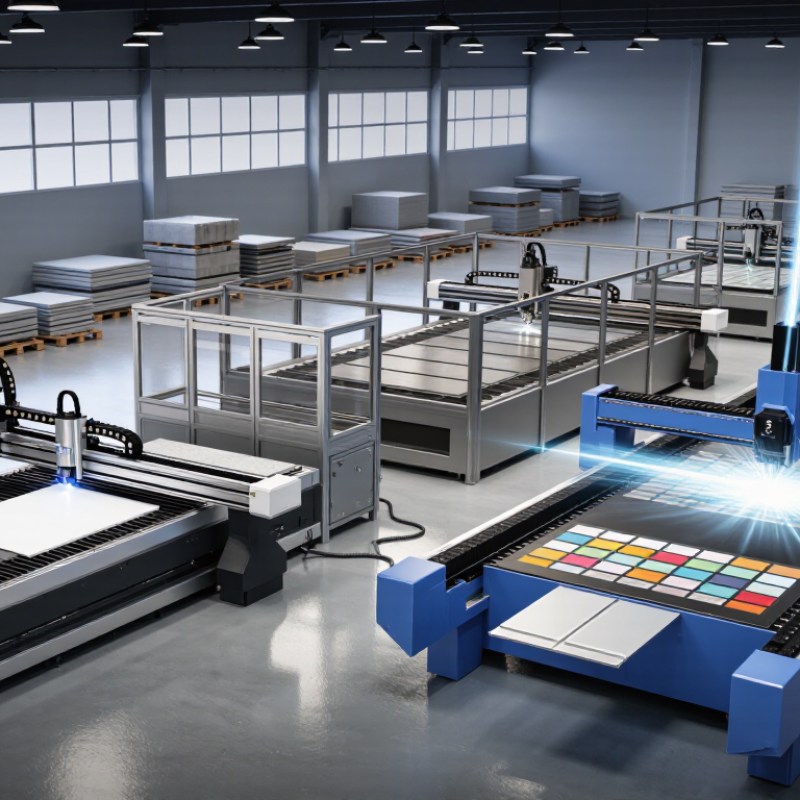
Waterjet fabrication uses a focused stream of water to cut parts from sheet or plate. For softer materials, water alone may be enough. Hard metals and stone usually need abrasive particles, commonly garnet, carried by the stream.
A high-pressure pump feeds water through a small orifice, creating a fast, narrow jet. In abrasive cutting, a mixing chamber adds grit before the nozzle directs it toward the workpiece. A CNC table follows a programmed path while the material rests on a support grid above a catch tank.
Clean cuts begin with careful setup.
An operator selects pressure, feed speed, abrasive flow, and nozzle distance for the material and thickness. Too much speed can leave visible striations or incomplete edges; slower travel often improves finish but adds time.
The jet produces little heat compared with thermal cutting, so heat-related distortion is reduced. Still, the cut is not magically perfect. Small holes, tight corners, and narrow slots may need slower settings or a revised toolpath.
Kerf width also matters: software offsets the path to keep finished dimensions close to the drawing. After cutting, parts may need rinsing to remove abrasive residue and inspection for taper or edge quality.
Even experienced shops can misjudge a new material; a test cut can reveal issues before a full sheet is committed.
Pure Waterjet Cutting for Soft Materials
Pure waterjet cutting uses a focused stream of pressurized water without abrasive particles. It is a practical option for soft materials that may deform or scorch under conventional cutting methods. Typical applications include foam inserts, textile layers, paperboard, rubber sheets, and some food products. No heat-affected zone. That can help preserve delicate surfaces and reduce melted or discolored edges.
Material behavior still matters. A low-density foam may compress under the stream, while a loose fabric can shift or fray near the cut. Operators often secure the sheet on a suitable support and test feed speed, pressure, and nozzle distance on a sample. Small adjustments can change edge quality. Stacked layers may save time, but water can travel between them and produce uneven cuts.
I would not assume a clean result from a drawing alone; the actual material, thickness, and backing deserve a trial. For repeat production, record the settings and inspect cut edges under consistent lighting. Pure waterjet cutting is not ideal for every soft material, but careful setup can deliver precise shapes with little thermal damage.
Abrasive Waterjet Cutting for Hard Materials
Abrasive waterjet cutting uses a high-pressure stream of water mixed with abrasive particles, often garnet, to machine hard materials. It is useful for stainless steel, titanium, stone, and many ceramics. Because the process does not rely on a hot cutting edge, it avoids a conventional heat-affected zone. That matters. Yet “cold cutting” does not mean every edge will be perfect.
For thick plate, operators adjust pressure, abrasive flow, nozzle distance, and feed rate to control cut quality. A slow pass may reduce striations, but it can also increase production time. Too much abrasive wastes material and may accelerate nozzle wear. Small test cuts help reveal how a particular grade responds before a full sheet is committed. Not automatically.
Hard, brittle materials need careful support. Ceramic tiles can chip if poorly fixtured, while layered composites may delaminate under unsuitable settings. Kerf width and slight taper also affect tight-fitting parts, so designers should allow for them instead of assuming a perfectly square edge. The method is versatile, but it is not a shortcut around material testing. Inspect cut edges and verify dimensions against the job’s actual tolerance.
What Are the Top Water Jet Fabrication Types in 2026? — Abrasive Waterjet Cutting for Hard Materials
Representative Mohs hardness values for materials commonly processed with abrasive waterjets.
Why abrasive waterjet? Adding abrasive particles to the water stream enables cutting of hard materials such as ceramics and silicon carbide. Pure waterjet cutting is generally used for softer materials. Mohs hardness is an ordinal scale, so the values indicate scratch resistance rather than cutting time or machine capacity.
3D, Micro, and Robotic Waterjet Systems
3D, micro, and robotic systems are expanding what waterjet fabrication can handle in 2026. A 3D waterjet head tilts around contoured parts, cutting bevels and angled edges without moving each piece through multiple setups. The result can be cleaner transitions on thick plate or formed components. Yet extra axes need careful calibration.
Micro waterjets use a finer stream and narrow kerf for small features in thin materials. Their accuracy depends on nozzle condition, abrasive consistency, and the gap between the nozzle and workpiece. Robotic systems add flexible reach for curved surfaces and repeatable cutting paths. Still, more motion does not automatically mean better parts; fixturing and path verification remain critical. The International Federation of Robotics reported 4,281,585 industrial robots operating worldwide in 2023, a 10% annual increase. This reflects broader factory automation, not waterjet installations specifically.
Tips: Check the smallest required feature against the material thickness before choosing micro cutting. For 3D or robotic work, test a sample and inspect edge quality, taper, and alignment. Small setup errors show quickly.
What Are the Top Water Jet Fabrication Types in 2026? - 3D, Micro, and Robotic Waterjet Systems
| System Type | Motion and Cutting Approach | Typical Capabilities | Common Materials | Typical Applications | Key Considerations |
|---|---|---|---|---|---|
| 3D Waterjet System | Multi-axis cutting head tilts and rotates to cut bevels, angled edges, and contoured features. Some systems compensate for jet lag and taper. | Produces complex profiles and angled cuts in sheet, plate, and some formed components. Achievable accuracy depends on material, thickness, part geometry, and machine setup. | Metals, stone, glass, composites, ceramics, and other waterjet-compatible materials. | Beveled edges, countersinks, shaped components, intricate architectural parts, and preparation for welding or assembly. | More complex programming and setup than 2D cutting. Thick or highly contoured parts may require slower cutting and additional process testing. |
| Micro Waterjet System | Uses a fine, tightly controlled water or abrasive-water jet with precision motion for small features and narrow cuts. | Designed for small kerfs and fine details. Depending on the setup, micro abrasive-waterjet streams may be approximately 0.2–0.5 mm in diameter; actual kerf and tolerances vary by material and process. | Thin metals, ceramics, glass, polymers, and selected composite materials. | Small precision components, narrow slots, miniature profiles, delicate parts, and research or specialist manufacturing. | Cutting speed and practical thickness are generally lower than with conventional systems. Abrasive selection, nozzle condition, fixturing, and material thickness strongly affect results. |
| Robotic Waterjet System | A multi-axis industrial robot moves the cutting head around or across a stationary or positioned workpiece. The jet may be pure water or abrasive, depending on the material. | Offers flexible access to three-dimensional surfaces, edges, and large or irregular workpieces. Reach and repeatability depend on the robot, tooling, calibration, and workholding. | Automotive trim and interior materials, foam, textiles, plastics, composites, and selected metals when paired with suitable abrasive cutting equipment. | Trimming formed parts, cutting composite components, removing excess material, and processing large or curved workpieces. | Robot-arm compliance and changing tool angles can affect cut consistency. Accurate calibration, collision checks, suitable fixturing, and process validation are important. |
Note: Capability figures and outcomes are application-dependent, not guaranteed specifications. Material type, thickness, nozzle condition, abrasive, pressure, cutting speed, and machine configuration all influence results.
How to Choose a Waterjet Fabrication Type in 2026
Choosing a waterjet fabrication type starts with the material, thickness, and edge requirements. Pure-water cutting works well for soft materials such as foam, rubber, and textiles. Abrasive waterjet cutting uses added garnet to cut metals, stone, glass, and many composites. It can handle substantial thickness, but cutting speed and edge quality vary with the material and setup. That matters.
Match the process to the part, not just the machine’s maximum capacity. A thin aluminum panel may need a different setup from a thick steel plate, even when both are abrasive-cut. Consider required tolerances, surface finish, part geometry, production volume, and whether small holes or narrow features are involved. Ask a fabricator about taper, kerf width, and how they manage abrasive waste. These details affect fit and cleanup. A test cut on your actual material can reveal issues that a specification sheet misses. I would avoid choosing by speed alone; that shortcut can create extra finishing work. Not always obvious. If the design is still changing, flexibility may matter more than maximum throughput. Discuss sample parts and inspection methods before committing to a process.
Related Posts
-
What Is the Best Water Jet Fabrication in China?
-
7 Tips for Choosing a Water Jet Fabrication Supplier
-
Understanding the Benefits of Jet Cut Technology in Modern Manufacturing
-

Why Choose Waterjet Cutting Services in Seattle for Your Precision Needs?
-
2026 Best Waterjet Cutting Solutions for Global Buyers?
-
2026 Top Waterjet Cutting Trends for Global Buyers?