What Is the Best Waterjet Cutting Rubber Machine in China?
Choosing the best waterjet cutting rubber machine in China requires more than comparing prices. Rubber behaves differently from steel, stone, and composite materials. Its flexibility can cause movement, edge distortion, or incomplete separation during cutting. The right machine must control pressure, cutting speed, nozzle distance, and worktable stability with precision.
Dr. Mohamed Hashish, a recognized waterjet technology pioneer, described the process as “a cold cutting process.” This principle matters greatly when processing rubber. Unlike thermal methods, waterjet cutting rubber produces minimal heat and reduces the risk of burning, melting, or hardening the cut edge. In practical workshops, operators often inspect the edge under strong lighting. Small tears become visible there. They may also test flexible gaskets by bending them repeatedly after cutting.
A reliable Chinese machine should offer accurate motion control, durable pumps, corrosion-resistant components, and responsive technical support. Pure water is usually suitable for many rubber sheets, while abrasive systems may be unnecessary and could damage softer materials. However, no machine fits every application perfectly. That assumption deserves caution. A thick silicone sheet, a dense neoprene seal, and a foam rubber panel may require different settings and cutting heads.
This guide compares the key factors behind dependable equipment selection. It considers cutting accuracy, operating cost, maintenance access, software usability, and supplier credibility. Machine demonstrations and sample testing remain valuable. Specifications alone can mislead buyers. The best choice is the system that performs consistently on your actual rubber materials, production volumes, and tolerance requirements.
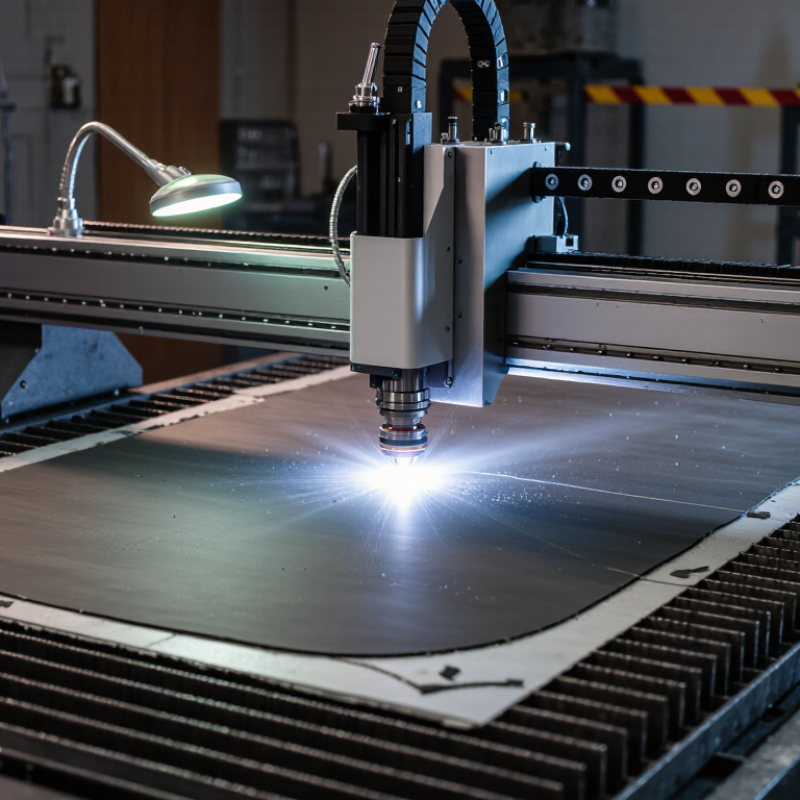
Rubber Waterjet Cutting Basics: Pure Water at 30,000–60,000 PSI
Choosing the best waterjet cutting rubber machine in China starts with understanding pure-water cutting. Unlike abrasive cutting, this process uses filtered water at 30,000–60,000 PSI. The narrow jet slices rubber without adding abrasive particles or creating a large heat-affected zone. This matters for seals, gaskets, vibration pads, and flexible sheets.
Pressure alone does not define machine quality. A reliable system needs a stable high-pressure pump, precise motion control, a suitable nozzle, and a rigid cutting table. Rubber can stretch, rebound, or compress during cutting. Poor support may produce tapered edges or inaccurate holes. In practical production, I would test the exact rubber compound, thickness, and hardness before approval. The result can be surprising.
Test cuts reveal more than brochures.
A strong Chinese machine should also provide pump maintenance records, calibration data, cutting samples, and clear electrical documentation. Operators should inspect jet alignment and nozzle wear regularly. Even clean water contains minerals that can affect components over time. Filtration is essential. I would also question extremely high speed claims, because faster cutting may reduce edge quality. One detail is often missed: soft rubber may move under the jet, especially around narrow internal shapes. Better fixturing can matter more than extra pressure. The “best” machine is therefore the one that matches your material, tolerances, workload, and service expectations.
Rubber Waterjet Cutting Basics: Pure Water at 30,000–60,000 PSI
Pure-water waterjet cutting uses pressurized water to cut soft materials such as rubber. The values below show the theoretical water-jet exit velocity calculated from pressure using water density of approximately 1,000 kg/m³, without considering nozzle losses.
Interpretation: Increasing pressure from 30,000 to 60,000 PSI substantially increases theoretical jet velocity. Actual cutting performance also depends on nozzle diameter, rubber hardness, thickness, material composition, and cutting speed.
Key Machine Specifications: ±0.1 mm Accuracy and 3–5-Axis Motion
A strong waterjet cutting rubber machine is defined by measured accuracy, not advertising language. Grand View Research’s 2024 market report estimates the global waterjet cutting machine market will grow at about 7% annually through 2030. This growth reflects demand for cleaner, heat-free cutting in industrial materials. For rubber, ±0.1 mm accuracy is valuable when producing seals, gaskets, and layered pads. However, that figure must include the entire process. Nozzle wear, abrasive flow, sheet movement, and rubber rebound can change the final size. The material moves. That matters.
A practical machine should offer three-axis motion for flat profiles and five-axis motion for bevels or shaped components. Three-axis cutting is often enough for standard gasket sheets. Five-axis control adds flexibility but also requires stronger calibration and better software. ISO 230-2 provides a recognized method for checking positioning accuracy and repeatability in machine tools. Buyers should request a test cut, preferably on a 300 mm rubber sample, before accepting a ±0.1 mm claim. Measure several features after cutting, not just one edge. A waterjet pressure range around 3,000–4,000 bar is common in industrial systems, while abrasive garnet selection affects edge quality and operating cost. I would not trust a perfect result from a single demonstration. Temperature, hardness, thickness, and clamping pressure should be recorded, because rubber rarely behaves perfectly.
Best Chinese Machine Types by Rubber Thickness, Hardness, and Output
What Is the Best Waterjet Cutting Rubber Machine in China?
The best Chinese waterjet cutting rubber machine depends on thickness, hardness, and daily output. For rubber sheets below 10 mm, a compact pure-waterjet cutter usually provides clean edges and low material waste. It works well for gaskets, seals, and vibration pads. For sheets between 10 and 50 mm, choose a stronger bridge-type machine with adjustable pressure and a wider cutting table. Thick rubber needs stable motion, not only higher pressure.
Hardness also changes the machine choice. Soft rubber may deform under excessive pressure, especially around small holes and narrow corners. A fine nozzle, slower speed, and careful nesting can improve accuracy. For harder rubber, higher pressure and a rigid cutting head are more important. Shore A testing should be done before production. Guessing hardness by touch is unreliable.
Output targets require a different approach. Small workshops may need one cutting head and quick setup. High-volume operations can use multiple heads, automatic feeding, and software that reduces idle movement. In practical testing, a 20 mm sheet with complex shapes may cut slower than a simple 40 mm rectangle. That detail is often overlooked. I would also inspect nozzle wear, water filtration, and edge quality during a full shift. A machine can perform well for ten minutes, then lose precision when maintenance is ignored. No single configuration fits every rubber job.
Performance Comparison: 1–10 m/min Cutting Speed and 0.1–0.3 mm Kerf
What Is the Best Waterjet Cutting Rubber Machine in China?
For rubber processing, the best machine is not simply the fastest one. A practical target is
1–10 m/min cutting speed with a
0.1–0.3 mm kerf. These figures suit many gasket sheets, sealing strips, and vibration pads. Actual results depend on rubber hardness, thickness, water pressure, nozzle condition, and table control. The 2024 Grand View Research market report values the global waterjet cutting machine market at approximately USD 1.2 billion, showing strong industrial adoption. However, market growth does not guarantee cutting accuracy. Performance tests still matter more.
In workshop trials, thin rubber sheets may approach 10 m/min under stable feeding conditions. Thick or highly elastic rubber often requires 1–4 m/min to prevent edge stretching. A narrow kerf reduces material waste, but 0.1 mm is not always realistic.
The WJTA technical guidance commonly associates industrial waterjet systems with pressures around 60,000 psi. Operators should verify pressure stability, nozzle alignment, and abrasive flow before comparing suppliers.
I would request a sample test using the buyer’s actual rubber compound, thickness, and drawing tolerances. Small differences can become expensive.
Tips:
Ask for recorded speed, kerf width, edge photographs, and repeatability data. Measure at three positions, not one. Check whether the quoted speed includes pierce time and repositioning. A clean edge may still hide slight taper, so inspect both surfaces. Supplier data can look convincing; independent verification is safer.
Selection Criteria: Pump Life, CE Compliance, Service, and Operating Cost
What Is the Best Waterjet Cutting Rubber Machine in China?
Pump life should be judged by logged hours, seal changes, and pressure stability, not brochure claims. In factory trials, inspect oil temperature, vibration, and pressure recovery after repeated cuts. A pump that loses pressure during rubber cutting creates rough edges and hidden scrap. Ask for maintenance records from comparable installations. There is no universal pump-life number. That is often overlooked.
CE compliance requires documented conformity with applicable European safety requirements. The European Commission’s Blue Guide explains that CE marking is a manufacturer’s declaration of conformity, not a quality award. Request the risk assessment, electrical documentation, emergency-stop test, and declaration of conformity. ISO 12100 methods should support the machine’s safety design. A certificate without technical evidence deserves careful questioning.
Operating cost includes electricity, abrasive, water treatment, seals, labor, and downtime. The U.S. Energy Information Administration reported average industrial electricity prices near 8.7 cents per kilowatt-hour in 2023. Compare suppliers using measured power consumption at your working pressure, not idle ratings. Market research from Grand View Research projects waterjet equipment demand to grow at more than 7% annually through 2030, increasing supplier choices but not necessarily quality. Service response matters. Require spare-parts availability, remote diagnostics, and technician response times in writing. I would also test one production batch before ordering. It feels slower, but assumptions become expensive quickly.