How to Choose the Right Lift Dock for Global Shipping?
Choosing the right lift dock for global shipping requires more than comparing platform sizes or purchase prices. A lift dock must match cargo weight, trailer height, container access, weather exposure, and daily shipment volume. One weak assumption can create delays.
Dr. Alan Braithwaite, a recognized logistics and supply-chain specialist, offers a useful principle: “Good logistics decisions connect physical movement with the information behind it.” This idea applies directly to lift dock selection. The equipment should support safe loading, accurate scheduling, and clear maintenance records. It should also fit the warehouse’s actual workflow, not an idealized plan.
Begin with measurable details. Record the heaviest pallet, the smallest wheelbase, and the highest loading height. Check whether forklifts, pallet trucks, and roll cages can approach the platform safely. A dock used near a coastal port may need stronger corrosion protection. A site facing freezing temperatures may require weather-resistant controls and reliable drainage. Small details matter.
Global shipping adds more questions. Can local technicians service the lift dock? Are replacement parts available near the operating region? Does the equipment meet applicable safety and electrical requirements? Documentation should be clear and current. It should include load ratings, inspection procedures, emergency controls, and operator training.
The cheapest option may not be economical. That is uncomfortable, but realistic. A poorly matched lift dock can cause damaged goods, waiting trucks, and avoidable downtime. Yet oversized equipment can waste space and capital. The best choice is not universal. It is the safest, most serviceable solution for the specific route, facility, and cargo profile. No checklist is perfect. Careful site observation still matters.
Define Lift Dock Types and Their Global Shipping Applications
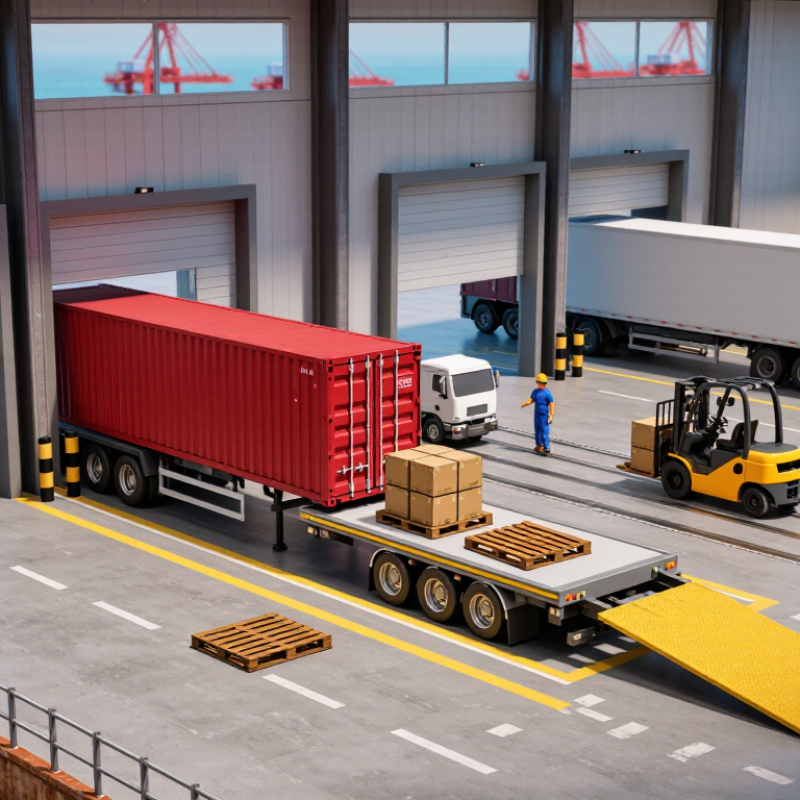
A lift dock connects a vehicle bed with a warehouse floor during loading. Its design affects safety, speed, and cargo handling. A dock leveler bridges small height differences between trucks and docks. A scissor lift dock raises pallets between different elevations. A vertical lift dock moves goods through multiple warehouse levels. Mobile lift platforms support temporary sites or facilities without permanent dock construction. Each type serves a different shipping condition.
For global shipping, match the lift dock to vehicle sizes, cargo weight, and local infrastructure.
High-volume container warehouses often need fixed hydraulic platforms with wide decks. Smaller inland facilities may prefer mobile units for mixed truck access. Cold-chain operations need corrosion-resistant materials and surfaces that allow regular cleaning. Power availability also matters. Hydraulic equipment may require stable electricity and scheduled maintenance. Remote sites may need manual backup controls.
During site assessments, I measure truck height, dock clearance, turning space, and daily pallet volume.
Operators often focus on lifting capacity first. That can be a costly mistake. Check travel height, platform dimensions, drainage, emergency stops, and guardrails. Confirm compatibility with regional electrical and workplace safety requirements. I have seen projects underestimate rainwater exposure, causing slippery decks and faster component wear. A careful specification should also include operator training, inspection intervals, and access for repairs. Sometimes, a simpler dock performs better than a heavier one.
Compare Dock Capacity, Safety Features, and Regulatory Standards
Choosing a lift dock for global shipping starts with real loading conditions, not the highest advertised rating.
Measure forklift weight, pallet loads, axle concentration, and entry speed. A 10,000-kilogram capacity may be inadequate if impact loads are ignored. In practical dock assessments, uneven wheels and wet plates often create greater risk than expected.
Safety deserves equal attention.
Select mechanical stops, side barriers, non-slip surfaces, emergency lowering, and visible capacity markings. OSHA 29 CFR 1910.26 requires dockboards to be secured and rated for their intended loads.
The U.S. Bureau of Labor Statistics recorded 1,495 fatal injuries among transportation and material-moving workers in 2023. That figure covers many workplaces, but it shows why dock access cannot be treated as a minor detail.
Small failures matter.
Regulatory checks should cover the destination, origin, and equipment design.
EN 1398 addresses dock leveller safety and performance, while ISO 3874 covers intermodal container handling methods. Confirm local electrical, structural, guarding, and inspection requirements before installation. A dock can meet one standard and still fail another authority’s expectations. That is easy to miss.
I would also test the dock with representative loads, not empty pallets. A paper calculation may look precise, yet daily traffic, rain, poor lighting, and rushed operators can expose weak assumptions. Industry estimates from the International Labour Organization report nearly 3 million work-related deaths annually worldwide, reinforcing the value of documented inspections and operator training.
Evaluate Port Compatibility, Installation, and Maintenance Needs
Choosing a lift dock for global shipping starts with port compatibility, not catalog capacity. A dock must match trailer heights, container clearances, apron slopes, and local power systems. UNCTAD’s Review of Maritime Transport 2023 reports that over 80% of global merchandise trade by volume moves by sea. This makes exposure to salt air, rain, and heavy traffic unavoidable. Fit matters. Measure the platform, lip, pit, and approach angle at every target port.
Installation conditions can change the decision. Check whether the site permits excavation, hydraulic lines, drainage, and safe vehicle access. Confirm voltage, control-panel standards, emergency stops, and technician availability before shipment. The World Bank and S&P Global’s Container Port Performance Index 2023 evaluated 405 container ports, highlighting how vessel time depends on efficient handling systems. A poorly fitted dock can create delays before the first container moves.
Maintenance planning should include corrosion protection, seal replacement, lubrication, inspections, and load testing. Keep critical components accessible from ground level where possible. I once assumed a higher lifting capacity meant better performance; that was incomplete thinking. A stronger unit may require deeper foundations and more costly repairs. Maintenance intervals should reflect cycle frequency, not only calendar time. The lift should have visible inspection points and documented service records. Small warning signs matter. Oil mist, uneven movement, and unusual noise often appear before a serious failure. The final choice should balance port fit, installation risk, and long-term service evidence.
Select the Best Lift Dock for Cost, Reliability, and Long-Term Use
How to Choose the Right Lift Dock for Global Shipping?
Select the Best Lift Dock for Cost, Reliability, and Long-Term Use
A lift dock should match your real freight, not an idealized specification sheet. Measure trailer heights, pallet weights, wheel loads, and daily cycles before comparing prices. A mixed-container operation needs adjustable travel and stable edge support. Small height errors can create steep forklift approaches. That risk is easy to underestimate.
The 2023 World Bank Logistics Performance Index compares 139 economies and highlights logistics reliability and timeliness. A dock that causes repeated loading delays can weaken an otherwise efficient supply chain. Review lifting speed, cycle limits, weather protection, corrosion resistance, and emergency lowering features. Check whether local technicians can replace seals, controls, and hydraulic components. Spare parts matter. So does training.
The International Labour Organization estimated 2.93 million work-related deaths and 395 million nonfatal injuries annually. That figure makes safe dock access more than a purchasing preference. Select equipment aligned with applicable safety standards, load testing, guarding, and documented inspections. Ask for lifecycle costs, not only the initial quotation. Energy use, planned maintenance, downtime, and installation changes can exceed early savings. The cheapest dock may win the spreadsheet, yet lose over ten years. I would not assume the highest-rated model is automatically best. Site conditions, operator habits, and neglected inspections can defeat excellent engineering. A careful trial with real pallets often reveals uncomfortable details.