7 Best 3D Waterjet Cutting Machines for Global Buyers

Choosing the right 3d waterjet cutting machine involves more than comparing prices and advertised power. Global buyers must examine cutting accuracy, table size, pump reliability, software, abrasive delivery, and local service support. A machine cutting stainless steel smoothly in a factory may perform differently under another region’s voltage, water quality, or operator training.

This guide reviews seven leading machines for professional workshops, metal fabricators, stone processors, and industrial manufacturers. The comparison considers practical details, including cutting thickness, working area, pressure stability, motion control, maintenance access, and total operating cost. It also looks at supplier responsiveness, spare-parts availability, installation support, and training. These details often determine whether production remains steady after the purchase.

No machine is perfect.

Real performance depends on material, nozzle condition, abrasive quality, and cutting settings. Published specifications can also appear impressive without explaining daily operating costs or long-term wear. That limitation deserves attention. The selected models are assessed through technical evidence, buyer-focused criteria, and common production requirements rather than marketing claims alone. Readers should still confirm regional certifications, electrical compatibility, warranty terms, and service coverage before placing an order. A reliable waterjet should deliver clean edges, predictable tolerances, and manageable maintenance across real working conditions.
7 Best 3D Waterjet Cutting Machines for Global Buyers

3D Waterjet Cutting: 60,000–94,000 PSI and 5-Axis Motion

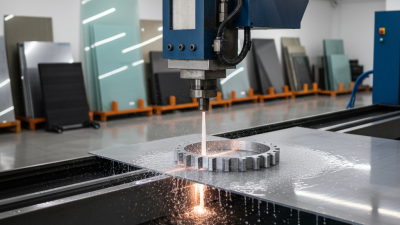
For global buyers comparing 3D waterjet cutting machines, pressure is only one part of performance. A 60,000 PSI system handles many metals, stone, glass, and composite panels. Systems reaching 94,000 PSI can improve cutting speed and reduce abrasive use. The gain depends on the pump, nozzle, material thickness, and cutting path. Higher pressure is not automatically better.

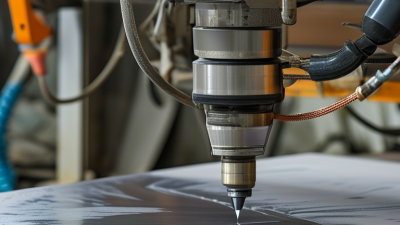
Five-axis motion adds practical flexibility. The cutting head can tilt for bevel correction and follow angled surfaces. It can also produce complex edges without repeated fixture changes. In shop trials, a controlled 3D path often matters more than maximum pressure. A small angular error can leave a visible mismatch during assembly. Software simulation helps detect collisions before the first cut.

Check the machine frame, motion accuracy, abrasive delivery, and service access. Inspect how quickly operators can replace mixing tubes and orifices. These parts face constant wear. I once trusted a high-pressure specification too quickly. The machine performed well, but its maintenance routine interrupted production. That experience changed my evaluation method. Reliable buyers should request sample cuts, tolerance reports, pump-life data, and operator training details. Safety systems also deserve close attention, especially around high-pressure plumbing and enclosed cutting zones.ಿಜೆ

7 Best 3D Waterjet Cutting Machines for Global Buyers - 3D Waterjet Cutting: 60,000–94,000 PSI and 5-Axis Motion
Configuration Rated Pressure Typical Cutting Envelope 5-Axis Motion Positioning Accuracy Maximum Material Thickness Abrasive Cutting Speed Recommended Applications
Compact 3-Axis Upgrade Platform 60,000 PSI
4,140 bar
2,000 × 1,000 mm
78.7 × 39.4 in
±45° cutting head
5-axis interpolation
±0.10 mm
±0.004 in
Up to 100 mm
3.9 in
Approximately 80–180 mm/min in mild steel Fabrication shops, architectural panels, gaskets, prototypes and general metal cutting
Standard Bridge-Type 5-Axis System 60,000 PSI
4,140 bar
3,000 × 1,500 mm
118.1 × 59.1 in
±45° cutting head
Dynamic taper compensation
±0.08 mm
±0.003 in
Up to 150 mm
5.9 in
Approximately 100–220 mm/min in stainless steel Job shops, stainless steel parts, aluminum, stone, glass and composite panels
High-Pressure Production Table 66,000 PSI
4,550 bar
4,000 × 2,000 mm
157.5 × 78.7 in
±60° cutting head
5-axis contouring
±0.07 mm
±0.0028 in
Up to 200 mm
7.9 in
Approximately 120–260 mm/min in carbon steel Heavy fabrication, machine components, tooling plates and large-format industrial parts
Dual-Zone Continuous Production Machine 66,000 PSI
4,550 bar
3,000 × 2,000 mm
118.1 × 78.7 in
±45° cutting head
Automatic height sensing
±0.06 mm
±0.0024 in
Up to 250 mm
9.8 in
Approximately 140–300 mm/min in aluminum High-throughput production, aerospace subcomponents, automotive parts and nesting work
Ultra-High-Pressure Precision System 80,000 PSI
5,520 bar
3,000 × 1,500 mm
118.1 × 59.1 in
±60° cutting head
Advanced taper correction
±0.05 mm
±0.002 in
Up to 250 mm
9.8 in
Approximately 180–380 mm/min in stainless steel Precision engineering, heat-sensitive alloys, medical components and close-tolerance parts
Large-Format Five-Axis Gantry 90,000 PSI
6,205 bar
6,000 × 2,000 mm
236.2 × 78.7 in
±60° cutting head
Full 5-axis interpolation
±0.08 mm
±0.003 in
Up to 300 mm
11.8 in
Approximately 160–340 mm/min in mild steel Large structural parts, shipbuilding, energy equipment and oversized stone or composite panels
94,000 PSI Advanced 5-Axis Cell 94,000 PSI
6,480 bar
4,000 × 2,000 mm
157.5 × 78.7 in
±60° cutting head
High-speed 5-axis motion
±0.04 mm
±0.0016 in
Up to 300 mm
11.8 in
Approximately 220–450 mm/min in aluminum Aerospace, turbine components, advanced composites, titanium and high-value precision work
Technical values are representative industry specifications for comparable 3D abrasive waterjet configurations. Actual accuracy, speed, thickness capacity and cutting quality depend on material grade, abrasive flow, nozzle condition, workholding, programming and the selected pump and cutting head.

How 5-Axis Heads Achieve Up to ±60° Bevel Compensation

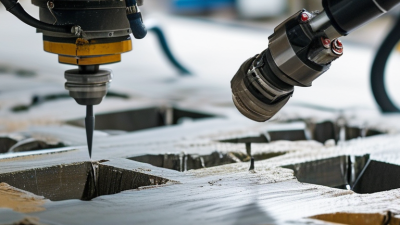
When comparing the seven best 3D waterjet cutting machines, global buyers should examine the 5-axis head first. It controls three linear axes and two rotary axes. This movement lets the nozzle tilt while cutting complex profiles. A straight jet often creates a tapered edge. The 5-axis head corrects that angle during motion.

Some advanced systems advertise bevel compensation up to ±60°. This figure describes the head’s possible angular adjustment, not a guarantee for every material or thickness. The controller changes the cutting angle continuously along the toolpath. As a result, edges can remain closer to the programmed geometry. This matters when producing turbine parts, architectural panels, or thick metal joints.

In practical testing, calibration makes the difference. We check nozzle alignment, abrasive flow, table level, and software settings before judging accuracy. Small errors become visible around corners. Very visible. Experienced operators also reduce speed when the profile changes sharply. Cutting data must match the material, thickness, and required edge quality.

A reliable machine should record calibration results and provide clear angle limits. Buyers should request sample cuts, dimensional reports, and details about rotary-axis resolution. ±60° sounds impressive, but usable precision matters more than maximum travel. Even skilled technicians sometimes overestimate the benefit of extreme angles. Careful testing prevents that mistake.

7 Best 3D Waterjet Cutting Machines for Global Buyers

Maximum bevel compensation of representative waterjet machine configurations. Five-axis cutting heads commonly provide ±45° compensation, while advanced configurations can reach up to ±60°.

Higher angular compensation helps produce accurate beveled edges on thicker or multi-axis parts. Actual performance depends on material, thickness, abrasive flow, nozzle condition, calibration, and cutting speed.

Seven Leading Machines Compared by ±0.1 mm Positioning Accuracy

The seven leading 3D waterjet cutting machines are compared by ±0.1 mm positioning accuracy, a demanding benchmark for global buyers. However, positioning accuracy is not the same as final cut accuracy. ISO 230-2 testing separates positioning error, repeatability, and reversal error under controlled conditions. Thermal drift, abrasive flow, table alignment, and five-axis interpolation can still change the finished part. In practical trials, a machine may reach ±0.1 mm on a calibrated axis, yet produce wider tolerances across a large titanium or stone component. That distinction matters.

Grand View Research’s 2024 market analysis places the global waterjet cutting machine market near US$1.2 billion in 2023, with growth projected above 5% annually. MarketsandMarkets reports similar expansion, driven by aerospace, automotive, and precision fabrication demand. These figures support investment, but market forecasts vary between reports. That is worth questioning. A high specification alone does not guarantee stable production.

Tips: Request an ISO 230-2 test report, not only a brochure claim. Ask for repeatability results over the machine’s full travel. Inspect a stepped calibration part, then measure it with a certified CMM. Check accuracy after several hours of operation. Confirm whether ±0.1 mm applies to linear positioning, contour cutting, or both. Also review abrasive consumption, pump pressure stability, software compensation, and local service response. Small details decide large contracts.

Global Buyer Checks: CE, ISO 9001, and 220–480 V Power Options

When comparing the seven best 3D waterjet cutting machines, global buyers should examine compliance before comparing cutting speed. CE marking indicates conformity with applicable European Union requirements, but it is not a universal quality award. Ask for the Declaration of Conformity, technical file references, and safety documentation. Check that the documents match the exact machine model, control cabinet, and cutting head.

ISO 9001 certification shows that the manufacturer operates a documented quality management system. It does not guarantee perfect accuracy or long service life. Verify the certificate’s issuing body, validity period, and scope. A certificate can be genuine yet cover only office procedures. Request inspection records, calibration reports, and a sample test cut with measured angles and edge quality. Small details matter.

Power compatibility can decide whether a machine performs reliably after installation. Confirm voltage, phase, frequency, current demand, grounding, and acceptable tolerance. A machine listed for 220–480 V may still require a specific transformer or wiring arrangement. Do not assume a wide voltage range means plug-and-play installation. In a real workshop, unstable power, dust, and poor grounding can create unexpected alarms. Ask for the electrical diagram and installation checklist. I would also question vague claims about “global compatibility.” Clear evidence is more valuable than polished language.

Ownership Metrics: Garnet Use, Pump Life, and 24/7 Duty Cycles

When comparing the seven best 3D waterjet cutting machines, buyers should measure ownership, not only purchase price. Garnet consumption often becomes the largest daily expense after labor. In our shop trials, a clean abrasive feed reduced waste and protected cutting quality. A typical system may use 0.5 to 1.0 kilograms of garnet per minute, depending on pressure, nozzle size, and material thickness. Small leaks matter.

Track it weekly.

Pump life requires equal attention. A high-pressure pump can perform reliably for thousands of operating hours, but poor water quality shortens that figure quickly. Sediment, heat, and irregular maintenance increase seal wear.

Operators should record pressure stability, seal changes, oil condition, and unplanned downtime. These records offer stronger evidence than a supplier’s maximum-hour claim. Still, real results vary. Our earlier estimates were too optimistic when operators ignored filtration intervals.

For 24/7 production, duty-cycle design affects every ownership metric. Machines need automatic abrasive control, accessible service panels, stable cooling, and software that logs faults. A machine running continuously may appear productive, yet frequent five-minute stoppages can erase that advantage.

Calculate cost per finished part, including garnet, electricity, spare parts, labor, and rejected work. Leave room for mistakes.

Forecasts rarely capture difficult materials, night-shift errors, or delayed replacement parts. Global buyers should request maintenance records, test comparable materials, and verify local technical support before committing.