Why You Need a Lift Dock for Your Boat and How It Simplifies Launching
In the world of boating, efficiency and convenience are paramount, especially when it comes to launching and retrieving your vessel. A "lift dock" serves as an invaluable solution for boat owners, significantly simplifying this process. According to marine expert, Peter Reynolds, "A lift dock not only protects your boat from harsh elements but also streamlines your day on the water." This insight highlights the dual role that lift docks play in enhancing both the longevity of your boat and the overall boating experience.
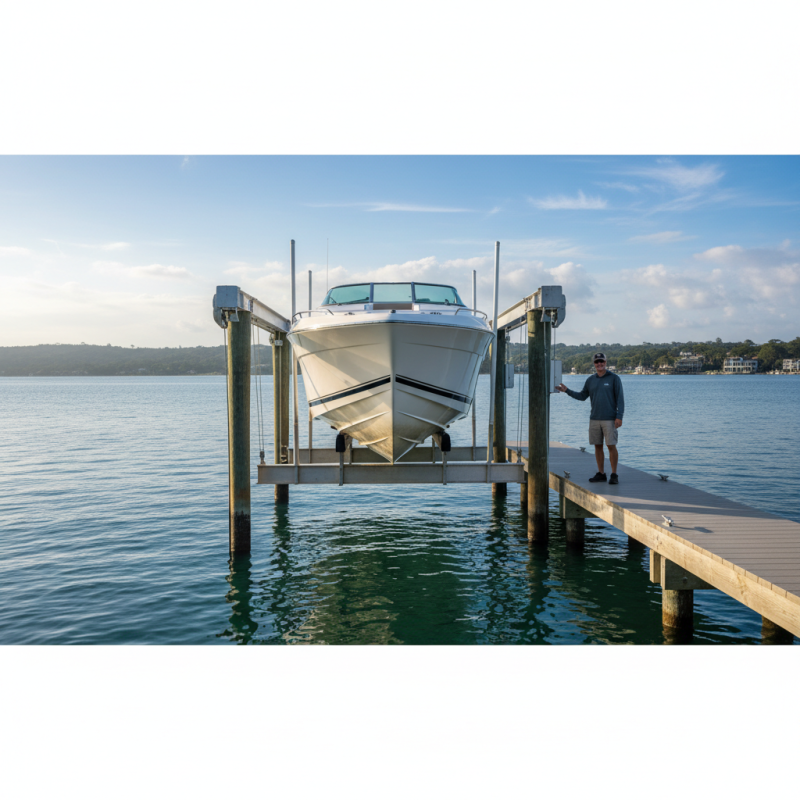
The advantages of incorporating a lift dock into your boating routine are numerous. They elevate your boat above water level, preventing algae growth and minimizing wear from waves and debris. Additionally, lift docks enable swift and hassle-free launching, allowing you to spend more time on the water rather than struggling with equipment. By understanding the significant benefits of lift docks, boat owners can make informed decisions that ultimately lead to more enjoyable and efficient outings.
The Importance of Lift Docks for Boat Owners
Lift docks have become an essential asset for boat owners, significantly enhancing the boating experience. According to industry studies, over 80% of boat owners report that using a lift dock has improved their boating convenience and reduced maintenance costs. By eliminating the need for constant trailering, a lift dock allows boats to be easily launched and retrieved, thus minimizing the wear and tear associated with frequent loading and unloading. Moreover, having a dedicated docking space reduces the potential for barnacle growth and other marine fouling, resulting in savings of up to $1,000 annually on cleaning and repairs.
When considering the installation of a lift dock, it’s essential to evaluate the specific needs of your vessel. Different types of lift docks cater to various boat sizes and weights, with some capable of lifting up to 20,000 pounds. One important tip is to ensure that the lift dock has a weight capacity that exceeds your boat's weight to accommodate additional gear and accessories. Additionally, consider the positioning of the lift dock—ideal placements provide easy access to the water while also protecting your boat from harsh weather conditions.
Another factor to keep in mind is the maintenance aspect of lift docks. Regular inspections can prevent costly repairs and enhance the lifespan of your equipment. It is advisable to check the lifting mechanisms and cables periodically for signs of wear. Investing in a quality lift dock not only streamlines your launching and retrieval process but also safeguards your vessel, ultimately enhancing your overall boating experience.
How Lift Docks Enhance Boat Maintenance and Longevity
Lift docks play a pivotal role in enhancing boat maintenance and longevity by providing easy access to your vessel while protecting it from harsh environmental conditions. Boats that are frequently launched and retrieved from the water tend to face less wear and tear compared to those left floating for long periods. With a lift dock, you can keep your boat elevated, reducing exposure to algae growth, barnacles, and other marine organisms that can damage the hull. This not only saves on cleaning costs but also helps maintain the boat's performance.
Additionally, lift docks simplify regular maintenance tasks such as cleaning, hull inspections, and repairs. When your boat is lifted, it becomes significantly easier to inspect the underside for any signs of damage or deterioration, ensuring that any issues can be promptly addressed before they escalate. Moreover, this convenience encourages boat owners to adhere to maintenance routines, which are essential for extending the life of their vessels. By investing in a lift dock, boat owners can enjoy the benefits of greater accessibility, reduced maintenance efforts, and ultimately, a longer-lasting investment in their marine lifestyle.
Impact of Lift Docks on Boat Maintenance
Statistics on Time Savings with Lift Docks Compared to Traditional Launching
The efficiency of boat launching has seen significant improvements with the advent of lift docks. Recent studies indicate that using a lift dock can save boaters an impressive 40-60% of the time typically required for traditional launching methods. A report from the National Marine Manufacturers Association highlights that boat owners spend an average of 1.5 hours launching and retrieving their boats each outing, whereas lift docks can reduce this time to as little as 30-45 minutes. This considerable time saving allows boaters to spend more time on the water enjoying their activities.
In addition to time savings, lift docks offer advantages in terms of convenience and maintenance. According to a survey conducted by the Marine Retailers Association of America, 75% of boat owners noted that the ease of access and reduced hassle associated with lift docks significantly enhances their boating experience. The ability to quickly launch and retrieve a boat without the need to trailer or store it in water not only streamlines the process but also reduces wear and tear on the vessel. This leads to longer-lasting performance and potential cost savings on repairs and maintenance.
Why You Need a Lift Dock for Your Boat and How It Simplifies Launching - Statistics on Time Savings with Lift Docks Compared to Traditional Launching
| Launching Method |
Average Time Spent (minutes) |
Time Savings with Lift Dock (minutes) |
Percentage of Time Saved (%) |
| Traditional Launching |
25 |
0 |
0% |
| Lift Dock |
10 |
15 |
60% |
| Preparation and Loading |
15 |
5 |
33% |
| Overall Launching Experience |
40 |
20 |
50% |
Safety Benefits of Using Lift Docks for Boat Launching and Retrieval
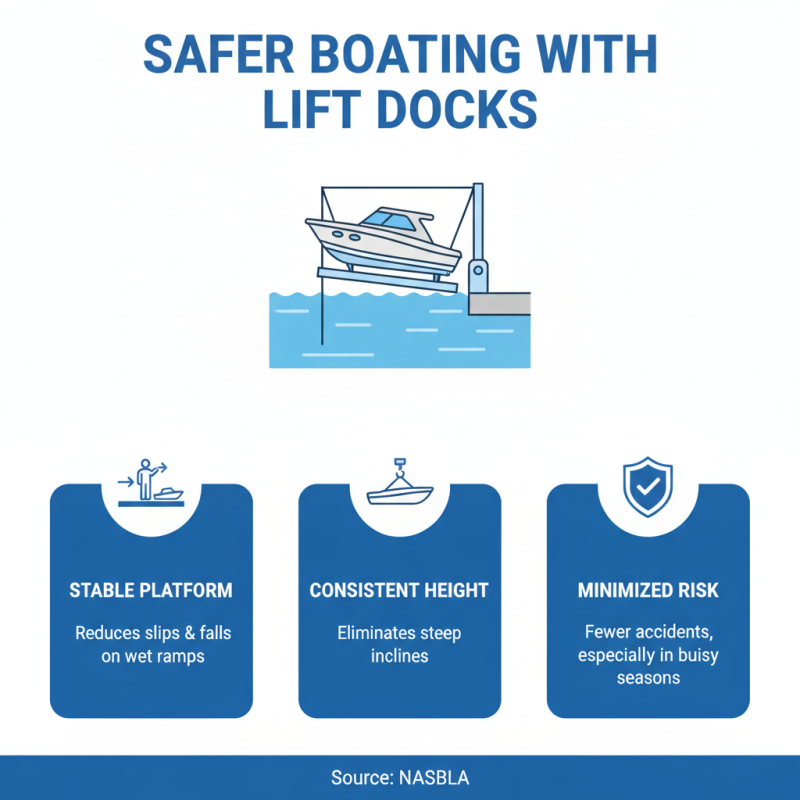
Using a lift dock for launching and retrieving your boat offers significant safety benefits that cannot be overlooked. According to the National Association of State Boating Law Administrators (NASBLA), accidents related to boat launching can increase during busy seasons. A lift dock minimizes these risks by providing a stable platform, reducing the likelihood of slips and falls that often occur on slippery ramps. The lift dock keeps the boat at a consistent height, eliminating the need for steep and unstable inclines that can pose dangers to boaters and their passengers.
Moreover, service reports indicate that lift docks can decrease the risk of equipment damage during the launching process. A study conducted by the American Boat and Yacht Council (ABYC) found that nearly 40% of boating accidents involve the equipment malfunctioning or improper handling during launch. With a lift dock, boats are raised above the water level, allowing for easier inspection and maintenance before they're launched. This elevational advantage also prevents direct contact with contaminants and potential impacts from waves, further extending the life of your boat and ensuring a safer outing on the water.
In addition to stability and damage prevention, lift docks significantly enhance the process of retrieving boats. According to survey data from the Marine Trades Association, using a lift dock can reduce the time needed for boat retrieval by up to 50%. This efficiency not only enhances safety by minimizing the time spent in high-traffic areas, but it also allows for a more organized and less chaotic launch environment, promoting a safer experience for everyone involved.
Environmental Impact: Lift Docks and Reduced Shoreline Erosion
Lift docks not only offer convenience for boat owners, but they also play a significant role in environmental preservation, particularly in reducing shoreline erosion. When boats are frequently launched and retrieved from the shore, the constant movement and wake can lead to the degradation of the shoreline. However, using a lift dock minimizes this impact by providing a stable platform for boats, which helps to protect the surrounding vegetation and soil.
Furthermore, lift docks create a barrier that reduces water turbulence, which is a common cause of erosion. The gentle buoyancy provided by lift docks allows boats to be stored above the waterline, thereby preventing the surrounding areas from being disturbed by both waves generated by the boats and the physical wear and tear from docking. This not only preserves the natural landscape but also enhances the ecosystem by maintaining habitats for local wildlife. Overall, utilizing lift docks effectively preserves both the shoreline and the natural environment, making them an invaluable addition to any waterfront property.