
Why Choose a Metal Distribution Box for Global Projects?
Global electrical projects demand equipment that remains dependable across changing climates, site conditions, and installation practices. A Metal Distribution Box offers a strong foundation for organizing circuits, protecting components, and supporting safer power management. Its rigid enclosure can withstand impacts, dust, moisture, and repeated handling better than many lightweight alternatives. This matters on construction sites, industrial facilities, transport projects, and temporary infrastructure.
Material selection still requires careful judgment. Steel provides strength and cost efficiency, while stainless steel or coated metal may better resist coastal humidity and chemical exposure. A suitable enclosure should include secure doors, practical cable entry points, grounding provisions, and enough internal space for inspection. Small details matter. Poor ventilation can increase heat. Unplanned cable bends can delay maintenance.
Experienced project teams do not choose a box by appearance alone. They review incoming voltage, circuit capacity, enclosure protection, ambient temperature, mounting conditions, and local installation requirements. Factory inspection, dimensional checks, and routine electrical testing improve confidence before shipment. Clear drawings and traceable quality records also help contractors work consistently across borders. However, no design is universal. A metal box may add weight, require corrosion protection, or need stronger mounting support. These limitations deserve honest evaluation.
Reliable suppliers explain these trade-offs instead of promising a perfect solution. They can recommend finishes, accessories, and configurations based on actual project evidence. When performance, documentation, and field practicality align, a Metal Distribution Box becomes more than a cabinet. It becomes a dependable part of the project’s electrical safety strategy. That reliability must be proven repeatedly. Not assumed.
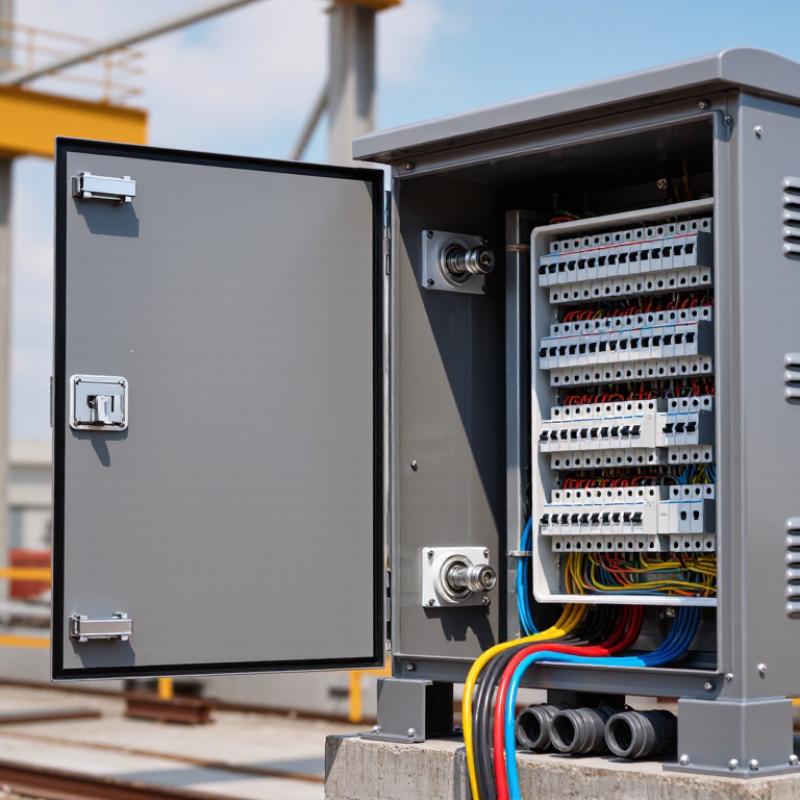
What Is a Metal Distribution Box?
A metal distribution box is an enclosure that protects electrical components, wiring, and connection points. It commonly houses circuit breakers, busbars, terminals, and protective devices. Steel or aluminum forms the outer shell. This structure helps resist impact, heat, dust, and accidental contact.
It is more than a simple cabinet.
In practical installations, technicians value clear space, strong hinges, and reliable grounding points. A metal enclosure can also reduce damage from tools, vibration, and harsh transport conditions. However, metal alone does not guarantee safety. The complete assembly should meet IEC 61439 requirements, while its ingress protection rating should follow IEC 60529 testing methods.
Global demand makes this equipment increasingly important. The International Energy Agency’s Electricity 2024 report forecasts average global electricity demand growth of about 3.4% annually through 2026. More circuits and distributed power systems require organized protection. A properly designed box supports safer maintenance and clearer fault isolation.
Site conditions still change everything.
Outdoor projects may need corrosion-resistant coatings, sealed cable entries, and suitable IP ratings. Coastal locations can expose untreated steel to salt mist within months. Designers sometimes choose oversized boxes, but excessive space can increase cost and condensation risk. That trade-off deserves review before production. The enclosure must fit the components, local standards, operating temperature, and the people who will service it.
How Does a Metal Distribution Box Work?
A metal distribution box receives electrical power and divides it among several outgoing circuits. Inside, an incoming cable connects to busbars or terminals. These conductors distribute current to separate breakers, fuses, or switching devices. Each protective device controls one circuit. If a fault causes excessive current, the device disconnects that circuit quickly.
The metal enclosure protects internal components from impact, dust, and accidental contact. Its hinged door allows technicians to inspect connections safely. Cable glands seal entry points and reduce moisture intrusion. The enclosure must also connect to a reliable protective earth. Without proper grounding, the metal body can become dangerous during insulation failure. Ventilation may be necessary when transformers or breakers produce significant heat.
For global projects, engineers check voltage, frequency, fault ratings, enclosure protection, and local installation requirements. A box suitable for a dry indoor plant may fail in a humid coastal site. Stainless steel, coated steel, or another suitable material may be selected according to exposure conditions. Clear circuit labels help technicians work across language barriers. Field teams also perform torque checks, insulation tests, and functional testing before energizing the system.
Loose terminals, poor sealing, or overcrowded wiring create avoidable risks. Engineers should leave enough space for heat dissipation and future maintenance. That limitation deserves attention.
Which Materials and Features Support Global Use?
Global projects face dust, rain, salt air, vibration, and uneven maintenance conditions. The enclosure must handle them without complicating installation. The IEA Electricity 2024 report projects global electricity demand growth above 3% annually through 2026. More power infrastructure means more outdoor distribution points. A metal distribution box offers strength, repairability, and stable grounding. Galvanized steel suits general industrial sites. Stainless steel performs better near coastal or chemical environments. Aluminum reduces weight where transport and mounting access matter. The NACE IMPACT study estimated global corrosion costs at 3.4% of worldwide GDP. That figure makes surface protection more than a cosmetic choice.
Material selection should follow exposure, not habit. IEC 60529 defines ingress protection ratings, including IP65 and IP66. IP66 protects against dust and powerful water jets. For impact risks, IEC 62262 IK ratings add useful mechanical guidance. Powder coating can improve durability, but damaged edges still need inspection.
Cable glands should match cable diameter, sealing needs, and local installation practices. Internal earth bonding supports safer maintenance. Ventilation or pressure compensation may prevent condensation. Field commissioning often reveals small failures, such as trapped moisture under a gasket. Small oversights matter.
Tips: Confirm the required IEC, regional, and electrical standards before fabrication. Request corrosion testing for harsh locations. Check door clearance, cable bending space, and replacement access on the drawing. A practical design review should include local technicians, because remote assumptions are often imperfect.
What Safety and Compliance Standards Should Be Considered?
Why Choose a Metal Distribution Box for Global Projects?
What Safety and Compliance Standards Should Be Considered?
A metal distribution box must meet the electrical rules of its destination market. IEC 61439 is widely used for low-voltage switchgear and controlgear assemblies. It addresses temperature rise, insulation, clearances, and short-circuit performance. The enclosure should also match IEC 60529 ingress protection ratings. An IP54 rating may protect against dust and splashing water, while harsher sites may require a higher rating.
Grounding deserves close attention. A protective bonding conductor should connect the metal door, enclosure, and internal components. Reliable bonding reduces shock risk during insulation faults. Designers should verify fault-current ratings and conductor sizes through documented testing. Do not rely on appearance. A thick steel box is not automatically safe.
Regional requirements can also change the design. Some projects may require CE or UKCA conformity, while North American installations may follow different enclosure and wiring rules. Local electrical authorities often request test reports, material declarations, and installation instructions. Corrosion protection matters near coastlines, mines, and chemical processing areas. Powder coating can help, but damaged edges still need inspection.
Field experience shows that paperwork is often treated as an afterthought. That causes delays. Another weakness is selecting an IP rating without checking cable glands and door seals. The complete assembly must be evaluated. Standards also change, and older certificates may not cover the current edition. A qualified engineer should review the project location, fault level, environmental conditions, and approval pathway before production.
Why Choose a Metal Distribution Box for Global Projects? – What Safety and Compliance Standards Should Be Considered?
| Compliance Area | Relevant Standard or Regulation | What It Covers | Recommended Project Target | Evidence to Request | Why a Metal Enclosure Helps |
|---|---|---|---|---|---|
| Enclosure construction | IEC 62208 | General requirements and tests for empty enclosures used in low-voltage switchgear and controlgear assemblies. | Use an enclosure evaluated for the intended voltage, installation environment, temperature, and mechanical configuration. | Test reports, technical construction file, material specifications, and enclosure ratings. | Steel or stainless steel provides a rigid mounting surface and supports secure installation of electrical components. |
| Low-voltage assembly safety | IEC 61439 series | Design verification, routine verification, temperature rise, short-circuit withstand, clearances, creepage distances, and protective circuits for low-voltage assemblies. | Apply the appropriate part of the IEC 61439 series according to the assembly type and installation use. | Design-verification records, routine-test reports, rated current, short-circuit rating, and wiring diagrams. | The enclosure can withstand mechanical stresses and maintain stable component positioning during service. |
| Ingress protection | IEC 60529 | IP code classification for protection against access to hazardous parts, solid foreign objects, and water. | Typical planning targets are IP54 for many protected indoor areas and IP65 or higher for exposed outdoor locations, subject to site conditions. | IP test report identifying the complete enclosure configuration, door seals, cable entries, and ventilation accessories. | A properly sealed metal box can protect conductors and devices from dust, rain, and accidental contact. |
| Impact resistance | IEC 62262 | IK code classification for resistance to externally applied mechanical impacts. | IK08 is a common minimum planning level for general industrial areas; higher levels may be required in public or high-impact zones. | Impact test report and the declared IK rating of the complete installed configuration. | Metal panels generally offer greater resistance to dents, punctures, and accidental impact than many non-metallic alternatives. |
| Protective earthing and bonding | IEC 61439; IEC 60364; local electrical installation rules | Continuity of the protective circuit, bonding of exposed conductive parts, and protection against electric shock. | Provide a dedicated protective-earth terminal, reliable door bonding where required, and verified low-resistance continuity. | Earth-continuity test results, bonding diagram, terminal specifications, and installation instructions. | Conductive steel enables robust bonding when paint, coatings, hinges, and removable panels are correctly addressed. |
| Electrical clearances and creepage | IEC 60664-1; IEC 61439 | Insulation coordination, minimum clearances through air, creepage distances, pollution degree, and overvoltage category. | Confirm dimensions using the system voltage, pollution degree, material group, altitude, and overvoltage category. | Insulation-coordination calculations, layout drawings, component data sheets, and dielectric test results. | A rigid enclosure helps preserve component spacing and reduces the risk of panel deformation during transport or installation. |
| North American enclosure requirements | UL 50E; NEMA 250 | Environmental construction and enclosure-type requirements commonly used for electrical equipment in the United States and Canada. | Select the required enclosure type according to indoor or outdoor use, corrosion exposure, hose-down conditions, and hazardous-location requirements. | Certification or evaluation records, construction details, gasket specifications, and enclosure-type documentation. | Metal construction is widely used where strong environmental protection, grounding, and physical durability are required. |
| Fire and installation safety | NFPA 70 (NEC); applicable national wiring regulations | Conductor sizing, overcurrent protection, grounding, working space, box fill, cable entries, and installation methods. | Verify local requirements for voltage, current, fault current, conductor temperature rating, access, and service clearance. | Single-line diagrams, load schedules, short-circuit calculations, installation instructions, and inspection records. | Steel is non-combustible and can provide a robust barrier around energized components, although correct overcurrent protection remains essential. |
| Corrosion protection | ISO 12944; project coating specification | Classification of corrosivity environments and selection of protective paint or coating systems for steel structures and equipment. | Specify coating performance according to exposure, such as indoor, industrial, coastal, humid, or marine conditions. | Coating system description, surface-preparation method, dry-film thickness, adhesion results, and corrosion-test data where required. | Steel can be galvanized, powder-coated, painted, or manufactured in stainless steel to suit demanding environments. |
| Temperature and heat dissipation | IEC 61439; IEC 60068-2 environmental tests where specified | Temperature rise, ambient operating conditions, thermal cycling, humidity, and equipment performance under environmental stress. | Define the ambient range, internal heat load, solar exposure, ventilation method, and maximum permissible temperature rise. | Temperature-rise calculations or tests, derating data, ventilation details, and environmental test records. | Metal conducts and distributes heat effectively, but ventilation, spacing, and component derating must still be engineered. |
| Hazardous locations | IEC 60079 series; local hazardous-area regulations | Equipment protection for explosive gas, vapor, dust, or other classified atmospheres. | Use only equipment with the correct protection method, gas or dust group, temperature class, zone, and certification for the location. | Valid hazardous-location certificate, marking information, approved cable glands, installation conditions, and inspection records. | Metal provides mechanical strength and effective bonding, but ordinary metal construction alone does not make an enclosure suitable for hazardous areas. |
| Market access and documentation | Applicable regional conformity legislation and technical-file requirements | Declarations, risk assessment, labeling, traceability, language requirements, and records needed for the destination market. | Prepare a region-specific compliance matrix before design approval and procurement. | Declaration of conformity where applicable, drawings, bills of materials, test reports, labels, manuals, and change-control records. | Metal enclosures support durable labels, serialized identification plates, and consistent mechanical traceability. |
Note: The applicable requirements depend on system voltage, fault level, installation environment, country, industry, and whether the box is supplied as an empty enclosure or as a complete electrical assembly. Final ratings should be confirmed through the project authority having jurisdiction and the applicable conformity assessment process.
How Should Metal Distribution Boxes Be Selected and Installed?
Selecting a metal distribution box starts with the site, not the catalogue. Record the system voltage, load current, cable quantity, and available wall space. For coastal projects, choose corrosion-resistant metal and suitable protective coatings. Dusty factories may require stronger ingress protection. Small details matter.
Check local electrical requirements before ordering. Confirm the enclosure’s rating, short-circuit withstand, door clearance, and mounting method. A qualified electrician should review the design. Do not guess the box size. Crowded terminals create heat and make future testing difficult. Allow room for bending cables and tightening connections safely.
Installation begins with isolation and verification of the circuit. Mount the box on a firm, level surface using corrosion-resistant fasteners. Seal cable entries with correctly sized glands, and prevent water from tracking along the cables. Connect the protective earth to the enclosure and test continuity before energizing. Torque terminals according to the component manufacturer’s instructions. In field inspections, loose terminals are often found after rushed installation.
Keep unused openings sealed. Label each circuit clearly. After energization, inspect for abnormal heat, noise, or odor. A thermal scan can reveal overloaded connections that visual checks miss. Schedule inspections based on dust, humidity, vibration, and operating hours. One practical lesson is easy to overlook: the best enclosure still performs poorly when cable routing is careless.
Why Choose a Metal Distribution Box for Global Projects?
Select the enclosure according to the required IP protection level, installation environment, and exposure to dust or water. The chart uses the protection-code structure defined by IEC 60529: the first digit represents solid-particle protection and the second digit represents water protection.
IP54 is commonly considered for protected indoor or sheltered locations, while IP65 and IP66 provide dust-tight protection with increasing resistance to water jets. IP67 adds temporary immersion protection. Before installation, verify cable glands, covers, seals, grounding, corrosion resistance, and the complete assembly rating.

