Top 10 Tin Bar Casting Machine Types for Global Buyers
Choosing the right Tin Bar Casting Machine is rarely a simple equipment comparison. Global buyers must examine production volume, tin alloy composition, bar dimensions, cooling performance, energy use, and operator skill. A machine that performs well in a high-volume factory may struggle in a smaller workshop with changing orders.
Metallurgical process consultant Dr. Markus Reuter observes, “Casting stability begins with controlled heat, consistent feedstock, and measurable cooling—not impressive machine labels.” This practical view matters when comparing continuous, rotary, gravity, pressure, and automated casting systems. Each type offers different advantages. Some deliver faster output, while others provide simpler maintenance and lower investment costs. The best choice depends on the complete production environment.
This guide reviews ten Tin Bar Casting Machine types for international purchasers. It considers mold design, temperature control, bar surface quality, casting speed, maintenance access, and after-sales support. These details become visible on the factory floor: a clogged cooling line, uneven bar edges, or a delayed spare part can affect an entire shipment. Small details matter.
Specifications can mislead.
Buyers should request trial data, actual energy figures, sample bars, and references from comparable plants. Certifications are useful, but they do not replace process verification. The ranking also leaves room for judgment, because no single machine suits every alloy, budget, or production target. That uncertainty is worth acknowledging. Careful evaluation, transparent supplier communication, and realistic capacity planning remain more reliable than choosing equipment based only on price or advertised speed.
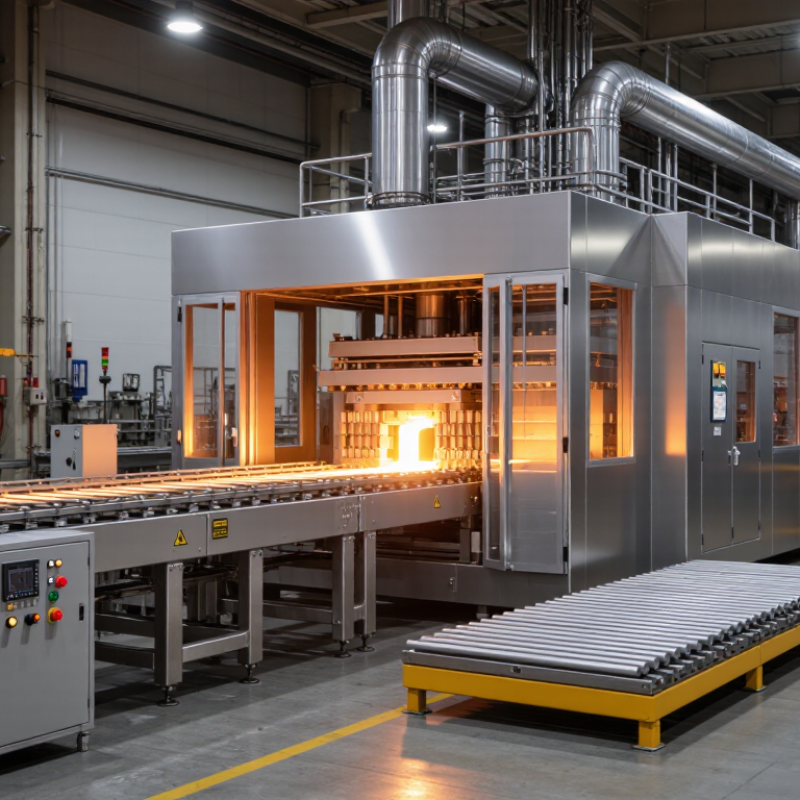
Tin Bar Casting Machine Types by Output: 0.5–20 t/h Industrial Capacity
Top 10 Tin Bar Casting Machine Types for Global Buyers
Tin bar casting machines are best compared by output, mold design, cooling method, and automation level. For 0.5–2 t/h, batch graphite-mold machines suit smaller foundries and frequent alloy changes. Manual steel-mold systems cost less, but they need closer operator attention. Water-cooled steel molds improve cycle stability. They also demand reliable flow control.
From 2–8 t/h, continuous chain-mold, rotary-mold, and conveyor casting machines offer steadier production. A rotary system can reduce handling between pours. Chain molds support repeatable bar lengths when mold alignment is maintained. Conveyor designs are practical for integrated cooling and trimming. Some plants use twin-roll casting for faster solidification, though surface quality can vary with melt temperature.
At 8–20 t/h, heavy-duty continuous casters need strong cooling circuits, automatic level control, and stable furnace feeding. Multi-strand machines can increase output without making each bar excessively large. Induction-heated holding furnaces help reduce temperature swings before casting. In practice, actual capacity often falls below the catalog figure. Operator skill, bar size, cooling-water temperature, and cleaning intervals all matter. I have seen a high-rated line lose production because its discharge table was too short. That detail is easy to miss. Buyers should verify hourly output using the planned bar dimensions, not only molten-metal capacity. A factory acceptance test with recorded temperature, cycle time, rejection rate, and energy use provides more reliable evidence than a brochure.
Gravity, Continuous, and Centrifugal Casters Ranked by 99.9% Tin Purity
Top 10 Tin Bar Casting Machine Types for Global Buyers
For 99.9% tin purity, process control matters more than machine size. The ranking starts with four gravity casters: permanent-mold, tilt-pour, bottom-pour, and sealed-chamber designs. They offer simple maintenance and clean bar geometry.
Continuous casters rank five through eight, including belt, wheel, strand, and rod casters. They deliver higher output and steadier dimensions. Centrifugal casters rank ninth and tenth, using horizontal or vertical molds for dense, uniform bars.
Gravity systems suit smaller batches. Continuous systems fit regular industrial demand.
The International Tin Association reports that solder remains close to half of global tin use in many market reviews. That keeps purity and inclusion control commercially important.
USGS Mineral Commodity Summaries reports global tin mine production near 300,000 metric tons annually in recent editions. Refined material still needs careful melting, filtration, and temperature control.
A 99.9% target can fail through oxidation, dirty launders, or mixed returns. Small defects matter. In practice, centrifugal casting may improve density, but it can raise tooling complexity. I would not rank it highest for every buyer.
Tips:
Ask for a verified purity test, not a brochure claim. Check oxygen exposure, mold temperature, bar weight tolerance, and cooling speed. Request trial samples from the exact feedstock. Also compare energy use per ton, because output figures can be optimistic. A portable spectrometer helps, but laboratory confirmation remains more reliable.
Energy and Cooling Systems Compared at 230–500°C Casting Temperatures
Top 10 Tin Bar Casting Machine Types for Global Buyers
Tin bar casting machines differ in heat transfer, throughput, and cooling control. Gravity, continuous, pressure, rotary, and horizontal systems are common choices. At 230–260°C, melting control becomes sensitive because pure tin melts near 232°C. A small temperature rise can improve flow, but excessive heat increases oxidation and energy loss.
Electrical resistance heaters offer steady temperature control and simple maintenance. Induction heating responds faster, especially during repeated casting cycles. However, it may require better coil design and process monitoring. Gas heating can support larger chambers, but heat distribution may vary across the crucible. In working plants, insulation quality often saves more energy than changing the heater alone.
Cooling becomes critical as casting temperatures approach 350–500°C, especially for tin-based alloys and fast production lines. Water jackets remove heat efficiently, while air cooling reduces leak risks and system complexity. Chilled water can shorten solidification time, but excessive cooling may create surface stress, shrinkage, or uneven bar structure. Keep it stable.
A practical setup may use closed-loop water cooling, temperature sensors near the mold, and variable-speed pumps. Operators should compare kilowatt-hours per batch, not only heater ratings. My first estimate would still need correction after measuring ambient temperature, mold wear, and start-up losses. These details are easy to overlook. Calibration records, cooling-flow checks, and clean contact surfaces support safer, more repeatable output across different machine types.
Automation Levels Evaluated by ±1 mm Bar Tolerance and 24/7 Operation
Tin bar casting machines differ mainly in automation, mold control, and material handling. Ten common types include manual mold casters, semi-automatic lines, continuous belt casters, rotary casters, chain conveyor systems, servo-driven casters, induction-heated units, gas-heated units, robotic transfer lines, and fully integrated casting cells. Each design suits different production volumes and workforce conditions.
For global buyers, ±1 mm bar tolerance should be tested under real production conditions. A servo-driven or fully automatic system can control pouring speed, mold alignment, cooling time, and cutting length more consistently. However, automation alone cannot guarantee accuracy. Mold wear matters. So does metal temperature. During a 24/7 trial, inspect bar length every hour and record temperature changes across shifts. A reliable line should also include automatic alarms, sensor checks, guarded access, and quick mold replacement.
Continuous operation exposes weak points quickly. Cooling channels may accumulate scale, while conveyors can drift after repeated loading. Experienced operators usually request a maintenance schedule, spare-part list, and documented test results before purchase. Ask whether the machine maintains ±1 mm tolerance after several hours, not only during a short factory demonstration. This detail is often overlooked. Energy use, cleaning time, and changeover speed also affect the true cost per bar. Some highly automated systems still need manual inspection, and that is not necessarily a defect.
Top 10 Tin Bar Casting Machine Types for Global Buyers - Automation Levels Evaluated by ±1 mm Bar Tolerance and 24/7 Operation
| Rank | Machine Type | Typical Automation Level | Typical Bar Tolerance | Typical Output Capacity | 24/7 Suitability | Estimated Operators / Shift | Main Strength | Typical Limitation |
| 1 | Continuous Belt Casting Machine | Fully automatic | ±0.5–1.0 mm | 300–1,500 kg/h | Excellent | 1–2 | High throughput and stable dimensions | Higher installation and cooling-system requirements |
| 2 | Twin-Roll Strip-to-Bar Casting Line | Fully automatic | ±0.5–1.0 mm | 500–2,000 kg/h | Excellent | 1–2 | Very high productivity and continuous operation | Requires careful roll-gap and cooling control |
| 3 | Automatic Water-Cooled Mould Caster | Fully automatic | ±0.8–1.0 mm | 200–800 kg/h | Excellent | 1–2 | Good heat control and repeatable bar geometry | Cooling-water quality must be monitored |
| 4 | Servo-Controlled Cut-Length Casting Line | Fully automatic | ±0.5–1.0 mm | 150–700 kg/h | Excellent | 1–2 | Accurate length control with automated cutting | Servo systems require skilled maintenance |
| 5 | Rotary Multi-Mould Casting Machine | Automatic | ±1.0–1.5 mm | 100–500 kg/h | Very good | 1–2 | Compact footprint and repeated mould cycles | Mould wear can affect dimensional consistency |
| 6 | Chain Conveyor Ingot Casting Machine | Automatic | ±1.0–2.0 mm | 150–700 kg/h | Very good | 1–3 | Reliable mould circulation and easy product discharge | Usually needs downstream trimming or inspection |
| 7 | Linear Permanent-Mould Caster | Semi-automatic | ±1.0–2.0 mm | 80–400 kg/h | Good | 2–3 | Flexible mould changes and moderate capital cost | Manual handling may limit long unattended runs |
| 8 | Tilt-Pour Permanent-Mould Caster | Semi-automatic | ±1.5–2.5 mm | 50–250 kg/h | Moderate | 2–4 | Suitable for varied bar sizes and smaller batches | Cycle time and dimensions depend on operator settings |
| 9 | Hydraulic Ejector Bar Casting Machine | Semi-automatic | ±1.5–3.0 mm | 60–300 kg/h | Moderate | 2–4 | Simple demoulding and robust mechanical construction | Hydraulic maintenance and manual inspection are required |
| 10 | Manual Gravity Permanent-Mould Caster | Manual | ±2.0–4.0 mm | 20–120 kg/h | Limited | 3–6 | Low initial investment and straightforward operation | Labor-intensive with lower consistency for 24/7 production |
Note: Values are typical industry ranges for tin and tin-alloy bar casting lines. Actual tolerance, throughput, staffing, and continuous-operation capability depend on bar dimensions, alloy composition, furnace capacity, mould design, cooling control, inspection standards, and maintenance planning.
Global Buyer Checklist: CE, ISO 9001, 380–480 V, and ASTM Compliance
Choosing among the top 10 tin bar casting machine types requires more than comparing output rates. Buyers should match the furnace, mold, cooling system, pulling unit, and cutting method with the target alloy and bar size. Continuous casting suits stable, high-volume production. Batch and semi-continuous systems may offer easier changeovers. The choice depends on actual production conditions.
CE documentation should include a valid Declaration of Conformity, risk assessment, electrical drawings, and safety instructions. Do not accept a logo alone. Check whether the stated compliance covers the complete machine, not only selected components. ISO 9001 certification is also useful, but review its scope, certificate validity, and quality-control records. Paperwork can look convincing.
The electrical specification deserves close attention. A 380–480 V, three-phase supply may still require 50 or 60 Hz confirmation, proper grounding, and sufficient startup capacity. Ask for measured power consumption, not only motor ratings. ASTM compliance should match the intended tin alloy, chemical composition, sampling method, dimensional tolerance, and testing procedure. Request recent inspection reports and sample bars. Small details matter. A machine can meet one ASTM requirement while missing another. Buyers should also inspect cooling-water temperature, emergency stops, guarding, and maintenance access before signing. Some checklists remain incomplete, and that is a problem worth admitting early.
Top 10 Tin Bar Casting Machine Types for Global Buyers
Global Buyer Checklist: CE, ISO 9001, 380–480 V, and ASTM Compliance
How to Read the Chart
The chart compares indicative nominal throughput ranges commonly used for preliminary equipment selection. Actual output depends on tin alloy, bar dimensions, mold design, melting efficiency, cooling capacity, and automation level. Use the range shown in the tooltip as a planning reference rather than a guaranteed machine rating.
For international purchasing, confirm CE conformity where applicable to the destination market, request ISO 9001 evidence for the supplier’s quality-management system, verify three-phase electrical compatibility across 380–480 V and the local frequency, and identify the applicable ASTM alloy, chemical-composition, dimensional, or testing requirements for the finished tin bar.