Top Dock Hoist Solutions for 2026 What Buyers Need to Know
In the fast-evolving world of dock hoists, understanding the latest innovations is crucial for buyers. John Davis, a renowned expert in the dock hoist industry, emphasizes, "Investing in the right dock hoist can significantly improve operational efficiency." This statement highlights the importance of choosing well in a market filled with options.
As we look towards 2026, potential buyers must consider various factors. The integration of smart technology in dock hoists is one trend gaining traction. Features like load monitoring and automated controls are becoming industry standards. However, some buyers may overlook these advancements, leading to missed opportunities.
Additionally, durability and safety should be top priorities in selection. Many dock hoists are designed for heavy loads and rigorous use. But not all products meet stringent safety regulations. Proper research is essential to ensure reliable performance and compliance. In a competitive landscape, the right choice today can set the foundation for success tomorrow.

Understanding Dock Hoist Technology Trends for 2026
As we approach 2026, understanding dock hoist technology trends is essential for buyers. The landscape is evolving rapidly. Innovations focus on safety, efficiency, and automation. New materials and designs are making dock hoists lighter yet more durable. This shift enhances operational effectiveness while lowering maintenance costs.
Investing in smart technology is crucial. Sensors and IoT integration are becoming common. These features help monitor load weight and hoist health in real time. They provide alerts for potential issues, reducing downtime. Buyers need to consider this integration for future-proofing their operations.
**Tips:** Keep an eye on energy-efficient models. They not only save money but also meet environmental standards. Regular training for staff on new technology can prevent accidents. Make sure your equipment is compliant with the latest safety regulations. Adapting to these trends can make a significant impact on operational success.
Key Features and Specifications to Consider for Buyers
When considering dock hoist solutions for 2026, buyers must focus on key features and specifications. A robust hoist should have a load capacity of at least two tons, accommodating a wide range of materials. According to recent industry reports, over 70% of dock operations require this capacity for efficient loading and unloading. Durability is another essential factor; hoists made from corrosion-resistant materials can significantly extend operational life.
Safety features are critical. Look for models equipped with automatic shut-off mechanisms and overload protection. These systems not only increase reliability but also reduce the risk of accidents. Data suggests that companies implementing advanced safety features see a 40% decrease in incidents.
Tip: Consider the hoist's energy efficiency, as many newer models offer lower power consumption. This can mitigate long-term operating costs. Also, explore models that come with adjustable height settings, providing flexibility for various tasks. Always ensure that the equipment complies with current industry standards for optimal safety and performance.
Reflecting on these criteria will lead to informed purchasing decisions.
Comparative Analysis of Leading Dock Hoist Brands in 2026
When considering dock hoist solutions for 2026, buyers face numerous options. The market has evolved, with various brands offering unique features. Key factors to analyze include load capacity, design, and user-friendliness. A hoist with a robust load capacity ensures safety during operations, while an ergonomic design promotes efficiency. Buyers should also consider ease of installation and maintenance.
Some brands focus on innovation, integrating smart technology for better monitoring. Others prioritize durability in harsh environments. It’s critical to assess these aspects based on specific operational needs. Moreover, not every brand excels in all areas. Potential weaknesses might emerge in support services or warranty policies.
Feedback from industry users highlights varying satisfaction levels. Some experience frequent breakdowns, while others praise their hoists' reliability. An evaluation of user reviews can reveal recurring issues. Ultimately, understanding these factors will guide buyers in selecting the right dock hoist, making the decision-making process crucial.
Top Dock Hoist Solutions for 2026
This chart provides a comparative analysis of key features among leading dock hoist solutions based on various criteria important for buyers in 2026. The data includes lifting capacity, maximum height, speed, and price range.
Safety Standards and Regulations for Dock Hoist Operations
When considering dock hoist operations, safety standards are paramount. The Occupational Safety and Health Administration (OSHA) states that proper equipment can reduce workplace injuries by up to 40%. In 2026, understanding these regulations is crucial. To comply, operators must ensure that their hoists meet the latest safety certifications. Regular inspections and maintenance are key to preventing accidents.
Moreover, maintaining safety protocols is not just about regulations. The National Institute for Occupational Safety and Health (NIOSH) emphasizes the importance of operator training. Workers must be knowledgeable about potential hazards and proper operating procedures. Reviewing past incidents can provide valuable lessons. This reflective practice ensures workers remain vigilant and informed.
**Tip:** Always conduct a pre-operation checklist. This includes inspecting the hoist, load limits, and safety gear. Engaging operators in safety discussions fosters a culture of awareness. Remember, safety is a continuous process, not a one-time effort.
**Tip:** Implement regular training sessions. This keeps everyone updated on the latest standards and practices. Encourage feedback from operators about potential improvements. The goal should be a safer working environment, where everyone collaborates to minimize risks.
Top Dock Hoist Solutions for 2026
| Solution Type |
Load Capacity (lbs) |
Typical Applications |
Safety Standards |
Regulatory Compliance |
| Electric Dock Hoist |
2,000 |
Automotive Industry |
OSHA, ANSI |
ISO 9001 |
| Hydraulic Dock Hoist |
3,500 |
Construction |
ASME, CSA |
CE Marking |
| Pneumatic Dock Hoist |
1,500 |
Shipping and Logistics |
B30.20 |
ISO 14001 |
| Manual Dock Hoist |
1,000 |
Warehouses |
ISO 45001 |
CSA Z150 |
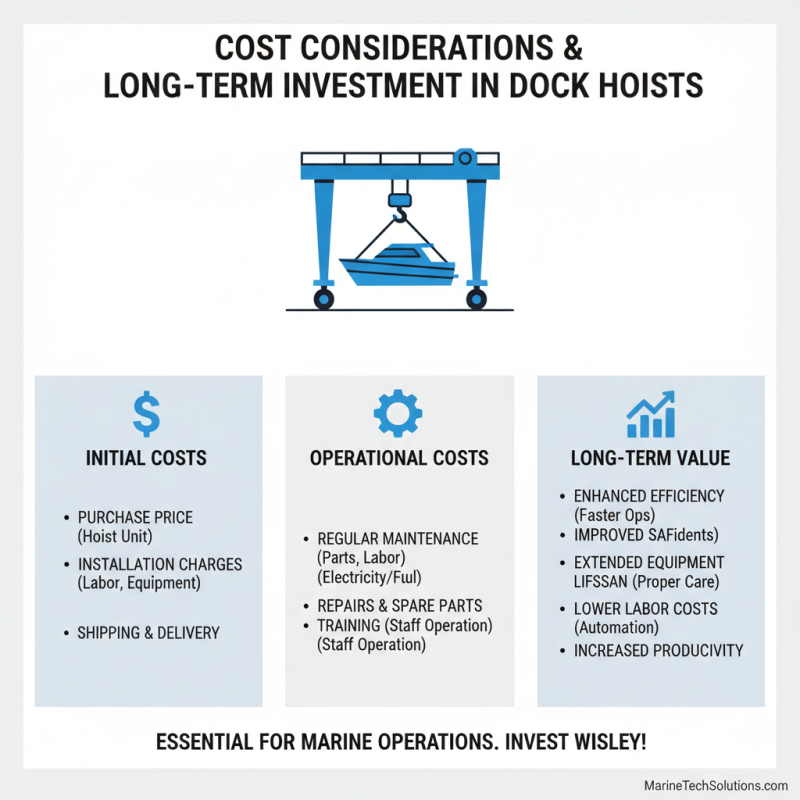
Cost Considerations and Long-term Investment in Dock Hoists
When investing in dock hoists, understanding cost considerations is crucial. These machines are essential for marine operations. They enhance efficiency and safety, yet their price can be significant. Buyers must assess their budget carefully. Initial costs include purchase price and installation charges. Regular maintenance also adds to the total expense.
Long-term investment is a vital aspect to consider. A well-chosen dock hoist can last for many years. While some models may seem cheaper upfront, higher maintenance costs can accumulate quickly. It's essential to evaluate total cost of ownership rather than just the purchase price. Buyers should also factor in potential downtime. Unreliable hoists can disrupt operations and lead to financial losses. The long-term reliability of a dock hoist reflects on the overall efficiency of the business.
In this evolving market, buyers must remain informed. Technology continues to advance, which can affect future costs and functionality. Keeping an eye on trends can help in making wiser choices. Making an informed decision today can significantly impact operational costs in the future. Think critically about each option and its long-term implications.