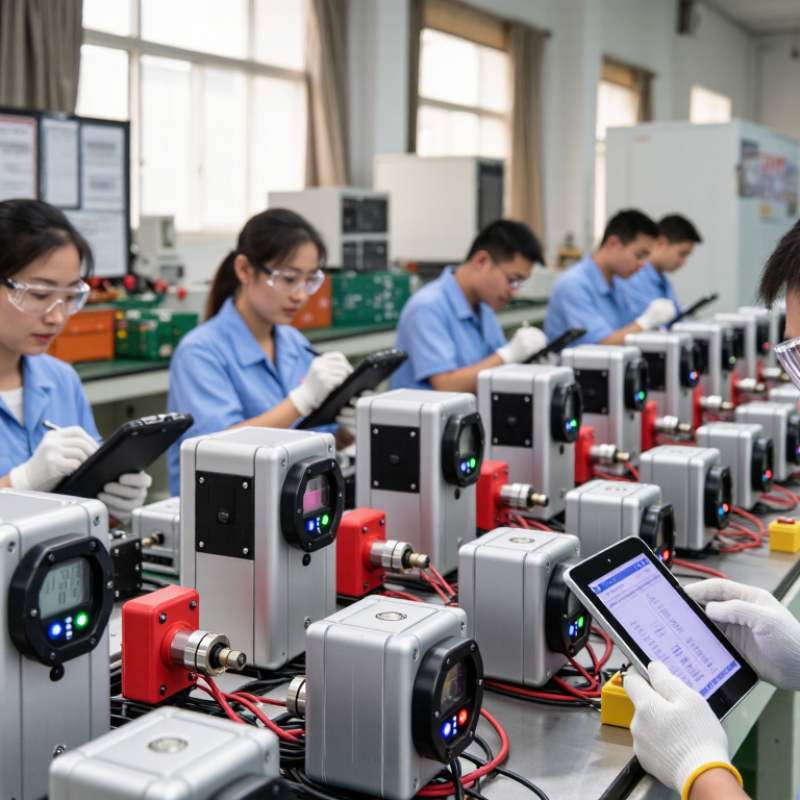
China Top LPG Gas Detector Manufacturers and Suppliers?
China has become a major sourcing destination for Lpg Gas Detector equipment. Its manufacturers supply residential, commercial, and industrial applications worldwide. However, “top” should mean more than low pricing. Buyers need dependable sensing, documented testing, stable production, and responsive technical support.
An effective detector should match the actual risk. LPG is heavier than air, so leaked gas can collect near floors, drains, and enclosed corners. A kitchen unit may require a clear audible alarm, while a factory system may need relay outputs, remote monitoring, explosion-protected construction, and multiple sensing points. Look for reliable catalytic or infrared sensors, suitable ingress protection, calibration records, and certifications accepted in the target market. Ask suppliers for sample test reports. Check their quality-control process. Visit the factory when possible.
James Reason, a leading human-factors and safety researcher, said, “We cannot change the human condition, but we can change the conditions under which humans work.” That principle fits LPG safety closely. Good equipment supports people, but it cannot replace installation discipline, regular calibration, ventilation, or emergency training. A detector mounted too high may respond slowly. A neglected sensor may create false confidence. This is where some supplier comparisons become incomplete. Price tables rarely show long-term maintenance needs, replacement intervals, or real alarm performance. Therefore, this guide examines China’s leading Lpg Gas Detector manufacturers and suppliers through practical evidence, technical capability, product reliability, certifications, and after-sales service. The goal is not to promote one company blindly. It is to help buyers make a safer, better-informed decision.
What Is an LPG Gas Detector and How Does It Work?
An LPG gas detector is a safety device that identifies leaked liquefied petroleum gas in indoor spaces. LPG usually contains propane or butane, which are heavier than air. Leaked gas may collect near floors, drains, or low cabinets. That detail affects detector placement.
Most detectors use a semiconductor or catalytic sensor. When LPG reaches the sensing element, its electrical properties change. The device compares this change with a preset alarm level. If the concentration becomes dangerous, it activates a sound and often a warning light. Some systems can also signal ventilation equipment or shutoff controls.
Correct installation requires practical judgment. Place the detector near a possible leak source, but follow the manufacturer’s specified height and distance. Avoid locations beside windows, cooking fumes, water spray, or strong airflow. Test the alarm regularly with its approved test method. Do not use a lighter or release gas deliberately.
A detector does not remove leaked LPG. It only provides an earlier warning. No sensor is perfect, and dust, aging, or poor calibration can reduce performance. I have seen users install detectors correctly but forget routine testing. That small oversight can weaken an otherwise reliable safety system. Replace the unit when its service life ends, and investigate every alarm instead of assuming it is a false signal.
Why China Is a Major LPG Gas Detector Manufacturing Hub
China has become a major LPG gas detector manufacturing hub through its dense industrial ecosystem. Its electronics supply chain is highly developed.
Sensors, circuit boards, displays, and alarm components are often sourced within nearby manufacturing regions. This proximity shortens development cycles and reduces transport delays.
Engineers can revise a detector design quickly. Production lines also support small and large orders. Tooling suppliers help customize enclosures, mounting parts, and control panels.
That flexibility matters. Cost helps, but price alone cannot prove reliability.
Reliable manufacturers treat calibration as a core production step. They check alarm response, sensor stability, wiring safety, and resistance to dust or moisture. Some facilities use controlled test chambers and certified gas samples during inspection.
A practical factory should provide traceable test records. It should also explain sensor replacement periods and maintenance requirements. Export experience can improve documentation, packaging, and communication with overseas buyers.
Still, not every supplier follows the same process. Some products look similar but use weaker sensors or limited quality checks. This weakness deserves attention.
Buyers should compare detection range, response time, alarm volume, ingress protection, and available interfaces. They should request sample testing before placing larger orders. Local installation rules and fire-safety requirements must also be reviewed. A detector may pass a factory test yet perform poorly when calibration, ventilation, or installation conditions are overlooked.
Key Types of LPG Gas Detectors Made in China
China’s LPG detector suppliers generally manufacture several sensor types for homes, kitchens, factories, and storage areas. The main choice is between catalytic-bead, infrared, semiconductor, and electrochemical designs. Catalytic-bead sensors respond quickly to combustible gas and suit industrial leak monitoring. Infrared sensors offer stable readings and resist oxygen-poor conditions. Semiconductor sensors cost less, but humidity and cleaning chemicals may affect accuracy. Portable detectors help technicians inspect valves, cylinders, and pipe joints. Fixed detectors protect rooms continuously. Wireless versions reduce installation work, although signal loss remains a practical concern.
The World LPG Association’s 2024 market statistics estimate global LPG demand at roughly 330 million tonnes in 2023. That scale increases the need for dependable detection around kitchens, warehouses, and filling facilities. For industrial use, buyers should check IEC 60079-29-1 compliance, alarm thresholds, response time, calibration records, and enclosure protection. Residential models should align with EN 50194-1 requirements and provide clear audible alarms. Chinese manufacturers also offer networked detectors with relay outputs, cellular communication, and cloud dashboards. These features are useful, but more electronics can create more failure points. No sensor is perfect. Dust, condensation, poor placement, and expired calibration can defeat an excellent detector. A sensible specification includes manual testing, scheduled calibration, visible alarm indicators, and replacement planning. Temperature compensation also deserves attention in cold storage or hot kitchens.
China Top LPG Gas Detector Manufacturers and Suppliers — Key Types of LPG Gas Detectors Made in China
LPG gas detectors are commonly available as fixed or portable instruments using catalytic-bead, infrared, or semiconductor sensing technologies. The chart below shows the lower explosive limits (LEL) of common LPG components, an important reference for detector calibration and alarm settings.
How to read the chart: The LEL is the lowest concentration of gas in air that can support combustion, expressed as a percentage by volume. LPG detectors commonly display gas concentration as a percentage of LEL, with alarm levels configured below the explosive range according to the application and applicable safety requirements.
How to Evaluate China’s Top Manufacturers and Suppliers
How to Evaluate China’s Top LPG Gas Detector Manufacturers and Suppliers
Evaluating LPG gas detector suppliers requires more than comparing prices. I check their manufacturing experience, technical staff, and product testing records. A reliable supplier should explain detection ranges, response times, alarm levels, and sensor lifespan clearly. Vague answers are warning signs.
Request samples before placing a large order. Test the detector near controlled LPG concentrations, not in an improvised environment. Check whether the alarm activates consistently and recovers after exposure. Ask for calibration certificates, inspection reports, and traceable serial numbers. Review enclosure protection, operating temperature, battery performance, and display readability. Small details matter in dusty workshops and poorly lit storage areas.
Supplier reliability also depends on documentation and after-sales support. Confirm whether manuals are accurate, replacement sensors are available, and technical replies arrive quickly. Inspect the factory through a live video call or an independent audit when possible. A polished website proves little. I once assumed a detailed catalog meant strong engineering, but the sample lacked clear calibration instructions. That mistake was preventable. Some evaluation points remain subjective, especially when test data is incomplete. Record every claim and compare it with physical results. A dependable manufacturer accepts questions, admits limitations, and improves unclear procedures rather than hiding them.
Quality Standards, Customization, Pricing, and Export Support
China’s LPG gas detector suppliers serve a large and safety-sensitive market. The WLPGA 2023 Statistical Review places global LPG demand above 300 million tonnes annually, with billions of users worldwide. That scale makes dependable detection essential in kitchens, cylinder stores, vehicles, and industrial filling areas.
Quality should begin with documented testing, not a polished brochure. Buyers should request evidence of calibration, sensor response time, alarm accuracy, and enclosure protection. IEC 60079-29-1 provides key performance guidance for flammable-gas detectors. For domestic applications, EN 50194-1 is also a useful reference. Suppliers with ISO 9001 systems may offer stronger process control, but certification alone proves little. Ask for recent test records.
Customization can include LPG sensor ranges, relay outputs, wireless communication, display language, cable length, and mounting design. However, excessive customization may delay production and complicate spare-parts support. Pricing depends on sensor type, alarm controller, certification, packaging, and order volume. A very low quote can hide shorter sensor life or weak calibration control. I would compare total ownership cost, not only unit price. Export support should include English manuals, packing lists, certificates, labeling, replacement sensors, and clear after-sales response times. Some suppliers promise global delivery, yet provide limited documentation. That gap deserves careful questioning.
| Evaluation Dimension | Typical Market Data for LPG Gas Detectors | What Buyers Should Verify | Export and Application Relevance |
|---|---|---|---|
| Target Gas | Liquefied petroleum gas, primarily propane and butane. LPG is heavier than air and may accumulate near floors, pits, and other low areas. | Confirm the product is calibrated for the intended LPG composition and installation environment. | Sensor selection and mounting height should follow the applicable installation code and risk assessment of the destination country. |
| Detection Principle | Catalytic-bead sensors are widely used for combustible-gas detection. Infrared sensors are also available for applications requiring reduced poisoning risk or lower maintenance. | Check sensor technology, expected service life, resistance to silicone or sulfur compounds, and replacement procedure. | The sensing principle affects certification, calibration intervals, operating cost, and suitability for industrial or residential use. |
| Typical Detection Range | Common combustible-gas detectors are specified from 0 to 100% LEL. Many alarms are configured around low and high alarm points such as 10% and 20% LEL, subject to the product design and local requirements. | Verify the stated measurement range, alarm thresholds, accuracy, repeatability, and response time in the technical datasheet. | Alarm settings must not be assumed to be interchangeable between countries or application types. |
| Accuracy and Response | Typical published specifications may include accuracy of approximately ±3% to ±5% of full scale and a response time commonly below 30 seconds, depending on sensor type and test conditions. | Request test conditions, calibration gas concentration, environmental temperature, humidity, and airflow used for the performance claim. | Performance values should be compared using the same test method rather than by headline figures alone. |
| Applicable Product Standards | Relevant standards can include IEC 60079-29-1 for performance requirements of gas detectors, IEC 60079-29-2 for selection, installation, use, and maintenance, and applicable national standards such as GB 15322 series where required. | Confirm the exact edition, product scope, test laboratory, certificate number, and whether the certificate applies to the proposed model. | Standards and approvals vary by destination, installation zone, and whether the detector is for domestic, commercial, or hazardous-area use. |
| Ingress Protection | Common enclosure ratings include IP30, IP54, IP65, and IP66. The appropriate rating depends on indoor conditions, outdoor exposure, dust, water, and cleaning methods. | Check that the IP rating is supported by a valid test report and that cable glands, connectors, and installation accessories maintain the stated protection. | Outdoor and industrial projects generally require stronger environmental protection than ordinary indoor installations. |
| Electrical Supply | Common configurations include 12 VDC, 24 VDC, and 100–240 VAC, with some models supporting a selectable or wide input range. | Verify voltage tolerance, power consumption, polarity protection, backup power options, and terminal or connector type. | Power configuration should match the buyer’s control panel, building supply, and local electrical requirements. |
| Output and Communication | Available outputs may include relay contacts, 4–20 mA, RS-485, and digital communication protocols. Stand-alone units may use audible and visual alarms. | Confirm relay rating, signal behavior during fault conditions, wiring diagrams, address settings, and communication protocol documentation. | Output compatibility is critical when integrating detectors with gas control panels, ventilation systems, or emergency shut-off valves. |
| Alarm and Fault Indication | Typical features include audible sounders, red/yellow/green status indicators, alarm latching or reset functions, sensor-fault indication, and relay outputs. | Verify alarm volume, visual indicator meaning, reset method, power-failure behavior, and low-sensor or calibration-fault alerts. | Clear fault indication helps reduce maintenance errors and supports safety inspections after installation. |
| Operating Conditions | Many commercial products are designed for approximately -20°C to +50°C or -10°C to +55°C, with allowable relative humidity commonly up to 90% non-condensing. | Compare the guaranteed operating range with the actual climate, condensation risk, altitude, vibration, and chemical exposure. | Temperature and humidity limits may affect sensor drift, battery performance, enclosure integrity, and certification validity. |
| Calibration and Maintenance | Functional checks and calibration are commonly recommended at intervals determined by the manufacturer, risk assessment, local regulation, and sensor technology. Calibration normally uses a certified test gas. | Ask for calibration instructions, recommended test gas, replacement sensor availability, zero-adjustment procedure, and maintenance records. | Accessible calibration and spare-parts support can significantly reduce the total cost of ownership after export. |
| Customization Options | Common options include enclosure color, language on labels, alarm thresholds, cable entry, connector type, display, relay logic, output type, mounting bracket, and private-label packaging. | Request a written specification approval before production and confirm whether customization changes certification or minimum order quantity. | Electrical and software changes may require additional testing, documentation, samples, and lead time. |
| Indicative Purchase Price | Approximate factory-level ranges are often about US$15–45 for basic stand-alone units, US$35–120 for networked or industrial fixed detectors, and higher for certified hazardous-area systems or integrated packages. | Compare prices on the same basis, including sensor type, certification, calibration, accessories, packaging, quantity, and delivery term. | These are indicative ranges only; actual quotations vary by specification, order volume, testing, exchange rates, and shipping conditions. |
| Minimum Order Quantity | Sample orders may be available from a few units. Standard production orders commonly begin at tens or hundreds of units, while customized projects may require a higher quantity. | Confirm sample fees, sample lead time, refundable tooling or engineering charges, and the minimum quantity for customized labels or firmware. | Small pilot orders can validate performance and documentation before a larger export shipment. |
| Production Lead Time | Standard products are often quoted at approximately 7–20 working days after confirmation. Customized products may require around 20–45 working days or longer. | Confirm whether lead time includes calibration, inspection, special packaging, certification review, and approval of artwork. | Production schedules should be coordinated with vessel bookings, import permits, and project installation dates. |
| Quality-Control Documents | Common documents include datasheets, user manuals, calibration records, inspection reports, packing lists, certificates of conformity, and product traceability information. | Check model numbers, serial-number consistency, test criteria, document language, and whether documents are issued for the shipped batch. | Complete documentation supports customs clearance, site acceptance, maintenance training, and future audits. |
| Export Packaging | Typical packaging includes an individual protective box, moisture and shock protection, carton labeling, installation accessories, and an export carton suitable for palletization. | Confirm carton dimensions, gross and net weight, drop protection, humidity control, barcode or label requirements, and spare-part packing. | Proper packaging reduces damage risks during multimodal transportation and simplifies warehouse receiving. |
| Shipping and Trade Terms | Common trade terms include EXW, FOB, CIF, and DAP. Air, sea, courier, and consolidated freight may be available depending on quantity and destination. | Confirm the named place, insurance responsibility, export customs responsibility, delivery schedule, and import-tax treatment. | The final landed cost should include freight, insurance, customs duties, local taxes, and destination handling fees. |
| Recommended Supplier Verification | Review factory capability, product test records, sample performance, sensor traceability, after-sales process, spare-parts policy, and consistency between certificates and shipped models. | Request independent verification where required and avoid relying only on catalog claims or copied certificates. | A documented verification process helps reduce risks related to non-compliant products, delayed shipments, and unavailable replacement sensors. |
Note: Price, lead-time, performance, and certification information is indicative industry reference data. Final specifications must be confirmed against the applicable product certificate, technical datasheet, local regulations, and approved purchase order.