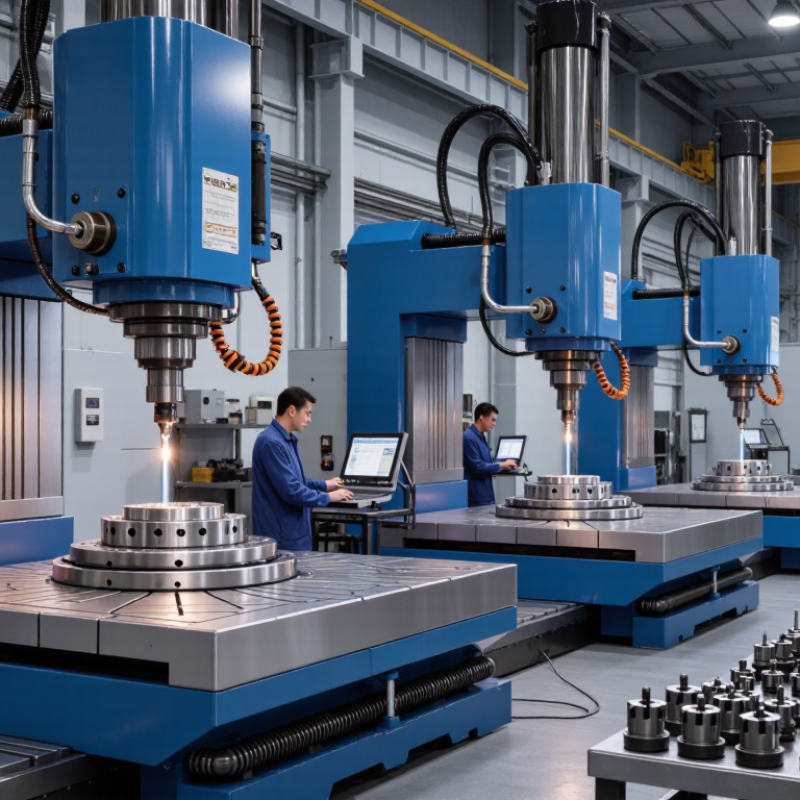
China Top Deep Drill Machine Manufacturers and Suppliers
China has become an important sourcing base for Deep Drill Machine equipment, serving mold makers, automotive plants, energy manufacturers, and precision engineering workshops. This article introduces leading Chinese manufacturers and suppliers, with attention to machine structure, drilling depth, spindle stability, coolant delivery, automation, and after-sales support.
A useful manufacturing perspective comes from Professor Friedrich Klocke, a recognized production-engineering specialist: “Precision begins with process control, not final inspection.” This principle matters when evaluating a Deep Drill Machine. A stable machine should guide a long tool through hard steel without excessive vibration, heat, or hole deviation. Buyers should examine spindle runout, drilling diameter ranges, BTA or gun-drilling capability, filtration systems, and real production samples. Factory visits can reveal details that brochures often hide. Watch the coolant flow. Listen for irregular vibration. Inspect the finished hole wall.
Chinese suppliers may offer competitive pricing, flexible configurations, and strong customization capabilities. However, low cost alone is not proof of value. Some listings provide incomplete technical data, and communication may become difficult after installation. That risk deserves attention. A reliable supplier should explain tolerances clearly, provide test reports, publish component brands, and support commissioning with trained engineers.
The following overview compares China’s top Deep Drill Machine manufacturers and suppliers through practical criteria. These include engineering experience, manufacturing quality, export capability, customization, delivery reliability, and service responsiveness. No supplier is perfect. The right choice depends on material, hole geometry, production volume, budget, and the customer’s willingness to verify every technical claim.
Deep Drill Machines: Types, Functions, and Industrial Applications
Deep drill machines create narrow, accurate holes far deeper than conventional drilling equipment. Their design supports stable cutting, controlled chip removal, and reliable coolant delivery. Common types include gun drilling machines, BTA deep hole systems, and ejector drilling machines. Gun drilling suits smaller diameters and precise holes. BTA systems handle larger diameters and demanding production volumes. Ejector systems help when internal chip evacuation needs additional support.
These machines serve aerospace components, hydraulic cylinders, automotive shafts, energy equipment, and precision molds. They can drill through alloy steel, stainless steel, aluminum, and other engineered materials. During operation, the cutting tool advances steadily while high-pressure coolant carries chips away. This reduces heat, vibration, and hole deviation. However, coolant pressure, tool geometry, and workpiece hardness must match carefully. A small mismatch may create scratches, oversize holes, or premature tool wear.
In machining practice, real performance depends on more than advertised depth. Operators should inspect spindle accuracy, guide support, filtration, control functions, and service response. A supplier’s specification sheet may look convincing, but test drilling reveals more. Ask for sample results, tolerance data, maintenance details, and operator training. Shorter setups can improve output. Not always. Poor alignment can erase those gains within hours. Regular inspection remains essential, especially when drilling long channels in heavy components.
Key Criteria for Evaluating Chinese Deep Drill Machine Manufacturers
When evaluating Chinese deep drill machine manufacturers, begin with the machine’s real working range. Check drilling depth, hole diameter, material hardness, and required tolerance. A machine designed for steel molds may not suit long aluminum components. Ask for sample results from similar workpieces, not only catalog specifications. Numbers can mislead.
Assess structural rigidity, spindle accuracy, guideway protection, and coolant delivery. Deep drilling creates heat and difficult chip evacuation. Reliable equipment should maintain stable pressure and remove chips without damaging the hole wall. Request inspection records, spindle runout data, and a filmed trial cut. Ask for evidence.
Manufacturer experience matters, but experience must match your application. Review factory procedures, operator training, quality-control stages, and traceability for critical parts. A supplier should explain how it handles vibration, tool breakage, and tolerance changes. Clear answers build confidence. Vague promises do not.
Also examine service capacity before placing an order. Confirm installation support, response times, spare-parts availability, software updates, and training documents. A low purchase price can become expensive when a small sensor stops production. I would compare at least three suppliers using the same technical checklist. That process is slower, yet fairer. No supplier is perfect. Even a strong factory may underestimate commissioning time or local service needs. Keep those risks visible in the contract, and require acceptance testing with measurable standards.
China Top Deep Drill Machine Manufacturers and Suppliers - Key Criteria for Evaluating Chinese Deep Drill Machine Manufacturers
A practical, brand-neutral framework for comparing deep drill machine manufacturers and suppliers in China.
| Evaluation Dimension | What to Evaluate | Reference Benchmark or Requirement | Why It Matters | Recommended Verification Evidence |
|---|---|---|---|---|
| Machine Configuration | Confirm whether the machine is designed for gun drilling, BTA drilling, ejector drilling, or a combined process. | The process must match the required hole diameter, depth-to-diameter ratio, workpiece material, and production volume. | Different deep drilling systems use different chip-removal and coolant-delivery methods, which directly affect hole quality and productivity. | Request a technical configuration sheet, process description, tooling compatibility list, and application references for comparable workpieces. |
| Drilling Diameter and Depth Capacity | Review the supported hole-diameter range, maximum drilling depth, workpiece length, and workpiece weight. | Capacity should exceed the largest required workpiece by a practical operating margin rather than only meeting the nominal limit. | Operating at the extreme limit can reduce rigidity, tool life, accuracy, and overall process stability. | Check dimensional drawings, machine specifications, load calculations, and a witnessed trial using the intended material and hole geometry. |
| Hole Accuracy and Surface Finish | Evaluate hole diameter tolerance, straightness, roundness, cylindricity, concentricity, and achievable internal surface finish. | Acceptance values should be stated in measurable units such as millimetres, micrometres, or Ra, and tied to a defined test condition. | Deep holes can experience tool deflection, vibration, thermal drift, and chip-related defects over long drilling distances. | Require inspection reports, coordinate-measuring results, bore-gauge records, surface-finish measurements, and a written acceptance protocol. |
| Spindle and Feed Performance | Assess spindle speed range, spindle power, torque, feed-force capability, feed-rate range, and interpolation performance. | The available speed and torque must cover the selected tool diameter, tool material, workpiece material, and cutting-fluid conditions. | Insufficient torque or unstable feed control may cause tool breakage, poor straightness, chatter, or inconsistent cycle times. | Request motor and spindle data, load curves, feed-axis specifications, and a cutting test at the proposed operating parameters. |
| Coolant and Chip Removal | Review coolant pressure, flow rate, filtration, tank capacity, temperature control, and chip evacuation design. | The system should provide stable high-pressure coolant delivery and filtration suitable for the selected drilling method and material. | Reliable coolant delivery helps control cutting temperature, lubricate the tool, evacuate chips, and reduce the risk of blockage or tool failure. | Verify pump curves, filter rating, pressure and flow measurements, tank specifications, chip-conveyor details, and maintenance intervals. |
| Machine Rigidity and Thermal Stability | Inspect bed construction, guideways, spindle support, workholding, vibration control, and thermal-compensation provisions. | The structure should maintain alignment and repeatability during long drilling cycles and changing thermal conditions. | Structural vibration and thermal expansion can affect hole straightness, dimensional accuracy, surface finish, and tool life. | Request foundation requirements, static-load information, alignment records, vibration-test results, and a continuous-cycle demonstration. |
| CNC Control and Automation | Evaluate programmable drilling cycles, feed and speed control, alarm functions, data access, tool monitoring, and automation interfaces. | The control system should support repeatable recipes, parameter protection, fault diagnosis, and integration with the intended production workflow. | Effective controls reduce operator variation and improve repeatability, traceability, and production efficiency. | Request a control-system demonstration, sample programs, alarm lists, backup procedures, remote-support capability, and interface specifications. |
| Tooling Compatibility | Confirm compatibility with gun drills, BTA heads, guide pads, tool holders, drill tubes, and replaceable cutting inserts. | The machine should accommodate the tooling standards and consumables available in the buyer’s target market. | Limited tooling compatibility can increase operating costs, extend procurement times, and restrict process optimization. | Review tool-holder drawings, interface dimensions, recommended tooling tables, sample tools, and consumable replacement procedures. |
| Quality Management | Assess incoming inspection, in-process inspection, final testing, calibration control, nonconformance handling, and document retention. | The supplier should operate a documented quality system and provide traceable inspection records for critical machine components. | Documented quality controls reduce variation between machines and make corrective actions easier to verify. | Request quality-system certificates, inspection plans, calibration records, factory-acceptance-test procedures, and sample final inspection reports. |
| Safety and Compliance | Review guarding, emergency stops, electrical protection, interlocks, coolant containment, noise control, and operating instructions. | The machine should comply with the safety and electrical requirements applicable in the destination country. | Compliance affects worker safety, import clearance, installation approval, insurance, and long-term legal risk. | Obtain risk-assessment documents, electrical schematics, conformity declarations where applicable, safety-test records, and manuals in the required language. |
| Factory Acceptance Testing | Determine whether the supplier can conduct a formal test before shipment using agreed material, tooling, parameters, and inspection methods. | The acceptance test should include measurable dimensional, functional, safety, and performance criteria signed by both parties. | A documented test reduces the risk of receiving equipment that cannot meet the intended application requirements. | Use a signed FAT protocol, test-piece drawings, inspection results, video records, punch lists, and closure documentation. |
| Installation and Commissioning | Evaluate installation support, foundation requirements, levelling, alignment, training, trial production, and commissioning responsibility. | Responsibilities, travel requirements, working days, utilities, and completion criteria should be stated clearly in the contract. | Deep drilling machines often require precise installation and process setup to achieve their specified accuracy. | Request an installation plan, utility checklist, commissioning schedule, training agenda, and signed site-acceptance record. |
| After-Sales Service and Spare Parts | Assess response time, remote diagnostics, field-service coverage, spare-parts availability, and recommended maintenance stock. | Service-level commitments should define response times, escalation channels, warranty scope, and parts-support periods. | Downtime can be costly when specialized pumps, seals, sensors, control components, or drilling accessories are unavailable. | Review warranty terms, spare-parts lists, service procedures, escalation contacts, maintenance schedules, and customer references. |
| Total Cost of Ownership | Compare purchase price with tooling, coolant, filtration, energy, maintenance, labour, training, freight, installation, and downtime costs. | Select the proposal with the strongest verified cost-per-part or cost-per-hole result, not simply the lowest initial price. | Operating and maintenance costs may exceed the difference between competing purchase prices over the machine’s service life. | Request a five-year operating-cost model, energy data, consumable estimates, preventive-maintenance costs, and production-cycle calculations. |
| Delivery and Export Capability | Review manufacturing lead time, inspection milestones, packing method, shipping documents, installation sequence, and export experience. | The supplier should provide a milestone-based schedule with clear responsibilities for documentation, transport, customs, and site readiness. | Large machine tools require careful logistics planning because of weight, dimensions, lifting requirements, and site-access limitations. | Check the production schedule, packing list, lifting drawings, shipping terms, insurance arrangements, and sample export documentation. |
Note: The benchmarks above are general purchasing guidelines. Final acceptance values should be agreed in writing according to the workpiece, drilling process, applicable standards, and destination-country requirements.
Leading China-Based Deep Drill Machine Manufacturers and Suppliers
China Top Deep Drill Machine Manufacturers and Suppliers
Leading China-based deep drill machine manufacturers and suppliers serve industries that require accurate, long-hole machining. Their equipment may support oil passages, hydraulic cylinders, mold components, and large steel parts. A capable manufacturer should explain drilling depth, hole diameter, tolerances, spindle power, and workpiece limits clearly. Technical drawings matter more than attractive photographs. Ask for machining samples and measured inspection reports. These details reveal whether the supplier understands real production demands.
Tips: Check the machine’s guideway design, coolant filtration, chip removal, and control system. Request videos showing a complete drilling cycle, not only the finished surface. Confirm installation support, spare-part availability, training, and response times. Compare the full operating cost, including tooling and maintenance. A low quotation can hide expensive upgrades later.
Reliable China-based suppliers usually combine engineering support with organized production and quality checks. Look for documented testing, traceable components, and clear acceptance standards. Communication is another practical test. Can the supplier answer tolerance questions without vague promises? Can it adjust the design for your material and workshop layout? No checklist is perfect. I would still verify critical claims through an independent inspection before shipment. A machine that drills quickly but leaves unstable hole walls is not a successful purchase. Surface finish, repeatability, vibration control, and operator safety deserve equal attention. Small omissions can become costly during daily production.
Manufacturing Standards, Customization, and Quality Control
Deep drill machine manufacturers and suppliers should treat standards as working controls, not decorative certificates. ISO 230-1 and ISO 230-2 provide methods for checking machine geometry, positioning accuracy, and repeatability. The 2023 ISO Survey recorded 1,265,216 ISO 9001 certificates worldwide. Yet certification alone cannot prove a stable deep bore. A supplier should provide calibration records, material traceability, and inspection results for every critical batch.
Customization starts with the hole itself. Bore diameter, depth-to-diameter ratio, workpiece hardness, coolant pressure, and chip evacuation determine the machine design. A 1,200 mm bore may require different tooling from a 300 mm production hole. The quotation should identify spindle speed, feed range, tool interface, filtration capacity, and achievable straightness.
Vague promises create expensive surprises. Ask for a sample test.
Quality control needs measurable evidence. Inspectors can use calibrated plug gauges, air gauges, CMM equipment, and surface-finish instruments. ISO/IEC 17025 accreditation strengthens laboratory reliability. Process capability data, such as Cpk values, can reveal drift before operators see visible defects. Still, Cpk is not magic. It depends on honest sampling and stable production. A polished report may hide poor fixture alignment. This is where supplier audits, witnessed trials, and retained samples matter. The 2024 Deloitte smart manufacturing survey identified quality improvement as a leading expected benefit, but implementation remains uneven. Good suppliers admit limitations, document deviations, and revise the process when test results disagree.
How to Select a Reliable Chinese Deep Drill Machine Supplier
China Top Deep Drill Machine Manufacturers and Suppliers
Selecting a Chinese deep drill machine supplier requires evidence, not impressive photographs. Start with the hole. Ask for documented results on diameter, depth, straightness, surface finish, and cycle time. A serious supplier should provide machine specifications, spindle power, coolant pressure, tool guidance, and test-piece records. Request a video showing the complete drilling cycle, including chip removal and tool replacement.
Supplier reliability also depends on factory controls. ISO’s 2023 Survey recorded more than one million ISO 9001 certificates worldwide, but certification alone does not prove machining capability. Check the certificate scope, issuing body, expiry date, and production address. Request inspection records for spindle runout, axis positioning, vibration, and temperature stability. These details expose weaknesses that brochures often hide.
In my experience, a live factory audit is more useful than a long product catalogue. Still, audits can miss night-shift problems.
Review after-sales support before signing. Confirm response times, spare-part availability, remote diagnosis, installation training, and warranty boundaries.
The International Federation of Robotics reported 541,302 industrial robots installed globally in 2023, showing how quickly automated production is expanding. A deep drill supplier should explain how its machine integrates with loading systems, sensors, and production data.
Ask for references from comparable materials and hole depths. Verify them independently. Also compare acceptance-test methods, because a supplier may measure precision under easier conditions than your factory.