Top 10 Ball End Mills for Precision Machining in 2026?
The demand for precision machining continues to rise, intensifying the need for high-performance tools like the Ball End Mill. According to a recent report by Machining Insights, the global market for end mills is projected to reach $3.5 billion by 2026. Industry experts emphasize the importance of selecting the right tooling for enhanced efficiency. Dr. Alan Sweeney, a renowned expert in machining technologies, stated, “A quality Ball End Mill can significantly improve surface finishes and reduce machining time.”
Choosing an optimal Ball End Mill is not just about cost, but about performance and reliability. Different materials and coatings influence the tool's lifespan and efficiency, making their selection critical. The inability to select the right tool can lead to higher operational costs and decreased productivity. Recent data shows that improper tooling accounts for up to 25% of machining inefficiencies.
With ongoing advancements in milling technology, staying informed is more important than ever. Understanding the nuances of various Ball End Mill options is essential for manufacturers aiming for competitive advantage. As new designs and technologies emerge, reflection on previous choices and open-mindedness towards innovations will be key to future success.
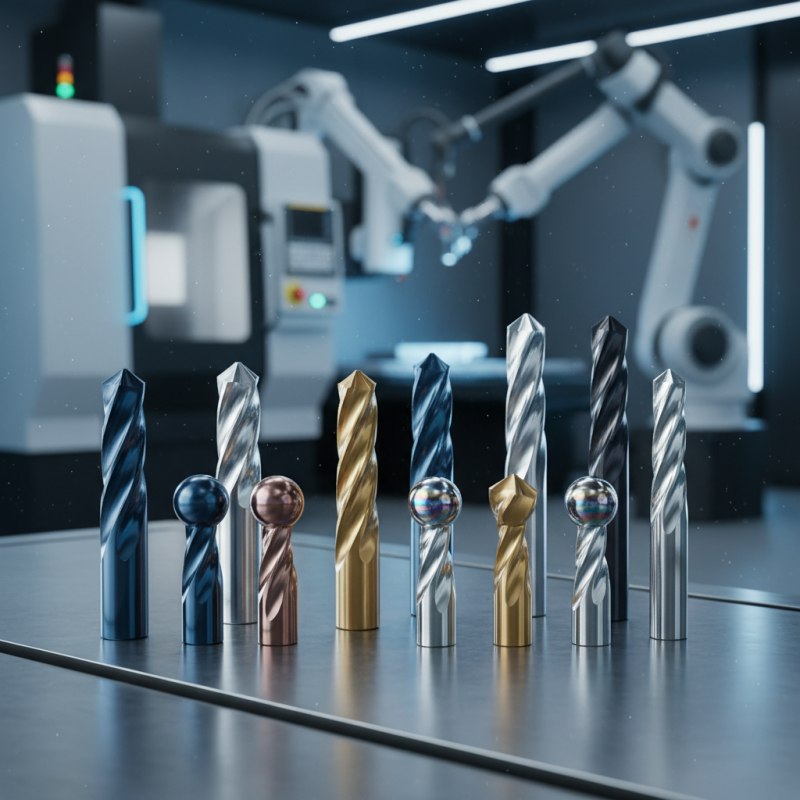
Overview of Ball End Mills and Their Applications in Precision Machining
Ball end mills are essential tools in precision machining. They help achieve smooth, rounded edges and intricate designs. According to a recent industry report, the demand for precision machining tools is expected to grow by 6% annually through 2026. This growth emphasizes the significance of ball end mills in various sectors, including aerospace, automotive, and medical devices.
These mills excel when working with complex geometries and contours. They provide superior finishing quality, which is vital for high-precision components. The versatility of ball end mills makes them ideal for deep machining, reducing tool wear. However, not all ball end mills perform equally. Some designs can lead to chipping or inconsistent finishes. Users often struggle with this issue, impacting project timelines.
The choice of material and diameter influences performance. For example, a smaller diameter can enhance detail but may sacrifice strength. This detail is crucial for applications where both strength and precision are needed. A recent study reported that improper tooling can lead to a 30% increase in production costs. Thus, making informed decisions about ball end mills is key to optimizing machining processes.
Key Features to Consider When Selecting a Ball End Mill
When selecting a ball end mill, key features play a crucial role in precision machining. One of the main factors is the diameter of the tool. Typically, smaller diameters are used for intricate designs, while larger sizes are preferred for efficient material removal. According to a recent industry report, using the correct diameter can improve performance by up to 30% in complex milling operations.
Another critical aspect is the material of the end mill. Carbide tools are favored for their hardness and longevity. They often perform better under high-speed conditions. Reports indicate that carbide mills can last 50% longer than high-speed steel counterparts. However, the cost of carbide is significantly higher, which may not suit every budget.
Flute design must also be considered. Varying the number of flutes can alter cutting efficiency and surface finish. For delicate materials, two-flute designs help prevent excessive heat buildup. In contrast, four-flute options can speed up production for tougher materials. Manufacturers have found that optimizing flute design can boost efficiency by 20%, highlighting the need for careful consideration in tool selection.
Top 10 Ball End Mills for Precision Machining in 2026
| Model | Diameter (mm) | Length (mm) | Material | Coating | Max RPM |
| Ball End Mill A | 6 | 50 | Carbide | TiN | 20,000 |
| Ball End Mill B | 8 | 60 | High-Speed Steel | AlTiN | 18,000 |
| Ball End Mill C | 10 | 65 | Carbide | ZrN | 22,000 |
| Ball End Mill D | 12 | 70 | Carbide | TiAlN | 19,000 |
| Ball End Mill E | 16 | 80 | High-Speed Steel | CrN | 15,000 |
| Ball End Mill F | 20 | 90 | Carbide | TiN | 21,000 |
| Ball End Mill G | 25 | 100 | High-Speed Steel | AlTiN | 16,000 |
| Ball End Mill H | 30 | 110 | Carbide | ZrN | 14,000 |
| Ball End Mill I | 35 | 120 | High-Speed Steel | TiAlN | 12,000 |
| Ball End Mill J | 40 | 130 | Carbide | CrN | 10,000 |
Top 10 Ball End Mills for Precision Machining in 2026: A Comparison
When selecting ball end mills for precision machining, there are various factors to consider. The choice of material, coatings, and geometry can significantly impact the milling process. High-speed steel and carbide are popular choices due to their hardness and durability. Each offers unique benefits, making them suitable for different applications.
Geometry plays a crucial role in performance. A larger ball diameter may achieve a smoother finish but can limit detail work. In contrast, a smaller diameter allows for intricate cuts but might require slower feeds. It’s essential to strike a balance based on specific machining requirements.
Additionally, coating can enhance tool life. Some coatings reduce friction and improve chip removal, which is vital during long machining runs. Yet, coatings may not always be necessary for simpler tasks. Machinists often find themselves weighing these factors against operational costs. Finding the right balance can be tricky, and sometimes, the ideal tool might not exist. Continuous learning and adaptation are key in the ever-evolving landscape of precision machining.
Performance Metrics: Evaluating Cutting Efficiency and Tool Life
In precision machining, choosing the right tool is crucial. Ball end mills play a significant role. They shape various materials with finesse. Evaluating their performance makes all the difference. Cutting efficiency and tool life are key metrics. A well-performing tool cuts smoothly and lasts longer. It minimizes downtime and boosts productivity.
Cutting efficiency is influenced by geometry. The design of the cutter impacts chip removal. A sharp edge enhances performance. Tool life varies based on material and conditions. Some tools wear out quickly, which is a concern. Others maintain their edge longer but may have limits in specific applications. Balancing these factors is essential.
Regular audits of tool performance can reveal insights. Tracking wear patterns helps in making informed choices. Selecting a tool that meets specific machining needs is important, but sometimes it’s trial and error. Each operation is unique, and there’s always room for improvement. A good approach combines data analysis with hands-on experience.
Future Trends in Ball End Mill Technology and Innovations
The future of ball end mill technology is evolving rapidly. Innovations are making these tools more efficient and versatile. One promising trend is the development of advanced coatings. These coatings can improve wear resistance and extend tool life. Manufacturers are experimenting with new materials also. This could lead to lighter and stronger end mills suitable for high-speed applications.
Automation in machining is another key trend. Smart tools can now communicate with machines. They provide real-time data on performance and wear. This feedback loop helps in optimizing machining processes. However, integrating such technologies remains a challenge. Not all shops have the resources to adapt quickly.
Sustainability is gaining attention as well. Companies are looking for eco-friendly manufacturing methods. Biodegradable lubricants and recyclable materials are being explored. Still, achieving sustainability without sacrificing performance is complex. As demands grow, the balance will require careful consideration. These trends show a dynamic shift in the industry, marking an exciting era for precision machining.
Top 10 Ball End Mills for Precision Machining in 2026