
10 Tips for Choosing a Commercial Kitchen Range
Choosing a Commercial Kitchen Range is a performance decision, not merely a purchasing task. The right model must match menu volume, cooking methods, ventilation capacity, staff movement, and available fuel. ENERGY STAR reports that restaurants can use five to seven times more energy per square foot than other commercial buildings. That makes burner efficiency, insulation, controls, and idle performance financially important. Small details matter.
Ed Norman, a respected restaurant designer and author of Restaurant Design and Development, describes the kitchen as “the engine of the restaurant.” His observation remains practical. A range that heats unevenly can slow service, damage delicate sauces, and create visible inconsistency on the plate. A model that is difficult to clean can quietly increase labor time each evening. Still, equipment specifications do not tell the whole story. Real kitchens are crowded, rushed, and occasionally poorly organized.
The National Restaurant Association’s 2024 State of the Restaurant Industry report highlights persistent pressure from food, labor, and operating costs. Therefore, our ten tips examine more than output ratings. They consider recovery time, pan capacity, ergonomic spacing, maintenance access, energy use, and total ownership cost. U.S. Department of Energy guidance also supports evaluating commercial foodservice equipment through efficiency and operating practices, not purchase price alone. Some recommendations may feel obvious. Others require careful measurement on site. That is where many buying decisions become imperfect. A range can look powerful in a showroom, yet perform poorly beside an undersized hood or an overcrowded prep line.
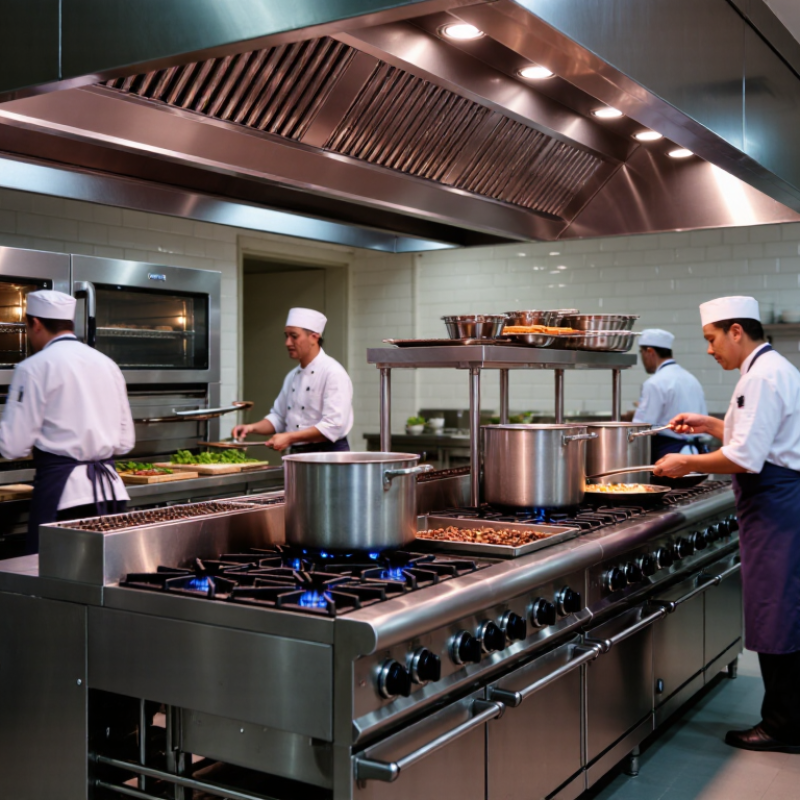
Define the Kitchen’s Cooking Capacity and Production Needs
Before choosing a commercial kitchen range, define what the kitchen must produce each hour. A small café serving 40 breakfasts needs different capacity from a hotel kitchen plating 300 meals. Review sales records, menu cycles, peak tickets, and preparation schedules from real service days. Do not rely on average volume alone. The busiest thirty minutes often determine the range size, burner count, and oven capacity. Observe where pans wait, where cooks queue, and which dishes slow the pass.
Translate those observations into measurable needs: portions per hour, pan dimensions, cooking times, and simultaneous tasks. A kitchen producing 120 lunches may need several burners running while an oven roasts vegetables and holds protein. A range with impressive output can still fail if its oven is too shallow or recovery is slow. Ask experienced cooks to test a representative service, not an empty showroom demonstration. Record temperatures, batch times, and control access during a rush.
Leave practical capacity for growth, but avoid equipment that consumes valuable floor space. Unused burners still require cleaning, ventilation, and maintenance. That estimate is rarely perfect. Menus change, staffing fluctuates, and unexpected orders expose weak assumptions. Recheck the plan against the layout, utility supply, extraction capacity, and safe working clearances. A qualified technician should verify those requirements before installation.
Compare Range Types, Sizes, and Burner Configurations
Choosing a commercial kitchen range starts with the work happening around it. Gas ranges offer quick visual control and strong heat, while electric units provide steady temperatures. Induction heats pans efficiently but requires compatible cookware. A mixed range can balance speed and flexibility. Compare these types against your menu, staff skills, and available utilities.
Measure the cooking line, not just the empty wall. A 24-inch range suits limited production, while 36- or 48-inch models support several pans at once. Leave clearance for handles and movement. Count your burners carefully. Four medium burners may outperform six crowded burners in a small kitchen. Match burner output to your stockpots, sauté pans, and simmering tasks. A powerful burner is not always the better choice.
Inspect grate stability, control placement, cleaning access, and oven capacity. Heavy grates should remain steady when a full pot moves across them. Controls must stay away from busy handles and splashing oil. Ask whether the oven fits your sheet pans. Check ventilation needs before ordering. Local electrical, gas, and fire requirements can change the installation plan. I once underestimated side clearance; the range worked, but service access became awkward. That mistake is easy to repeat. Plan for cleaning, repairs, and future menu changes, not only today’s cooking volume.
Commercial Kitchen Range Options: Typical Burner Counts by Width
Commercial ranges are commonly specified by width and cooking-surface configuration. The chart compares typical open burners with griddle sections across commonly available range sizes.
How to use this comparison: Open burners are suited to pots and pans, while griddle sections provide continuous flat cooking space. Larger ranges generally support more burners or a combination of burners and griddle space, but exact layouts vary by model and installation requirements.
Evaluate Fuel Sources, Heat Control, and Energy Efficiency
10 Tips for Choosing a Commercial Kitchen Range
Evaluate Fuel Sources, Heat Control, and Energy Efficiency
Choosing a commercial kitchen range starts with the available fuel, not the catalog photo. Gas provides immediate visual feedback and strong recovery after a cold pan is added. Electric units can offer even surfaces and simpler cleaning. Induction heats quickly, but it requires compatible cookware and sufficient electrical capacity. During a site visit, measure the gas pressure, outlet location, and ventilation capacity. Measure twice.
Heat control affects both food quality and staff confidence. A useful range should respond smoothly when a simmer replaces a hard boil. Test the controls with a small saucepan, then try a heavy stockpot. Watch for delayed reactions, uneven flames, or hot zones across the cooking surface. These details become obvious during a busy service. Heat matters. Ask experienced cooks to test the range, because published specifications cannot show every awkward control or slippery knob.
Energy efficiency depends on daily habits and the whole kitchen system. Strong burners may waste energy when pans are undersized or flames rise around them. Choose burner sizes that match common cookware, and check insulation around ovens and doors. Compare rated input with expected operating hours, not just the purchase price. A licensed technician should verify connections and ventilation against local requirements. I once underestimated recovery time during peak service, so I now test equipment under realistic loads. That extra test may reveal higher energy use, uncomfortable heat, or a range that slows production.
10 Tips for Choosing a Commercial Kitchen Range: Evaluate Fuel Sources, Heat Control, and Energy Efficiency
| Tip | Evaluation Dimension | Relevant Data or Comparison | What to Check Before Purchase | Practical Recommendation |
|---|---|---|---|---|
| 1 | Match the fuel source to the menu | Gas ranges commonly provide approximately 25,000–35,000 BTU/h per commercial open burner, while high-output burners may exceed 40,000 BTU/h. Electric elements are commonly rated around 3–5 kW each. | Review the menu mix, peak production volume, available utility capacity, and whether the kitchen requires open-flame cooking, griddling, simmering, or large-pot heating. | Select gas for strong direct flame response and high-output pan work; select electric or induction where precise surface heating, easier cleaning, or limited gas availability is more important. |
| 2 | Compare heat-transfer efficiency | Typical cooking-energy transfer is approximately 35–40% for gas, 70–80% for conventional electric resistance, and up to about 80–90% for induction under suitable operating conditions. | Ask for tested efficiency data and confirm that the figures refer to cooking performance rather than burner input alone. | Consider induction or conventional electric when reducing room heat and energy waste is a priority. Include the cost of electrical upgrades in the total comparison. |
| 3 | Evaluate heat-control precision | Gas provides visual, continuously adjustable flame control. Electric resistance elements respond more slowly because the element retains heat. Induction generally offers rapid power adjustment and low residual surface heat. | Test low-temperature simmering, rapid boil recovery, and transitions between high and low settings using the cookware used in daily service. | Choose the control system that best fits the menu: fine simmering favors responsive controls, while high-volume boiling requires sufficient sustained output and recovery speed. |
| 4 | Size the range for peak demand | A range may have multiple burners, plates, or zones, but simultaneous operation can be limited by the total gas input, electrical service, or manufacturer power-management system. | Calculate the number of pans used during the busiest service period, pan diameters, required output, and expected recovery time after adding cold food. | Size for realistic peak production rather than average demand. Avoid paying for unused capacity, but maintain a reserve for busy periods and future menu changes. |
| 5 | Check ventilation and heat load | Gas flames and conventional electric elements release more waste heat into the kitchen than induction. Exhaust requirements depend on appliance duty, hood design, local code, and the complete cooking line. | Have a qualified ventilation professional review hood capture, makeup air, fire suppression, combustion air, and the additional cooling load created by the range. | Do not evaluate fuel efficiency without considering ventilation and air-conditioning costs. A lower-input appliance may reduce total operating load if it also releases less ambient heat. |
| 6 | Verify electrical and gas infrastructure | Induction and high-output electric ranges may require dedicated three-phase or high-amperage service. Gas equipment requires correctly sized supply piping, regulators, shutoff valves, and combustion ventilation. | Confirm voltage, phase, amperage, gas pressure, connection size, available capacity, and the distance from the utility connection to the cooking line. | Obtain a site survey before ordering. Installation upgrades can materially change the total project cost and schedule. |
| 7 | Compare total cost of ownership | Purchase price is only one cost. Include fuel or electricity, ventilation, cooling, water, cleaning labor, maintenance, replacement parts, and expected service life. | Estimate annual operating hours, average connected load, utility rates, idle time, and the cost of routine service for each fuel option. | Use a three- to seven-year ownership model instead of comparing equipment prices alone. Include demand charges where applicable. |
| 8 | Prioritize cleanability and hygiene | Sealed tops, removable drip trays, rounded corners, smooth controls, and accessible service panels can reduce cleaning time and food-debris accumulation. | Inspect how quickly grates, trays, filters, and burner components can be removed and reinstalled. Confirm that materials tolerate approved cleaning chemicals. | Choose a design that supports daily deep cleaning without requiring excessive disassembly. Lower cleaning labor can offset a higher initial purchase price. |
| 9 | Assess safety and compliance | Commercial ranges may require flame-failure protection, overheating protection, automatic gas shutoff, electrical safety controls, and integration with a fire-suppression system. | Confirm applicable local health, fire, building, gas, electrical, accessibility, and ventilation requirements. Verify that installation can comply with applicable commercial kitchen standards. | Obtain approval from the authority having jurisdiction and use qualified installers. Never rely only on residential installation assumptions for commercial equipment. |
| 10 | Plan for reliability and staff usability | A range that is easy to operate, service, and monitor can reduce training time and unplanned downtime. Induction requires compatible magnetic cookware and proper control-panel protection. | Check warranty terms, local service availability, spare-part lead times, diagnostic features, control readability, cookware compatibility, and operator training needs. | Run a hands-on trial with kitchen staff before final selection. Favor equipment that delivers consistent results under real service conditions and can be repaired promptly. |
Check Ventilation, Safety Standards, and Installation Requirements
10 Tips for Choosing a Commercial Kitchen Range
A commercial range must match the hood, fuel supply, and cooking volume. Ventilation is not an afterthought. NFPA analysis of 2017–2021 U.S. restaurant fires found cooking equipment involved in 61% of incidents. Tip 1: Confirm the required hood classification with a qualified ventilation engineer. Tip 2: Check capture, containment, airflow, and makeup air together. A powerful fan alone can create drafts, noise, and poor smoke capture. Test the hood with burners operating, not in an empty room.
Safety standards also influence the range choice. NFPA 96 addresses commercial cooking fire protection, while local authorities may require specific clearances, extinguishing systems, and access panels. Tip 3: Request current certification documents for the range and controls. Tip 4: Keep combustible walls, shelving, and paper products outside the approved clearance zone. Tip 5: Verify gas pressure, electrical load, shutoff access, and floor anchoring before delivery. Small omissions become expensive repairs.
Installation needs a written plan. ASHRAE Standard 154 provides guidance for commercial kitchen ventilation design, but local codes still control approval. Tip 6: Measure the hood, doorways, service routes, and ceiling height first. Tip 7: Coordinate plumbing, gas, electrical, and fire-suppression contractors. Tip 8: Schedule startup testing after installation. In practice, rushed handoffs cause many avoidable problems. I would question any quote that excludes commissioning, airflow balancing, or operator training. Tip 9: Leave service clearance around valves and panels. Tip 10: Recheck ventilation after adding fryers, griddles, or high-output burners. The original design may no longer fit.
Assess Durability, Maintenance, Warranty, and Total Cost
10 Tips for Choosing a Commercial Kitchen Range
Assess Durability, Maintenance, Warranty, and Total Cost
A commercial range must survive heat, spills, heavy pans, and constant service. Inspect the frame, oven door hinges, burner grates, and control knobs closely. Thick stainless steel usually handles daily abuse better than thin panels. Look for sealed seams around cooking surfaces. They reduce grease buildup and simplify cleaning. Ask experienced kitchen technicians which components fail most often. Their repair records can reveal weaknesses that brochures hide. Test each control before purchase. A stiff knob may become a costly interruption.
Maintenance affects both labor and food safety. Choose removable trays, accessible burners, and washable drip areas. Confirm whether replacement parts are readily available in your region. A range that needs specialist servicing can delay dinner service. Request the warranty in writing. Check coverage for burners, ignition systems, labor, and shipping. Some warranties exclude damage caused by poor cleaning or improper installation. That detail matters. Keep invoices, installation records, and service notes together.
Calculate the total cost beyond the purchase price. Include delivery, ventilation adjustments, installation, energy use, cleaning time, repairs, and eventual disposal. A cheaper range may consume more fuel every month. An expensive model may still disappoint if parts are scarce. Compare estimated costs over five years, not five minutes. I once underestimated maintenance labor because the unit looked easy to clean. The grease traps proved otherwise. Leave room for uncertainty. Staff habits, cooking volume, and local service rates can change the calculation. A practical trial with real pans and a timed cleaning test may reveal more than polished sales language.

