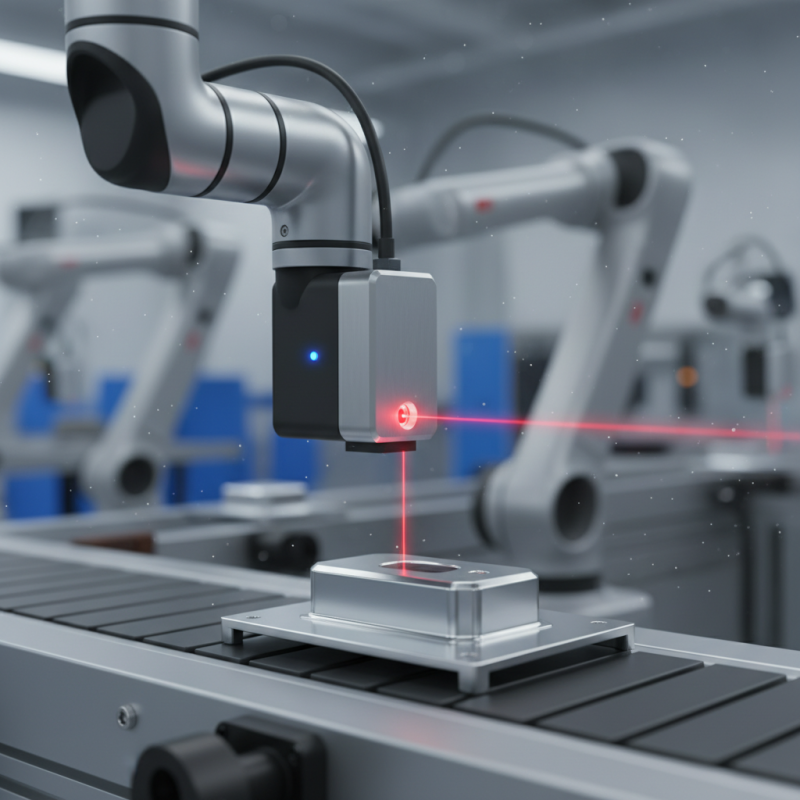
What is a Photoelectric Sensor and How Does It Work?
Photoelectric Sensors are essential devices in modern automation. These sensors detect changes in light to determine the presence or absence of objects. They play a vital role in various applications, including manufacturing and security systems.
Understanding how Photoelectric Sensors work can seem complex. However, their function revolves around the basic principle of light interruption or reflection. A light source emits a beam. When an object disrupts this beam, the sensor registers this change. The simplicity of this method is key to its effectiveness.
In today’s technology-driven world, Photoelectric Sensors enhance efficiency. Yet, they are not without limitations. Factors like dust or ambient light can affect their performance. Learning about these sensors invites deeper contemplation on their design and application.
Definition and Overview of Photoelectric Sensors
Photoelectric sensors are vital components in modern automation. They use light to detect objects without physical contact. These sensors can be found in various industries, including manufacturing and packaging. They are key for enhancing efficiency and safety.
According to a recent market report, the global photoelectric sensor market is expected to reach USD 1.8 billion by 2025, growing at a CAGR of 7.2%. This growth highlights the increasing reliance on automated systems. Their ability to accurately and quickly identify objects makes them indispensable. Yet, the technology isn’t perfect. Factors such as dust or smoke can interfere with sensor performance.
Photoelectric sensors operate using light beams emitted and received. When an object interrupts this beam, it triggers a response. However, environmental variables can lead to false readings. Such inconsistencies require regular maintenance and calibration. Stakeholders must consider factors like placement and surrounding conditions. Balancing efficiency and reliability remains an ongoing challenge within the industry.
Photoelectric Sensor Types and Applications
This chart illustrates the common applications of various types of photoelectric sensors based on units sold. Reflective sensors lead in application, followed by through-beam sensors, diffused sensors, and fiber optic sensors. Each type is suited for specific environments and operational needs, making them indispensable in automation and control systems.
Types of Photoelectric Sensors and Their Applications
Photoelectric sensors are essential in automation and control. They detect changes in light and work effectively in various industries. The market for photoelectric sensors is projected to grow significantly. According to a recent industry report, the global demand is expected to reach $3.5 billion by 2025.
There are three main types of photoelectric sensors:
- Through-beam: offer long detection ranges but require proper alignment.
- Retro-reflective: are versatile and easy to install. However, they can be less reliable in environments with excessive dust or moisture.
- Diffuse: work well for short distances, yet their performance may vary based on the target's color and texture.
Each type has its applications. For instance,
through-beam sensors are used in conveyor systems.
Retro-reflective sensors are common in packaging industries.
Diffuse sensors find uses in automotive assembly lines. Despite their advantages, these sensors can sometimes fail in challenging conditions.
Understanding the limitations is crucial when selecting the appropriate sensor for your needs.
Principles of Operation for Photoelectric Sensors
Photoelectric sensors are essential in various automation applications. They function based on light transmission and detection. A light beam is emitted, and when an object interrupts this beam, a signal is generated. This principle allows for precise detection without physical contact.
In fact, the global photonics sensor market is projected to reach $16.38 billion by 2025, according to recent industry reports. This growth reflects the increasing demand for automation and smart technologies across various sectors. The sensors can operate in different modes, including through-beam, retro-reflective, and diffuse reflective. Each mode has unique advantages and limitations, depending on the application requirements.
However, the choice of sensor can be challenging. Environmental factors like dust, moisture, and temperature variations can affect performance. Engineers must consider these variables when implementing photoelectric sensors. Not all sensor types work equally well in every situation. Some may require periodic calibration or cleaning. This need for maintenance can invite system vulnerabilities, making it essential to weigh options carefully.
Factors Affecting the Performance of Photoelectric Sensors
Photoelectric sensors are vital in many industries. They detect objects or changes in light intensity. However, several factors can affect their performance significantly. Understanding these factors helps ensure reliable operation in various environments.
Ambient light is a major consideration. Direct sunlight can interfere with sensor readings. This effect may lead to false triggers. Therefore, proper positioning is crucial. Installation in shaded areas can mitigate this issue. Additionally, dust or dirt on the sensor lens can obstruct light. Regular cleaning can prevent this problem, but it is often overlooked.
Temperature fluctuations also impact sensor functionality. Extreme heat or cold can alter the sensor's sensitivity. This alteration can result in inconsistent performance. Furthermore, the material of objects being detected plays a role. Different colors and textures reflect light differently. It is essential to account for these aspects during selection. Being aware of such factors can enhance overall workflow efficiency.
Common Uses and Benefits of Photoelectric Sensors in Industry
Photoelectric sensors play a vital role in various industrial applications. These sensors detect objects without direct contact. They rely on light beams to sense movement or the presence of items in their vicinity. For example, in packaging industries, they monitor the flow of items on conveyor belts. When an object interrupts the beam, the sensor triggers an action like stopping the conveyor. This feature enhances efficiency and reduces errors.
In addition to packaging, photoelectric sensors are widely used in manufacturing. They can detect misaligned parts during assembly. This quick response minimizes defects in products. Furthermore, these sensors are beneficial in safety applications. They help ensure safe operations by detecting personnel or obstacles in hazardous areas. However, relying solely on them can be risky. Sometimes, dust or reflections interfere with their performance.
Operators must regularly check and maintain these sensors. Even minor changes in the environment can affect accuracy. Despite their advantages, potential drawbacks should not be overlooked. Understanding their limitations is crucial for improving functionality. Proper implementation leads to smoother processes and safer environments in industries.
Photoelectric Sensor Data
| Sensor Type | Working Principle | Common Uses | Benefits |
| Through Beam | Emits a continuous beam of light and detects interruption. | Safety light curtains, object detection. | High precision, long range. |
| Retroreflective | Uses a reflector to bounce back the emitted light. | Conveyor systems, packaging machines. | Cost-effective, easy installation. |
| Diffuse Reflective | Detects light reflected from the object itself. | Product counting, position sensing. | Versatile, works in complex environments. |
| Laser Photoelectric | Utilizes laser light for precise detection. | High-speed applications, laser marking. | High accuracy, long detection range. |