How to Choose Abrasion Resistant Rubber Hose in 2026?
Choosing an Abrasion Resistant Rubber Hose in 2026 requires more than comparing catalog prices. Real performance depends on the material being transported, particle size, flow speed, pressure, temperature, and hose movement. A hose carrying sharp quarry stone faces different wear than one handling wet sand or cement slurry.
Dr. John S. Dick, a respected rubber technology expert, emphasizes: “Abrasion resistance is not a single material property; it depends on the test method and service conditions.” That principle should guide every purchase. A thicker rubber tube may improve service life, but excessive thickness can reduce flexibility. Strong reinforcement can support higher pressure, yet it may increase weight and installation difficulty.
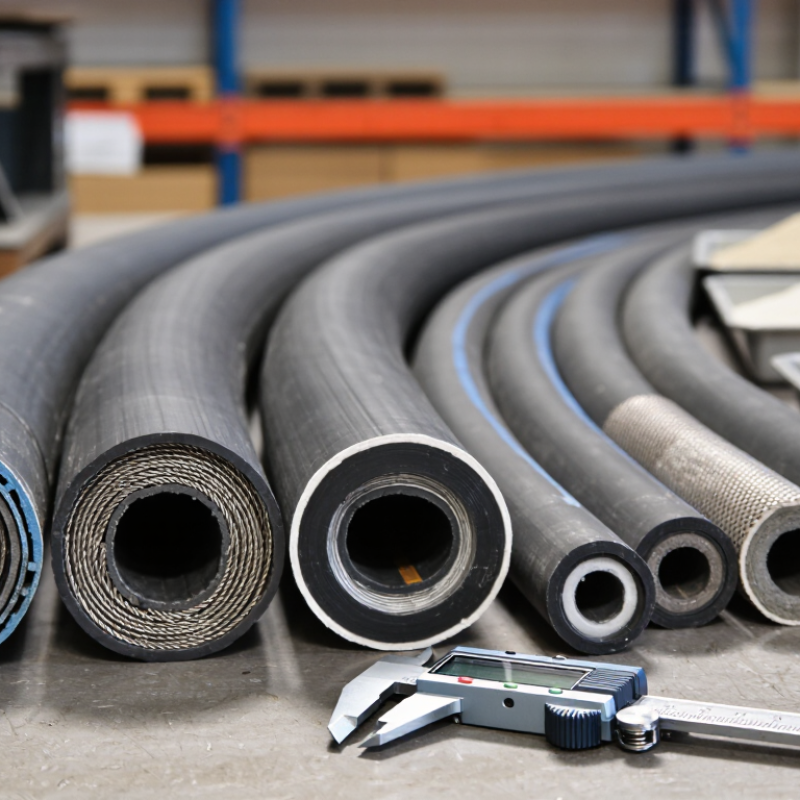
Look closely at the hose’s inner lining, reinforcement layers, cover compound, bend radius, and connection design. Check whether the manufacturer provides abrasion test data, pressure ratings, temperature limits, and batch traceability. Standards matter, but field conditions matter more.
Small details decide outcomes.
In practice, inspect the hose after the first operating cycle. Look for inner-wall thinning, exposed reinforcement, cracking near couplings, or unusual stiffness. Do not rely only on marketing terms such as “heavy duty.” They sound convincing, but they may hide incomplete test information.
This guide explains how to compare Abrasion Resistant Rubber Hose options for 2026. It also considers lifecycle cost, maintenance access, safety margins, and supplier reliability. Some recommendations remain conditional. That is intentional. No selection method can replace careful site observation and honest performance records.
Define Material, Media, and Abrasion Severity Before Selecting the Hose
Selecting an abrasion resistant rubber hose starts with three facts: material, media, and severity. In field inspections, I record the conveyed substance, temperature, pressure, and particle size before comparing hose constructions. A ceramic-like mineral slurry needs different protection than dry sand or wastewater grit. Small details matter.
The hose material must tolerate both wear and the surrounding fluid. Natural rubber often handles repeated sliding abrasion well, while synthetic compounds may perform better with oils, heat, or changing weather. Check the manufacturer’s temperature and pressure data, not only the advertised abrasion rating. A rating without test conditions can mislead. I also inspect the tube thickness, reinforcement, cover, and bend radius. A thick tube may resist wear, but a stiff hose can kink near a pump connection.
Abrasion severity depends on more than particle hardness. Measure flow velocity, solids concentration, impact angle, suction conditions, and how often the hose flexes. A sharp bend can create a thin wear zone within weeks. At one quarry inspection, the straight section looked healthy, yet the outer bend showed polishing and cracking. The problem was routing, not simply compound choice. Measure it carefully. Ideally, track wall thickness during maintenance and photograph the same locations each time. That record helps separate gradual wear from sudden damage. I would also review particle shape, because rounded grains and crushed stone do not attack rubber in the same way. This step is easy to overlook.
Compare DIN ISO 4649 Abrasion Loss Values in mm³ for Hose Liners
How to Choose Abrasion Resistant Rubber Hose in 2026?
DIN ISO 4649 reports rubber abrasion as volume loss in mm³. A lower value usually indicates better resistance to material removal. However, the number only makes sense beside the test conditions. Load, sliding distance, abrasive sheet, test method, and reference compound can affect the result. Request the complete test report, not just a headline figure.
In practical hose evaluations, I compare liner values with the actual material flow. Sharp sand, crushed stone, and recycled glass do not wear rubber in the same way. High velocity can increase damage near bends and couplings. A liner with 80 mm³ loss may outperform one rated at 60 mm³ under a different test setup. That comparison is imperfect, but ignoring it is worse. Check temperature, working pressure, particle size, and conveying angle before choosing.
Tips: Ask for DIN ISO 4649 results in mm³, the test method, and laboratory conditions. Examine the liner compound, not only the reinforcement. If possible, run a short field trial using your real material. Inspect the hose after several shifts. Early cracking or thinning matters more than attractive laboratory language. Also, allow a safety margin for pulsation and tight bends. Low abrasion loss is valuable, but it is not magic.
Match Working Pressure, Burst Ratio, Temperature, and Safety Margins
How to Choose Abrasion Resistant Rubber Hose in 2026?
Choosing an abrasion resistant rubber hose starts with actual operating conditions, not appearance. Field inspections often reveal pressure spikes that were missing from design notes. Pressure is not static. Record normal pressure, startup surges, pulsation, and accidental overloads. Select a working pressure above the highest measured operating pressure. Never treat burst pressure as allowable working pressure.
The burst ratio shows how much pressure the hose can withstand before failure. Confirm the stated ratio, test method, and production traceability with reliable technical documents. Temperature changes this relationship. Heat can soften rubber, while cold can reduce flexibility and increase cracking. Check both the fluid temperature and surrounding air temperature. Small details matter. A hose carrying hot slurry may need a lower pressure rating than the same hose used at room temperature. Do not ignore fittings, bend radius, or sudden movement.
Build a safety margin around real uncertainty. Consider wear, pressure cycling, installation errors, and chemical exposure. That assumption can fail. I have seen hoses selected correctly on paper but damaged by sharp steel edges during movement. Use protective sleeves, proper clamps, and a routing plan that prevents dragging. Inspect the outer cover for cuts, bulges, exposed reinforcement, and hardened areas. Replace doubtful hose early; a low purchase cost rarely offsets an unexpected shutdown.
How to Choose Abrasion Resistant Rubber Hose in 2026?
Match working pressure, burst ratio, temperature, and safety margins.
How to read this chart: Select a hose whose working pressure is above the system’s maximum operating pressure. The examples use a typical 3:1 burst-to-working-pressure ratio, meaning a 16 bar working-pressure hose may have an approximately 48 bar burst rating. Temperature values represent typical upper continuous-service limits; actual limits depend on the rubber compound, reinforcement, conveyed material, duty cycle, and fittings. Always confirm the manufacturer’s tested specifications and include additional safety margin for pressure spikes, pulsing, bending, abrasion, and installation conditions.
Size Diameter, Bend Radius, and Coupling Type for Flow Efficiency
How to Choose Abrasion Resistant Rubber Hose in 2026?
Hose diameter controls velocity, pressure loss, and wear. A useful field calculation is Q = vA. For the same flow, a 2-inch hose moves fluid at about 56% of the velocity in a 1.5-inch hose. That difference can reduce turbulence and internal abrasion. The U.S. Department of Energy’s pumping-system sourcebook reports potential energy savings of 20–50% through system improvements, but hose sizing alone cannot promise that result.
Bend radius deserves equal attention. A hose may fit on paper yet fail near a sharp frame corner. Measure the radius from the hose centerline, not its outside edge. Stay above the manufacturer’s minimum radius, especially during startup movement. ISO 6945 and ASTM D5963 provide recognized abrasion-testing methods, but laboratory wear data may not match sharp ore, sand, or recycled slurry. Real conditions are messier.
Coupling type must match pressure, vibration, and maintenance access. SAE J517 guidance supports checking hose construction, pressure rating, and assembly compatibility together. Threaded couplings suit fixed lines, while flanged or quick-connect designs can simplify frequent replacement. Do not select a coupling by diameter alone. A larger fitting can still restrict the bore. I have seen this mistake. It looked efficient, but the reducer created a noisy pressure drop. Clearance, sealing material, and torque should be verified before installation.
How to Choose Abrasion Resistant Rubber Hose in 2026? - Size Diameter, Bend Radius, and Coupling Type for Flow Efficiency
| Nominal Hose ID | Approx. Internal Area | Recommended Abrasive-Service Velocity | Estimated Flow Range | Planning Bend Radius
(6 × Hose ID) | Recommended Coupling Type | Flow-Efficiency Application |
| 25 mm (1 in) | 491 mm² | 3–5 m/s | 5.3–8.8 m³/h | 150 mm | Threaded or compact flanged connection | Small-bore transfer lines and localized wear points |
| 38 mm (1.5 in) | 1,134 mm² | 3–5 m/s | 12.2–20.4 m³/h | 228 mm | Flanged or heavy-duty quick coupling | Moderate-flow slurry and abrasive material handling |
| 50 mm (2 in) | 1,963 mm² | 3–5 m/s | 21.2–35.3 m³/h | 300 mm | Flanged coupling preferred for continuous service | General-purpose abrasive slurry and aggregate transfer |
| 75 mm (3 in) | 4,418 mm² | 3–5 m/s | 47.7–79.5 m³/h | 450 mm | Full-face flanged coupling | Higher-flow slurry lines where low pressure loss matters |
| 100 mm (4 in) | 7,854 mm² | 3–5 m/s | 84.8–141.4 m³/h | 600 mm | Bolted flanged coupling with abrasion-resistant sealing | Pump discharge, mineral processing, and bulk solids transport |
| 150 mm (6 in) | 17,671 mm² | 3–5 m/s | 190.8–318.1 m³/h | 900 mm | Heavy-duty flanged coupling | Large-volume dredging, mining, and abrasive slurry systems |
| 200 mm (8 in) | 31,416 mm² | 3–5 m/s | 339.3–565.5 m³/h | 1,200 mm | Full-bore flanged coupling with external support | Very high-flow abrasive transport and fixed installations |
Engineering notes: Flow estimates are calculated from Q = A × v using a hose velocity of 3–5 m/s and represent water-equivalent volumetric flow. Actual capacity depends on solids concentration, particle size, density, pressure loss, pump capability, hose construction, and operating temperature. A planning bend radius of 6 × hose ID is a practical guide; the certified minimum bend radius must be confirmed for the selected hose construction. Flanged couplings generally provide better bore alignment and sealing for abrasive service, while quick couplings are useful where frequent disconnection is required. Do not use coupling pressure ratings above the lowest-rated component in the assembly.
Verify ISO 3861, SAE 100R4, and 2026 Lifecycle Performance Requirements
Choosing an abrasion resistant rubber hose in 2026 requires more than checking wall thickness. Start by matching the service medium, pressure, temperature, bend radius, and abrasion source. A hose dragging across a steel edge needs different reinforcement from one carrying wet sand. Field inspections often reveal the real problem: external scuffing, crushed bends, or loose couplings.
Verify ISO 3861 documentation when handling sand or slurry suction and discharge. Check the stated size range, working pressure, vacuum rating, temperature limits, and test results. Do not accept a certificate without confirming its scope and revision date.
SAE 100R4 applies to hydraulic suction and return hose applications. Confirm reinforcement construction, oil compatibility, operating pressure, and minimum bend radius. These standards address different duties. Treating them as interchangeable is a costly mistake.
For 2026 lifecycle performance requirements, request evidence beyond initial burst testing. Examine abrasion test methods, fatigue cycles, pressure-pulse data, cover thickness, and expected service intervals. Ask how performance changes after heat, ozone, chemical exposure, and repeated flexing. A clear traceability record should connect each hose assembly to its materials and inspection results. In practice, I would measure the installation twice and photograph vulnerable contact points. Small routing errors shorten service life quickly. I still allow a maintenance margin, because laboratory durability rarely matches a dirty, vibrating worksite. Simpler replacement access may matter more than a slightly higher initial rating.