

How Can Body Making Machine Improve Production Efficiency?
A modern Can Body Making Machine can reshape production efficiency from the inside out. It forms a flat metal blank into a precise cylindrical body, often within seconds. When forming pressure, lubrication, and tooling alignment remain stable, manufacturers can increase output without sacrificing wall quality. Small details matter. A slight die misalignment may create wrinkles, cracks, or rejected cans across an entire shift.
“Consistent process control is the real foundation of high-speed canmaking,” says Dr. Klaus J. Schmid, a canmaking technology consultant with experience in metal-forming operations. His observation highlights an important point: machine speed alone does not guarantee better productivity. Effective efficiency also depends on quick changeovers, low scrap rates, predictable maintenance, and operators who understand forming behavior. A well-adjusted Can Body Making Machine can reduce material waste while keeping production timing more reliable.
In a typical plant, sensors monitor vibration, force, temperature, and lubrication flow. These signals help technicians identify problems before defective bodies fill a conveyor. The result can be smoother scheduling and fewer emergency stoppages. However, no machine performs perfectly. Tool wear, inconsistent sheet quality, and human decisions still influence results. That assumption deserves scrutiny. Investing in advanced equipment without training may create disappointing returns. This article examines how a Can Body Making Machine improves production efficiency, where measurable gains appear, and which practical limitations manufacturers should consider before upgrading their lines.
What Is a Body Making Machine?
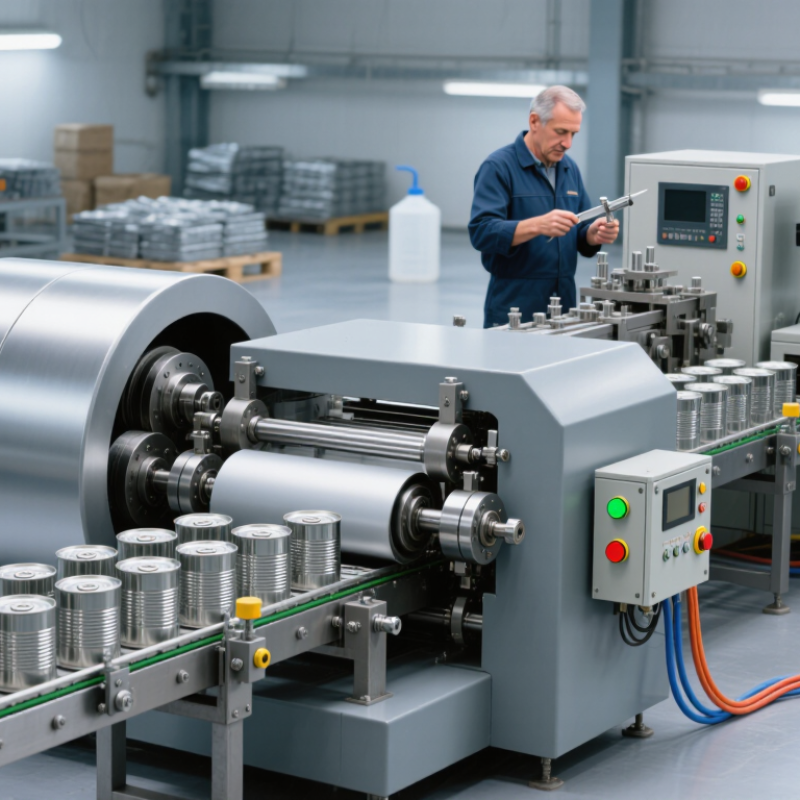
A body making machine is industrial equipment that forms flat metal sheets into cylindrical can bodies. It commonly uses drawing and ironing operations to shape, stretch, and strengthen the material. The machine controls feeding, forming pressure, lubrication, and discharge speed. A typical production line includes a sheet feeder, forming dies, sensors, and an inspection station.
From production-floor experience, efficiency depends on more than machine speed. Accurate feeding reduces material waste and prevents tilted bodies. Stable lubrication helps lower friction during forming. Sharp tooling also supports consistent wall thickness. When these conditions work together, fewer stoppages occur, and operators spend less time correcting defective cans.
Small details matter. A misaligned guide can damage several pieces quickly. Sensors can detect height, diameter, or surface problems before defects spread. However, automation is not magic. Poor maintenance, incorrect settings, and rushed changeovers still reduce output. I have seen fast equipment lose valuable hours because a simple die adjustment was ignored. Regular cleaning and measured inspections usually provide better results than constant speed increases. Operators should record defects, machine temperatures, and adjustment times, although production teams sometimes overlook these records during busy shifts.
How Can Body Making Machine Improve Production Efficiency? - What Is a Body Making Machine?
| Production Metric | Manual or Stand-Alone Forming | Semi-Automatic Body Making Machine | Automatic Body Making Machine | Efficiency Impact |
|---|---|---|---|---|
| Primary Function | Separate forming, feeding, and handling operations | Mechanical forming with assisted loading and unloading | Integrated feeding, drawing, wall ironing, trimming, and transfer operations | Combines multiple operations into a controlled production flow |
| Typical Output Rate | Approximately 10–40 finished bodies per minute, depending on product size and operator skill | Approximately 40–120 finished bodies per minute | Approximately 100–300 finished bodies per minute for high-volume can production | Higher cycle speed increases hourly production capacity |
| Production Consistency | More variation caused by operator handling and material positioning | Improved consistency through guided tooling and mechanical timing | Stable dimensions and repeatable forming force through synchronized controls | Reduces dimensional variation and limits downstream adjustments |
| Material Utilization | Higher risk of inconsistent trimming, deformation, and material waste | More controlled forming and trimming with moderate material savings | Precision tooling supports consistent wall thickness and trim dimensions | Lower scrap rates improve usable output from the same raw material |
| Typical Scrap Level | Approximately 3%–8%, depending on process control and operator experience | Approximately 2%–5% under stable operating conditions | Approximately 1%–3% when tooling, lubrication, and material quality are properly controlled | Less defective production reduces rework and material consumption |
| Labor Requirement | Usually requires several operators for forming, inspection, transfer, and packing | Typically requires one operator per machine or production cell | Often operated by one trained operator with periodic quality checks | Automation allows labor to be reassigned to inspection, maintenance, or packaging |
| Changeover Time | Approximately 30–90 minutes, depending on product and tooling changes | Approximately 20–60 minutes with prepared tooling and settings | Approximately 15–45 minutes when quick-adjust tooling and stored recipes are available | Shorter changeovers increase available production time for different can sizes |
| Dimensional Control | Frequent manual checks of diameter, height, wall thickness, and trim height | Scheduled inspection supported by fixed guides and mechanical settings | Continuous process monitoring can be combined with scheduled sampling inspections | Earlier detection of process drift prevents large batches of nonconforming bodies |
| Unplanned Downtime | Often related to manual errors, inconsistent feeding, and repeated adjustments | Moderate downtime risk from feeding, tooling, and operator intervention | Reduced routine intervention, although preventive maintenance is essential | Reliable feeding and diagnostic controls improve overall equipment availability |
| Energy Use per Unit | Lower machine energy demand but higher labor input and slower throughput | Moderate energy consumption with improved output per operating hour | Higher installed power, but generally lower energy consumption per finished unit at high utilization | Higher throughput can spread fixed energy demand across more finished products |
| Quality Inspection Method | Visual inspection and frequent hand measurement | Sampling inspection with operator-assisted measurement | In-process sensors or alarms combined with statistical sampling inspection | Faster feedback supports corrective action before defects multiply |
| Maintenance Requirement | Basic maintenance with frequent manual alignment and adjustment | Routine lubrication, tooling checks, and mechanical adjustment | Scheduled lubrication, die and punch inspection, sensor checks, and preventive maintenance | Planned maintenance helps protect cycle speed, forming accuracy, and machine availability |
| Best-Suited Production Volume | Prototypes, small batches, and highly variable products | Small to medium production runs with moderate product variety | Medium to high-volume production with repeatable product specifications | Selecting the right automation level avoids excess labor or unnecessary capital cost |
Reference note: The figures shown are typical industry operating ranges for metal can body-forming applications. Actual performance depends on material type, sheet thickness, body diameter and height, tooling design, lubrication, operator training, maintenance condition, and line utilization.