Why You Should Consider a Lift Dock for Your Waterfront Property
As waterfront property owners seek ways to enhance both functionality and aesthetics, the concept of a lift dock emerges as a compelling solution. According to industry expert John Smith, a renowned specialist in marine infrastructure, "Choosing a lift dock not only improves accessibility but also protects your watercraft from the elements." This sentiment captures the essence of why investors should seriously consider the significant advantages a lift dock can offer.
Lift docks ensure that boats and personal watercraft are safely out of the water when not in use, drastically reducing the risk of wear and tear due to harsh weather conditions and aquatic growth. Additionally, these systems provide ease of use that enhances the overall enjoyment of waterfront living. As property values continue to rise, investing in a lift dock also represents a strategic move that could greatly increase the appeal and worth of a waterfront property. Through thoughtful consideration and planning, homeowners can maximize their waterfront experience while securing their investment for the future.

Benefits of Installing a Lift Dock for Your Waterfront Property
Installing a lift dock on your waterfront property can provide numerous advantages that enhance both functionality and value. One of the primary benefits is the protection it offers to your watercraft. Traditional docks can expose boats to damaging wave action and fluctuations in water levels, leading to scratches and wear. A lift dock elevates your vessel above the water, keeping it safe from debris, algae growth, and harsh environmental conditions, thus extending its lifespan and reducing maintenance costs.
Additionally, a lift dock can significantly improve your access to the water. With a streamlined design, lift docks facilitate easier launching and retrieval of watercraft, allowing you to spend more time enjoying your activities, whether that's fishing, boating, or swimming. This convenience can also make your property more appealing to potential buyers, emphasizing the ease of water access and the allure of waterfront living. Overall, investing in a lift dock is a practical decision that provides both immediate benefits and long-term value for your waterfront property.
Types of Lift Docks Suitable for Different Water Conditions
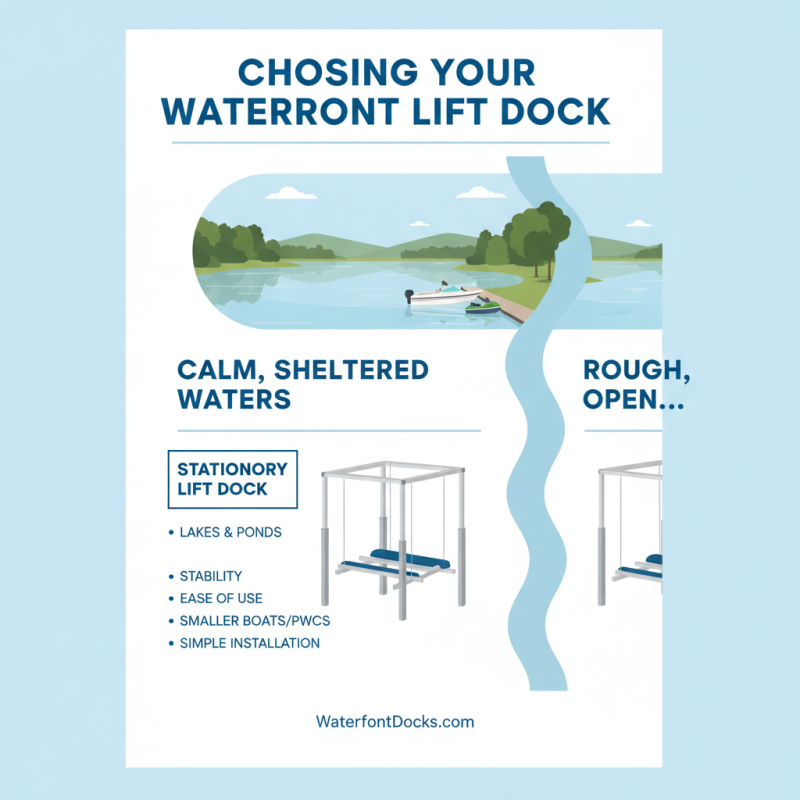
When considering the right lift dock for your waterfront property, understanding the various types available based on different water conditions is crucial. For calm, sheltered waters such as lakes or ponds, a stationary lift dock is often the best choice. These docks provide stability and ease of use, making them ideal for smaller boats and personal watercraft. Their design allows for simple installation and maintenance, ensuring that your watercraft is accessible throughout the season without the need for frequent adjustments.
In contrast, if your property is situated in areas with more turbulent waters, such as rivers or coastal environments, a floating lift dock may be more suitable. Floating docks are designed to rise and fall with water levels, providing a reliable solution that adapts to changing conditions. This flexibility helps protects your watercraft from potential damage caused by strong currents or waves. Additionally, modular floating systems allow for customization and can be adjusted according to the specific demands of your waterfront, ensuring safety and longevity of your investment.
Key Features to Look for in a Quality Lift Dock
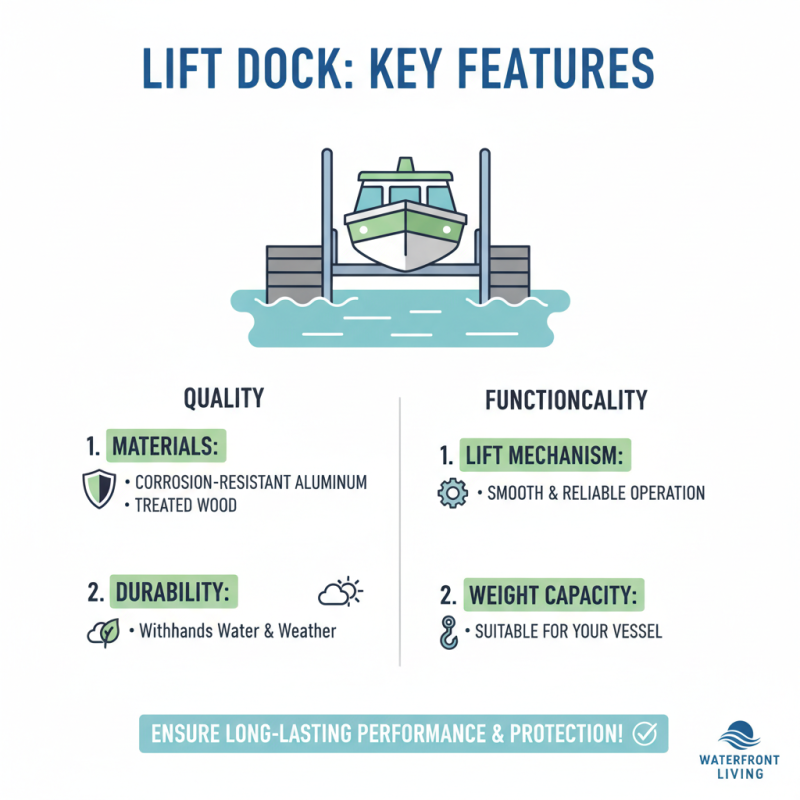
When considering a lift dock for your waterfront property, it's essential to focus on key features that ensure both quality and functionality. One of the most important aspects is the material used in construction. High-quality lift docks often utilize corrosion-resistant materials such as aluminum or treated wood, which can withstand exposure to water and weather elements, ensuring long-lasting durability.
Another crucial feature to consider is the weight capacity of the lift dock. Depending on the type of watercraft you own, it's vital to select a dock that can safely accommodate the weight and dimensions of your boat. Look for adjustable models that can adapt to varying water levels, allowing for easy and safe docking regardless of the season. Additionally, consider the design of the lift system—manual versus hydraulic systems can offer different advantages, so choose one that aligns with your operational preferences and ease of use.
Finally, assess the dock's stability and installation options. A well-designed lift dock will provide a solid foundation that minimizes movement, enhancing safety for both docking and boarding. Furthermore, ensure that installation is straightforward, with options for professional assistance if needed. By prioritizing these key features, you can ensure a reliable and efficient lift dock that enhances your waterfront experience.
Maintenance Tips for Ensuring Longevity of Your Lift Dock
Maintaining a lift dock is essential for ensuring its longevity and optimal performance. One of the primary factors to consider is regular inspections. Conduct thorough checks at the beginning and end of each season to identify any signs of wear, corrosion, or damage. Pay special attention to the cables and pulleys, as these components are subjected to constant stress and are crucial for the functioning of the lift. Cleaning any accumulated debris, algae, or marine growth can also prevent potential blockages and enhance performance.
Weather conditions can significantly impact the condition of your lift dock. To protect it from harsh elements, consider using protective coatings or sealants, especially for wooden components. Additionally, during winter months, it may be wise to consider removing the lift from the water if possible, as ice and snow can cause stress and potential damage. Regularly check and adjust the flotation devices to ensure that they are fully functional, as maintaining buoyancy is key to the lift’s integrity and usability over time.
Why You Should Consider a Lift Dock for Your Waterfront Property - Maintenance Tips for Ensuring Longevity of Your Lift Dock
| Maintenance Task |
Frequency |
Tips |
Estimated Cost |
| Inspect for Damage |
Annually |
Check for cracks or corrosion |
$50 - $100 |
| Clean Components |
Seasonally |
Use mild soap and water |
$20 - $40 |
| Lubricate Moving Parts |
Every 6 months |
Use marine-grade lubricant |
$10 - $30 |
| Verify Electrical Components |
Annually |
Check for frayed wires |
$50 - $200 |
| Check Floatation Devices |
Bi-annual |
Look for leaks or wear |
$30 - $80 |
Cost Considerations for Installing a Lift Dock on Your Property
When considering the installation of a lift dock on your waterfront property, one of the most critical aspects to evaluate is the cost. According to industry reports, the average expense for installing a lift dock ranges from $5,000 to $15,000, depending on the dock size and type.
For instance, a basic lift dock for smaller boats may cost less, while larger models capable of accommodating heavier vessels can significantly increase the investment. Installation costs can also vary based on local labor rates and the dock's geographic location.
Additionally, ongoing maintenance and operational costs should be factored into your budget. The National Marine Manufacturers Association indicates that annual maintenance can range from 10% to 15% of the initial installation cost. This includes routine inspections, repairs, and potential upgrades to keep the lift dock in optimal working condition.
Moreover, property owners should consider the potential for increased property value; studies suggest that waterfront properties with lift docks can see a return on investment of up to 70% when sold, making this addition not only a functional choice but also a financially sound one.