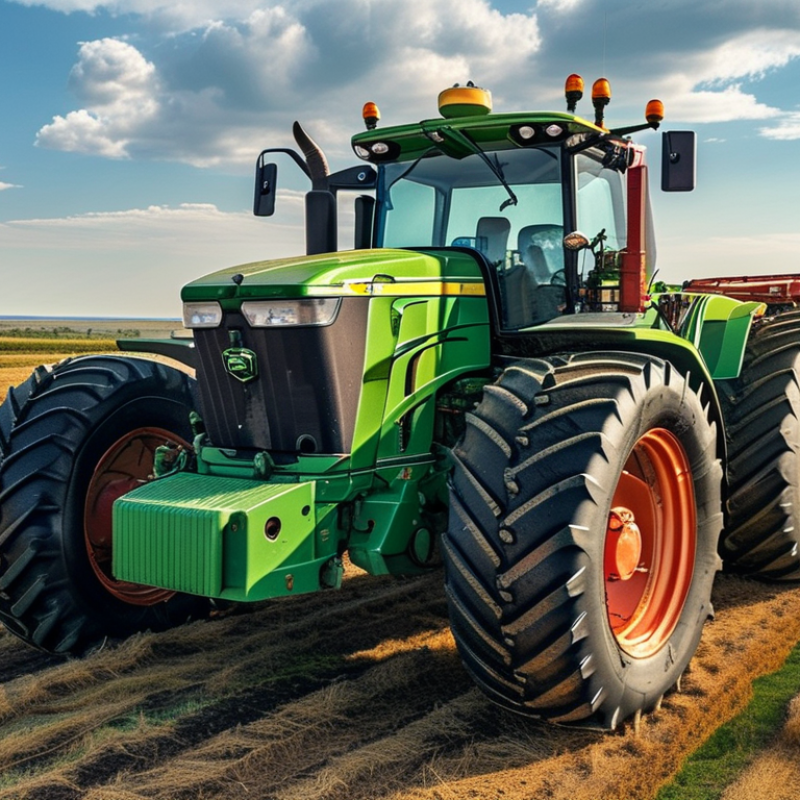
How to Choose the Best Large Tractor for Your Needs?
Choosing the right Large Tractor is not a simple task. It requires careful consideration of various factors. The right large tractor can dramatically improve your efficiency and productivity. However, the wrong choice could lead to frustration and wasted resources.
When selecting a large tractor, it is essential to assess your specific needs. What tasks will you perform? Will you be farming, landscaping, or doing heavy-duty hauling? Each task has different requirements. Understanding your primary use helps narrow down your options significantly.
Don't underestimate the importance of specifications. Power, size, and features vary widely between models. Also, consider your budget. You may find a perfect large tractor, but can you afford it? Reflect on this as you make your decision. A well-chosen large tractor can be an asset, but the wrong one can feel more like a burden.
Understanding Your Agricultural Requirements and Tasks
Choosing the right large tractor hinges on understanding your specific agricultural needs. An analysis by the American Society of Agricultural and Biological Engineers reveals that the choice of tractor significantly affects operational efficiency. Different tasks, like tilling, planting, and hauling, require varying horsepower and implement compatibility. For instance, tilling may demand a tractor with at least 100 HP, while smaller tasks can be managed with less power.
Identifying your tasks is crucial. If your farm encompasses mixed crop and livestock operations, you might require a versatile tractor. According to a report from the USDA, 65% of farms utilize multiple implements, indicating the need for adaptability in tractor selection. Many farmers overlook the importance of hydraulic capacity. An insufficient hydraulic system may hinder your ability to operate essential equipment efficiently.
Balancing power with fuel efficiency should not be underestimated. The average fuel consumption for large tractors is around 8-10 gallons per hour. Farmers often report that a lack of fuel management leads to inflated operational costs. It's worth reflecting on your spending habits and how tractor choice impacts your bottom line. By comprehensively assessing your farming practices, you can make a more informed decision that aligns with your operational goals.
Evaluating Tractor Size and Power for Your Specific Needs
Choosing the right tractor involves more than just picking one with impressive power. Evaluating tractor size and its power is crucial for optimal performance. If your land is flat and expansive, you might require a heavier, more powerful tractor. Conversely, if you have a small farm with tight spaces, a compact model would serve you better.
Consider your specific tasks. Are you plowing, tilling, or hauling materials? Each task demands different power levels and sizes. A small tractor may not handle heavy loads efficiently, while an oversized machine might struggle in narrow rows. Reflect on your daily operations. Will your equipment adapt to seasonal changes? Over time, your needs could shift, and it’s vital to have a tractor that can adjust accordingly.
Some mistakes are easy to make. Relying solely on horsepower can mislead your decision. Power doesn’t always translate to efficiency for every task. Similarly, don’t overlook the importance of weight distribution. A well-balanced tractor performs much better than a top-heavy one. Always prioritize usability and comfort; large tractors can become unwieldy and difficult to maneuver. Take the time to test different models, considering how they feel on the ground.
Exploring Different Types of Large Tractors and Their Features
When selecting a large tractor, understanding the different types available is crucial. There are essentially three categories: utility tractors, row crop tractors, and 4WD tractors. Utility tractors are versatile, often used for general farm tasks. Row crop tractors, designed for agriculture, have a narrow body for navigating between rows. Lastly, 4WD tractors excel in heavy-duty tasks, ideal for rough terrains. Each type offers distinct features tailored to specific farming needs.
Consider the horsepower when choosing a tractor. Industry reports indicate that tractors with 75-100 HP are ideal for medium-sized operations. However, larger operations may require tractors exceeding 200 HP. Look into the transmission type as well. Powershift transmissions provide smoother gear shifting, enhancing productivity.
Tip:
Assess your specific tasks before deciding. If you mainly handle light work, a utility tractor is sufficient. For more demanding tasks, invest in a row crop or 4WD tractor.
Maintenance is another critical factor. Regular servicing can improve your tractor's longevity and efficiency. Research indicates that tractors maintained every 300 hours perform better and reduce downtime significantly. Cater to all aspects—power, efficiency, comfort—to ensure optimal work performance.
Tip:
Evaluate your budget but don't compromise on quality. An initial investment in a reliable tractor can save money in the long run.
Considering Budget, Maintenance, and Long-term Ownership Costs
When choosing a large tractor, understanding the long-term costs is crucial. Initial purchase prices can be misleading. According to the American Farm Bureau, the average cost for a new large tractor can range from $80,000 to $200,000, depending on the model. However, maintenance and ownership costs can add significantly to this. Over time, these costs can account for 40% to 50% of your total investment.
Maintenance is an ongoing expense that can vary greatly. Regular servicing is essential; neglecting it can lead to costly repairs. Reports indicate that annual maintenance can run between $1,500 and $5,000. When budgeting, don’t forget to include parts, fluids, and unexpected repairs. Choosing a tractor that allows easy access to parts can help manage downtime and expenses efficiently.
Tip: Consider the tractor's fuel efficiency. Switching to models with better fuel economy could save thousands in the long run. Investing in models with proven durability can also reduce repair frequency. Remember, each decision impacts your budget, so weigh your options carefully. Assessing all costs will help ensure you make a sound financial choice.
Researching Brands and Dealer Support for Large Tractors
When researching brands for large tractors, dealer support plays a critical role. A strong support network ensures that you gain easy access to parts and service. According to the Agricultural Manufacturers Association, 70% of tractor owners report higher satisfaction due to ongoing dealer support. This indicates the importance of choosing a brand with a reliable dealer network. Investigating each brand’s support options will often save you time and money in the long run.
Take the time to explore online reviews and forums. Many users share their experiences with specific brands and dealers. These insights often reveal strengths and weaknesses that official sources may not disclose. Be cautious when interpreting online feedback; some may have biases, while others provide valuable lessons. Reports show that over 60% of buyers consider peer reviews influential during their decision-making.
Consider also the geographical reach of the dealers. A well-established dealer network in your area is vital. It ensures you receive timely service and support, especially during peak seasons. Data from industry surveys indicate that having local dealer support can reduce downtime by up to 30%. A responsive dealer can truly make a difference in maintaining your tractor’s performance.