How to Choose an Automatic BOV Aerosol Filling Machine?
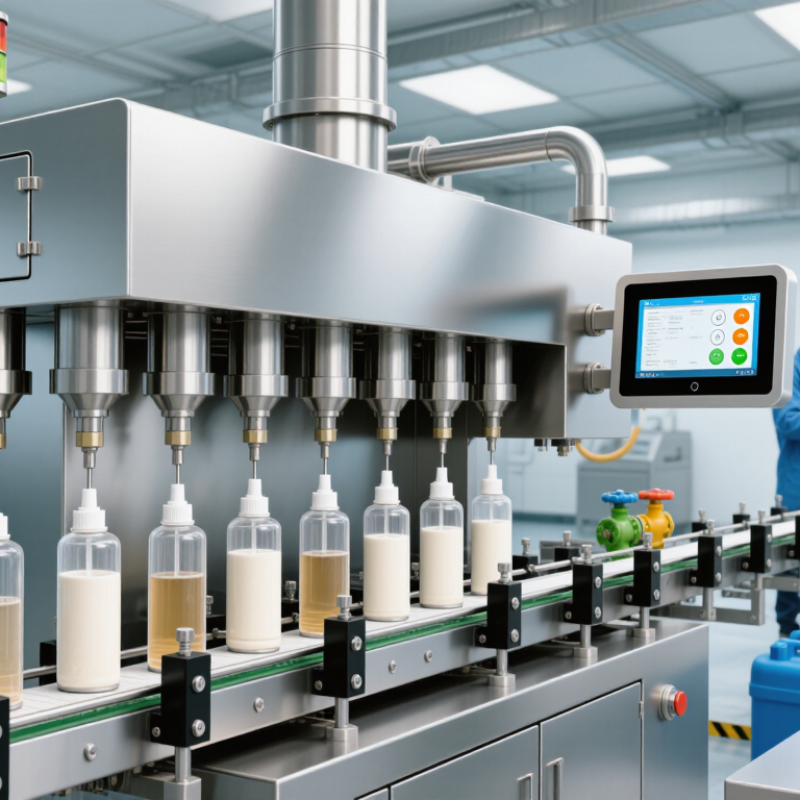
Choosing an Automatic BOV Aerosol Filling Machine requires more than comparing speed, price, or stainless-steel appearance. The correct decision begins with the product itself. Consider viscosity, pouch material, valve dimensions, filling volume, propellant compatibility, and required output. A machine that performs well with a thin cosmetic formula may struggle with a thicker cream. Small differences matter. A leaking pouch can ruin an entire batch.
Aerosol packaging engineer John L. O’Brien once said, “A reliable filling line is measured by repeatable performance, not impressive speed.” This principle remains practical. Inspect the dosing system, filling accuracy, pressure controls, valve placement, and sealing consistency. Ask whether operators can clean the equipment efficiently. Review the PLC interface, maintenance access, spare-parts supply, and technical training. These details often decide long-term productivity.
Safety cannot be treated as a final checkbox. The Automatic BOV Aerosol Filling Machine should support suitable guarding, pressure protection, grounding, ventilation, and compliance with applicable regional standards. Confirm documentation before purchase. Request factory testing with your actual containers and formulation. Watch the machine fill, seal, and reject defective units. That test may reveal more than a brochure.
A perfect checklist does not exist. I have seen buyers focus on hourly capacity and overlook changeover time. That mistake becomes expensive. A thoughtful choice balances production targets, product stability, worker safety, cleaning requirements, and future expansion. The best machine is not always the fastest. It is the one that performs consistently, safely, and transparently under real operating conditions.
Define BOV Product and Can Specs: 50–500 mL Fill Volumes
How to Choose an Automatic BOV Aerosol Filling Machine?
Define the BOV product and can specs before comparing machine speeds. For a 50–500 mL range, record the nominal fill volume, product density, viscosity, bag material, valve type, and actuator. A 50 mL facial mist and a 500 mL household foam require different dosing accuracy and handling space. Do not assume one setting fits both.
Can drawings should include diameter, height, neck finish, valve cup dimensions, and empty-can weight. Check the manufacturer’s dimensional tolerances, not only the nominal size. The European Aerosol Federation reported more than 5 billion aerosol units in Europe in its 2023 industry statistics, showing the importance of repeatable container handling. For filling accuracy, define an internal target, such as ±1–2% of nominal volume, then validate it through sample weighing and pressure tests. The exact tolerance depends on the product.
Select a machine with recipe control for each volume band, gentle bag insertion, vacuum or pressure monitoring, and automatic reject detection. The BOV process should separate product filling from propellant charging and verify seal integrity afterward. Industry market analysis from Grand View Research identifies packaging consistency and automation as key aerosol-market priorities. Still, reports rarely reflect your actual formulation. I would test the smallest and largest cans first. That exposes unstable dosing, poor valve alignment, and awkward changeover time before production begins.
Set Production Capacity: Compare 30–120 Cans per Minute
How to Choose an Automatic BOV Aerosol Filling Machine?
Set production capacity before comparing equipment. A 30-cans-per-minute machine produces 1,800 cans hourly under ideal conditions. At 120 cans per minute, the theoretical output reaches 7,200 cans. Real production is lower. Changeovers, valve alignment, cleaning, and minor stoppages consume time.
The European Aerosol Federation’s 2023 industry statistics reported approximately 5.5 billion aerosol cans filled in Europe. This volume shows why stable throughput matters. However, maximum speed is not always the best choice. Vorne’s OEE benchmark identifies 85% as world-class performance, while many packaging lines operate nearer 60–75%. At 80% efficiency, a 60-cans-per-minute line delivers about 2,880 cans hourly. That figure is more useful than its nameplate speed.
Your first capacity estimate may be wrong. A line running 120 cans per minute can create excessive rejects when BOV placement is inconsistent. Watch the conveyor during trials. Cans should move smoothly, without leaning or sudden gaps. Compare confirmed output, fill-weight variation, reject rates, and changeover time. Smithers’ recent aerosol packaging analysis also emphasizes automation, consistency, and production flexibility as important market requirements. A 60-cans-per-minute machine may therefore outperform a faster system when products, can sizes, or formulations change frequently. Test the slowest realistic shift, not only the best demonstration.
How to Choose an Automatic BOV Aerosol Filling Machine? - Set Production Capacity: Compare 30–120 Cans per Minute
| Production Capacity | Approx. Output per Hour | Recommended Filling Configuration | Typical Line Footprint | Compressed-Air Demand | Suitable Production Profile | Key Selection Consideration |
| 30 cans/min | Up to 1,800 cans/hour | Compact automatic BOV line with single-track feeding and integrated product, propellant, and crimping stations | Approximately 8–12 m², excluding operator access | About 0.5–1.0 m³/min at approximately 6–8 bar, depending on valve and actuator requirements | Small-to-medium batches, multiple formulas, and frequent product changeovers | Prioritize changeover access, dosing flexibility, and compact layout over maximum speed |
| 60 cans/min | Up to 3,600 cans/hour | Medium-speed automatic line with servo-controlled indexing and separate product and propellant dosing controls | Approximately 12–18 m², excluding operator access | About 0.8–1.5 m³/min at approximately 6–8 bar, depending on the number of pneumatic stations | Regular commercial production with moderate demand and scheduled product runs | Check actual sustained speed, reject handling, and compatibility with the selected BOV valve format |
| 90 cans/min | Up to 5,400 cans/hour | High-speed automatic BOV system with multi-head filling, automatic valve placement, crimping, leak testing, and continuous conveyor transfer | Approximately 18–25 m², excluding operator access and utilities | About 1.2–2.0 m³/min at approximately 6–8 bar, subject to equipment configuration | High-volume production of standardized products with longer uninterrupted runs | Confirm that the upstream can depalletizing and downstream packing equipment can match the target rate |
| 120 cans/min | Up to 7,200 cans/hour | High-throughput automatic line with synchronized multi-head filling, automated valve handling, crimping, leak inspection, coding, and discharge | Approximately 25–35 m², excluding operator access, safety clearance, and utilities | About 1.8–3.0 m³/min at approximately 6–8 bar, depending on pneumatic components and cycle rate | Large-volume production with stable demand, standardized packaging, and minimal changeovers | Evaluate total line balance, filling accuracy, safety interlocks, maintenance access, and continuous operating stability |
Planning note: The hourly figures represent theoretical maximum output calculated from the stated speed. Actual production is normally lower because of startup, shutdown, material replenishment, cleaning, changeovers, inspection, and rejected containers. Final capacity should be verified using the required can size, product viscosity, BOV valve specification, propellant, filling accuracy, and planned operating schedule.
Verify Dosing Accuracy: Target a Filling Tolerance of ±1%
How to Choose an Automatic BOV Aerosol Filling Machine?
Dosing accuracy should lead the machine comparison. Set a filling tolerance of ±1% for each approved formulation. A 250-gram target then allows only 2.5 grams of variation. That difference is visible on a calibrated scale. It also affects pressure balance, valve performance, and customer confidence. Grand View Research valued the global aerosol market at approximately USD 86 billion in 2023, showing why small process errors can become expensive at scale.
Choose equipment with servo-controlled dosing, stable pressure regulation, and automatic weight verification. A gravimetric check should compare filled containers against a traceable reference scale. The European Aerosol Federation reported more than 5 billion aerosol units produced in Europe during 2023. High output makes sampling discipline essential, not optional. In practice, I would check the first units, middle-run units, and final units of every batch.
Do not trust the screen alone. Temperature, product viscosity, and propellant pressure can shift results during production. The machine may display ±1%, while the actual container weights slowly drift. That is an uncomfortable possibility. Review calibration records, reject settings, nozzle cleanliness, and response time during factory testing. A short trial with real materials is more convincing than a polished specification sheet. Even experienced operators miss gradual drift. Cors.
Check Pressure Systems: Support Typical 8–12 bar Propellant Filling
How to Choose an Automatic BOV Aerosol Filling Machine?
Pressure capability should be your first technical checkpoint. A suitable BOV machine should support typical 8–12 bar propellant filling. This range is common in many production setups, but it is not universal. Product viscosity, valve design, temperature, and container strength can change the required pressure. Check the regulator, pressure gauge, relief valve, hoses, and fittings together. One weak component can reduce filling accuracy or create downtime. The European Aerosol Federation reported over 5 billion aerosol units produced in Europe in 2022. That scale shows why repeatable pressure control matters in modern factories.
Tips: Ask for pressure-test records, not only a catalogue number. Confirm whether 8–12 bar is the working range or the maximum rating. Request a trial using your actual BOV valves and containers. A machine may pass a short demonstration and still perform poorly after several hours. I would also inspect gauge readability from the operator’s position. Small details matter.
Do not select a machine by pressure alone. Verify filling speed, dosing tolerance, compressed-air demand, and automatic shutdown functions. ISO 11118 guidance highlights the importance of safe design for non-refillable metallic gas containers. Your supplier should explain how the machine manages leaks, overpressure, and emergency stops. Pressure stability can vary during peak production. That possibility deserves testing, not assumptions. In my experience, a slightly slower machine with stable 10-bar control often produces fewer rejects.
Automatic BOV Aerosol Filling Machine: Pressure System Check
Choose a machine capable of supporting the complete 8–12 bar propellant filling range. The operating target should be confirmed against the formulation, valve design, and applicable safety requirements.
Reference pressure values are expressed in bar. A suitable pressure system should provide stable control across the full typical filling range rather than only at its midpoint.
Evaluate Safety and Compliance: Apply ISO, CE, and Explosion-Proof Standards
When choosing an automatic BOV aerosol filling machine, safety must guide every technical decision. The machine should support documented risk assessments and controlled pressure handling. Ask for test records, maintenance procedures, and operator training evidence. ISO-based quality systems can improve traceability, but certification alone does not guarantee safe operation. Check whether the filling valves, seals, sensors, and pneumatic parts suit the intended formulation. Small material mismatches can cause leaks.
CE compliance requires more than placing a mark on the machine. Request the Declaration of Conformity, technical file references, and applicable harmonized standards. For equipment used in potentially explosive atmospheres, verify the correct explosion-proof classification, grounding design, electrical protection, and emergency shutdown system. In the European Union, ATEX requirements may apply, depending on the workplace and substances involved. Other regions may require different approvals. A supplier’s verbal promise is not enough.
Tips: Observe a factory acceptance test with realistic containers and operating pressures. Check whether the BOV crimping, product filling, vacuum, and propellant stages remain stable during repeated cycles. Inspect the control panel for clear alarms and accessible emergency stops. Also, ask an independent safety professional to review the installation. This step may feel excessive, but factory conditions rarely match a brochure perfectly.