China Top Water Jet Cutting Steel Techniques and Innovations?
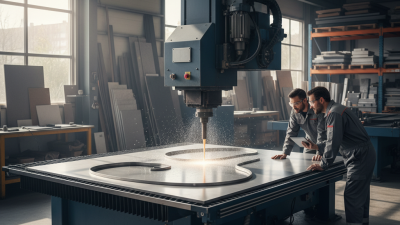
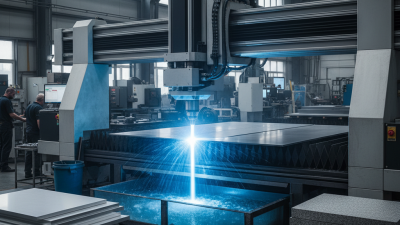
In the realm of advanced manufacturing, water jet cutting steel has emerged as a game changer. Renowned expert Dr. Emily Zhang, a leading figure in industrial innovation, asserts, “Water jet cutting is not just about precision; it’s an art of efficiency.” This technique employs high-pressure water streams to slice through steel, offering remarkable accuracy without generating heat. Such properties mitigate the risk of material distortion, a common issue in traditional cutting methods.
China is at the forefront of these innovations. The country's focus on enhancing water jet cutting technologies has led to the development of sophisticated machinery. These advancements bolster the steel cutting industry, promoting faster production rates and reducing waste. Despite these benefits, the industry faces challenges. For instance, not all materials respond well to water jet cutting. Thus, a deeper understanding of material properties is essential for optimization.
Continued research and development in this field remain crucial. Manufacturers must balance innovation with reliable practices. The water jet cutting steel industry exemplifies how technical precision can transform production while highlighting areas for ongoing improvement. Dr. Zhang encourages professionals to explore these dynamics further. Her insights remind us that while technology advances, the human element in craftsmanship still plays a vital role.

China's Pioneering Advances in Water Jet Cutting Technology
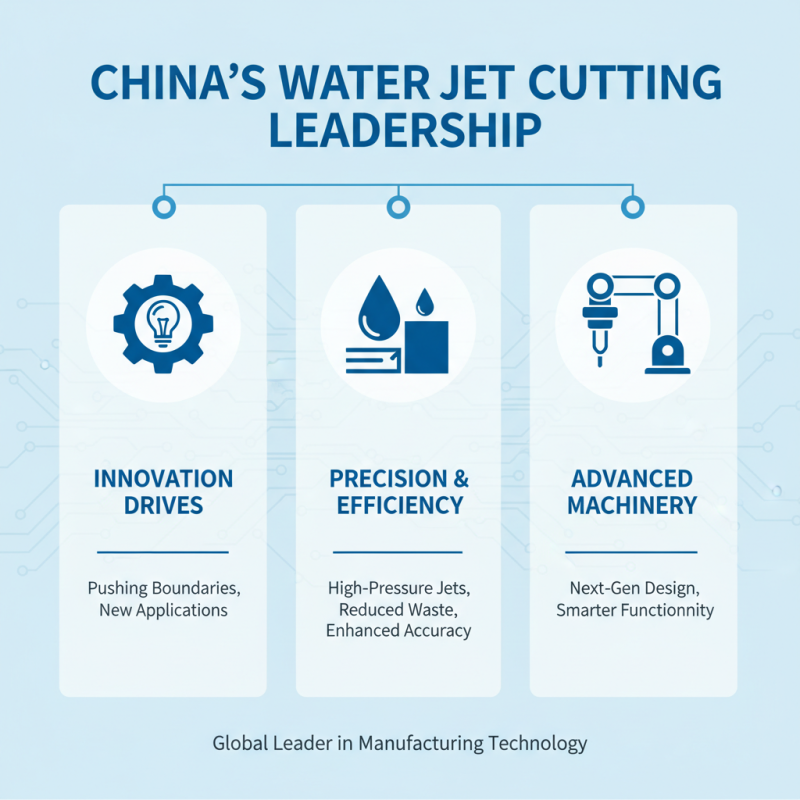
China has emerged as a leader in water jet cutting technology. Innovation plays a vital role, pushing the boundaries of this sector. Advanced machinery utilizes high-pressure water jets to cut through various materials. This approach enhances precision and reduces waste. The pursuit of efficiency has led to significant improvements in design and functionality.
Recent developments focus on automation and software integration. These tools allow for intricate designs with minimal human intervention. However, some machines still face downtime due to technical issues. Continuous improvement is needed here. Despite the progress, the industry sometimes struggles with standardization. Variations in material quality can affect outcomes. Building a reliable infrastructure for testing and validating these technologies is essential.
Moreover, skilled operators are crucial for success. Training programs have expanded, aiming to equip workers with necessary skills. Yet, attracting talent remains challenging. The industry must make efforts to inspire new generations. Collaborations between universities and companies could offer fresh perspectives. Addressing these gaps will ensure sustainable growth in China’s water jet cutting landscape.
Key Innovations in Water Jet Cutting Steel Techniques
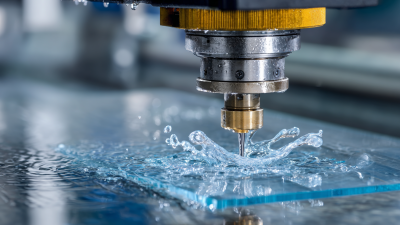
Water jet cutting technology has seen significant advancements in China. This cutting-edge method uses high-pressure water mixed with abrasives to slice through steel, providing precise and clean cuts. Key innovations have emerged in nozzle design and control systems. These improvements enhance cutting speed and accuracy, making the process more efficient.
One notable development is the integration of advanced sensors. These sensors monitor the cutting process in real-time, allowing adjustments on-the-fly. This adaptive technology reduces waste and ensures a higher-quality finish. However, this is not without challenges; maintaining equipment reliability can be an issue. Regular calibration is crucial for optimal performance.
Another important innovation is the use of eco-friendly abrasives. Traditional abrasives can be harmful to both the environment and workers. Newer materials are less toxic and reduce pollution. Despite these advancements, companies still face the dilemma of balancing performance and sustainability. There remains a need for ongoing research to refine these techniques while addressing cost-effectiveness.
Applications of Water Jet Cutting in Various Industries in China
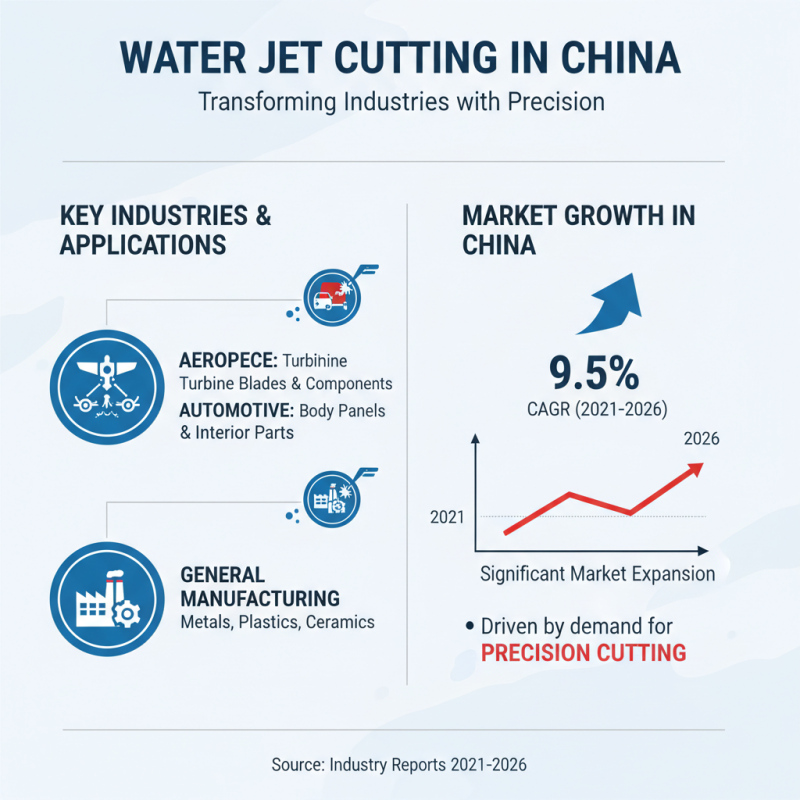
Water jet cutting has become a transformative technology in several industries across China. This technique effectively uses high-pressure water streams to cut various materials, including metals, plastics, and ceramics. Reports indicate that the Chinese water jet cutting market is projected to grow significantly, with a compound annual growth rate (CAGR) of around 9.5% from 2021 to 2026. This growth is attributed to the increasing demand for precision cutting in sectors like aerospace, automotive, and manufacturing.
In the automotive industry, water jet cutting offers unparalleled precision. It allows for intricate designs and can cut materials without inducing heat, which is crucial for maintaining structural integrity. The aerospace sector also benefits from this technology, as it ensures clean edges without burrs on aircraft components. Additionally, the metalworking sector has embraced water jet cutters for their versatility and efficiency, allowing for complex designs to be produced quickly.
**Tip:** Regular maintenance can extend the life of water jet systems, ensuring consistent performance.
Despite its advantages, there are challenges. Water jet cutting can be slower compared to laser cutting for certain materials. Moreover, the initial investment for high-quality equipment can be substantial. Businesses must weigh these considerations carefully.
**Tip:** Consider leasing equipment to reduce upfront costs and evaluate long-term needs.
Comparative Analysis of Traditional vs. Water Jet Cutting Methods
Water jet cutting technology has transformed the manufacturing landscape.
It offers a unique approach compared to traditional cutting methods.
While traditional techniques involve mechanical cutting or thermal processes,
water jet cutting utilizes high-pressure water mixed with abrasives.
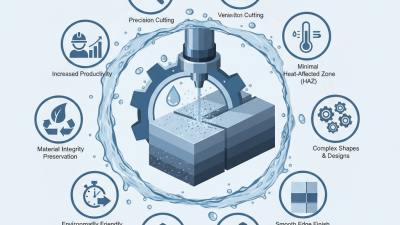
This results in cleaner cuts and less material wastage.
Traditional cutting methods often create heat, which can warp materials, especially metals.
Water jet cutting avoids this issue entirely. The cold cutting process
preserves the integrity of the material, making it ideal for delicate designs and intricate details.
Engineers appreciate the precision that water jet cutting brings to projects.
Tips: When considering water jet cutting, evaluate the thickness of the material.
Thicker materials may require more powerful setups. Also, assess the complexity of the design.
Simple shapes may be more cost-effective with traditional methods. Each project is unique and should be approached accordingly.
Moreover, water jet cutting has its limitations. It can be slower for high-volume production compared to traditional methods.
Understanding these nuances can guide better decision-making. It’s essential to weigh the pros and cons
of each method before committing to a cutting technique.
Future Trends in Water Jet Cutting Technology in China
Water jet cutting technology in China is evolving rapidly. The adoption of high-pressure water jets allows for precise cutting of various materials, including metals and ceramics. According to industry reports, the market for water jet cutting machines is expected to grow by 5.2% annually through 2025. This growth is fueled by the increasing demand in sectors like aerospace, automotive, and manufacturing.
Future trends indicate a shift towards more automated systems. Automation enhances efficiency and reduces labor costs. Many companies are investing in advanced control systems and robotics. The integration of artificial intelligence in water jet cutting is anticipated to improve precision and reduce operational downtime. Yet, the transition to fully automated systems poses challenges. Companies must address the skills gap among workers to effectively operate sophisticated machines.
Environmental sustainability is another driving force behind innovations. The focus on reducing water waste and energy consumption is increasingly important. Water recovery systems are becoming standard in new designs. However, balancing innovation with practicality remains a crucial concern. The industry's move toward green technology necessitates ongoing adaptation and investment in research and development.
Future Trends in Water Jet Cutting Technology in China