
China Top 10 Ammonia Manufacturers for Global Buyers
Ammonia is a foundational chemical for fertilizer, industrial processes, and emerging low-carbon energy supply chains. For global buyers, choosing a manufacturer involves more than comparing quoted prices. Production capacity, port access, product specifications, delivery reliability, and emissions data all shape a purchase decision.
The scale is substantial. The International Energy Agency’s Ammonia Technology Roadmap (2021) estimates that ammonia production accounts for about 2% of global final energy consumption and 1.3% of energy-related carbon dioxide emissions. The IEA also reports global production of roughly 185 million tonnes in 2020. Its Executive Director, Fatih Birol, highlights the need to transform this energy-intensive industry; the roadmap states, “Ammonia production is responsible for around 2% of total final energy consumption and 1.3% of CO2 emissions.” These figures make production methods and emissions disclosures relevant commercial considerations, not just technical details.
Details matter. A certificate, a loading port, a delivery window. This guide to China’s top 10 ammonia manufacturers offers international buyers a starting point for comparing suppliers. It considers capabilities and export readiness, while recognizing that public company data can be incomplete or change over time. A ranking is not a guarantee. Buyers should confirm current specifications, production availability, and shipment terms directly with each manufacturer. The IEA report provides useful industry context, but it cannot verify any individual supplier’s claims.
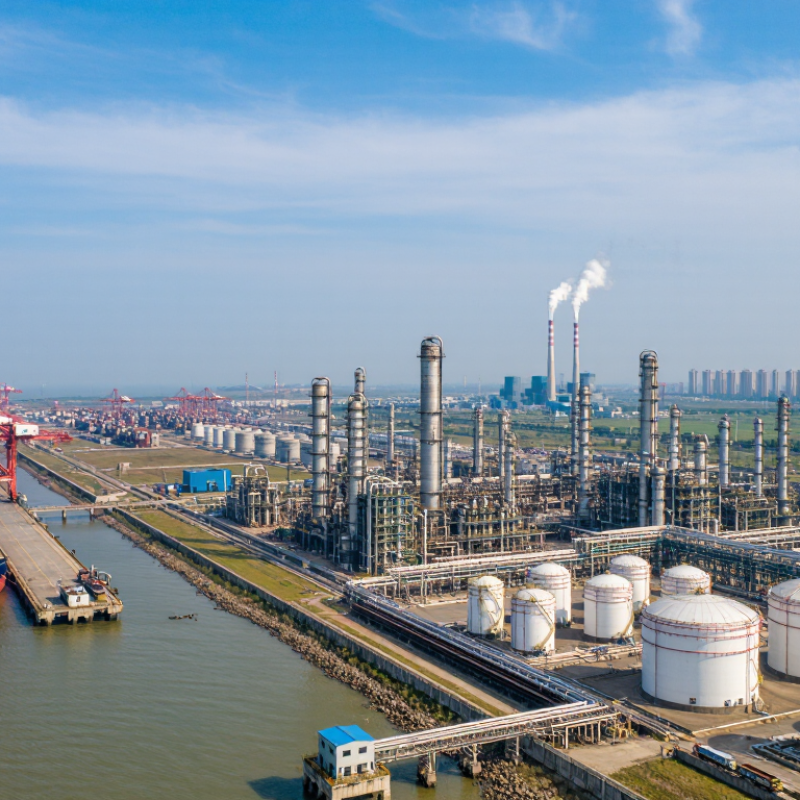
Understanding Ammonia and China’s Manufacturing Industry
Ammonia (NH₃) is a basic chemical feedstock, used mainly to make nitrogen fertilizers. It is also used in industrial refrigeration and other chemical processes. The International Energy Agency’s 2021 Ammonia Technology Roadmap estimates global production at about 185 million tonnes in 2020. It attributes roughly 450 million tonnes of direct CO₂ emissions to that production. The process also uses substantial energy. Small details matter: feedstock, production route, and delivery distance can all affect a buyer’s footprint and cost.
China is a central part of this manufacturing landscape. The IEA roadmap identifies it as the world’s largest ammonia producer, accounting for around 30% of global output. Many plants rely on coal, while other facilities use different feedstocks and technologies. So “made in China” does not describe one uniform production profile. Buyers comparing suppliers should check capacity, product specifications, feedstock, and the distance from plant to port or end user. A clear specification helps prevent mismatches in concentration or delivery form. Published figures also have limits: national averages cannot confirm the performance of an individual facility, and production data may vary by reporting year.
Criteria for Selecting and Ranking Ammonia Manufacturers
For global buyers, ranking ammonia manufacturers should begin with verifiable operating performance, not headline capacity. The IEA’s 2021 Ammonia Technology Roadmap reports global production reached 185 million tonnes in 2020. That scale makes dependable output, consistent product specifications, and documented batch testing practical purchasing criteria. Ask for recent production records and independent inspection results. A low quoted price means little if deliveries arrive late or batches vary.
Environmental performance deserves equal weight. The same IEA report estimates ammonia production causes about 450 million tonnes of CO₂ emissions annually. Buyers should compare energy use per tonne, emissions measurement boundaries, and credible improvement plans. Do not treat “low-carbon” claims as proof without audited data. Check the evidence. Feedstock access, maintenance records, and port or rail connections also shape supply reliability. Verify storage controls, emergency procedures, and shipment traceability. Not perfect. A weighted scorecard can expose trade-offs, but published data may be incomplete or outdated. Record the date and scope behind each figure; rankings should reward evidence, not polished brochures.
Profiles of China’s Top 10 Ammonia Manufacturers
These ten manufacturer profiles are best read as a buyer’s comparison, not a verified production ranking. They represent different operating strengths: large inland plants with established coal supply, integrated fertilizer producers, and coastal facilities positioned near ports. Some emphasize steady bulk shipments; others may suit buyers seeking flexible scheduling or nearby downstream processing. A supplier’s headline capacity is useful, but it does not confirm current output or export availability.
The International Energy Agency’s Ammonia Technology Roadmap reports that global ammonia production reached about 185 million tonnes in 2020. It also estimates that production used roughly 2% of final energy and caused 1.3% of energy-related carbon dioxide emissions. Those figures make feedstock, energy efficiency, and emissions data practical comparison points. Buyers should ask each producer for recent operating rates, product specifications, loading options, and independently verifiable documentation. Claims can vary.
A careful profile also separates the factory from the trading intermediary. Check whether the quoted producer controls production, storage, and dispatch, and confirm the delivery terms in writing. For inland plants, transport distance can affect cost and timing; coastal access may ease shipping but does not guarantee capacity. That distinction is easy to miss. Company-level disclosures are uneven, so buyers should treat unverified figures cautiously and compare like-for-like data.
China Top 10 Ammonia Manufacturers for Global Buyers — Profiles of China’s Top 10 Ammonia Manufacturers
The entries below summarize factual, industry-wide ammonia production and purchasing considerations. They are not company-specific profiles or a verified ranking of Chinese manufacturers; supplier-level capacities, certifications, and export records should be confirmed directly.
| Profile | Buyer-Relevant Dimension | Factual Industry Information | What Global Buyers Should Verify |
|---|---|---|---|
| 01 | Ammonia synthesis | Industrial ammonia is produced by reacting nitrogen with hydrogen in the Haber–Bosch process. The reaction is reversible and exothermic. | Ask for the product specification, analytical method, and recent batch certificate of analysis. |
| 02 | Hydrogen from natural gas | Natural-gas-based plants commonly produce hydrogen through steam reforming, followed by gas purification and ammonia synthesis. | Confirm the production route and request independently verifiable product and emissions documentation if relevant. |
| 03 | Hydrogen from coal | Coal gasification can produce synthesis gas containing hydrogen and carbon monoxide. Additional processing is needed to prepare hydrogen-rich feed gas for ammonia synthesis. | Confirm the plant’s feedstock, product quality controls, and any applicable environmental disclosures. |
| 04 | Nitrogen supply | Nitrogen for ammonia synthesis is commonly obtained from air, which is approximately 78% nitrogen by volume in dry air. | Check the supplier’s quality controls for synthesis-gas composition and finished-product purity. |
| 05 | Green ammonia pathway | Green ammonia generally refers to ammonia made using hydrogen produced by water electrolysis powered by renewable electricity, together with nitrogen separated from air. | Request evidence covering electricity sourcing, hydrogen production, and the boundaries used for any low-emissions claim. |
| 06 | Carbon-capture claims | Ammonia made from fossil-based hydrogen may be described as lower-carbon when carbon capture is used; the actual emissions outcome depends on capture performance and the assessment boundary. | Ask for project-specific capture data and a clearly defined lifecycle or facility emissions methodology. |
| 07 | Physical properties | Anhydrous ammonia boils at approximately −33.3°C at standard atmospheric pressure, so storage and transport require suitable pressure or refrigeration systems. | Confirm the offered product form, storage conditions, packaging, and compatibility with the receiving facility. |
| 08 | Common downstream uses | Ammonia is used to produce nitrogen fertilizers, including urea and ammonium-based fertilizers, and is also used in several industrial applications. | Match the product grade and impurity limits to the intended industrial or fertilizer application. |
| 09 | Handling and safety | Anhydrous ammonia is a hazardous substance and presents serious inhalation risks. Safe handling requires appropriate equipment, procedures, and emergency planning. | Review the current safety data sheet, transport documentation, emergency response arrangements, and applicable local regulations. |
| 10 | Export and delivery terms | International ammonia transactions require suitable packaging or bulk logistics, compliant shipping arrangements, and clearly specified delivery terms. | Verify export eligibility, port and vessel arrangements, delivery Incoterms, insurance, lead time, and responsibility for each logistics stage. |
Product Grades, Production Capacity, and Export Capabilities
When comparing China’s ammonia manufacturers, start with product grade rather than headline price.
Anhydrous ammonia is commonly supplied for fertilizer and industrial applications, while aqueous ammonia has different concentration and handling requirements. Confirm the stated concentration, impurity limits, and test method against your process needs. Request a recent certificate of analysis for a representative batch. Check the details. Specifications can vary between production lots, so a catalogue description alone is not enough.
Production capacity needs context. Annual nameplate capacity may not reflect current output, maintenance periods, or available export volume. Ask how much product can be allocated during your required delivery window, and whether output is made at one site or several. Export capability also depends on loading facilities, suitable transport equipment, port access, and reliable shipping schedules. For each proposed route, verify packaging or bulk-shipment options, shipment documents, and the supplier’s process for handling quality claims. A spreadsheet may make capacity look simple; it rarely captures delays at a terminal or a missed vessel. Compare verifiable records, not promises, and confirm key details directly before placing an order.
Key Considerations for Global Buyers Sourcing Ammonia
Global buyers should assess ammonia suppliers by product fit, consistency, and delivery capability—not price alone. Ammonia may be supplied in anhydrous or aqueous form, and these are not interchangeable. Confirm the required concentration, grade, impurity limits, and intended application before requesting quotations. Details matter. A clear specification helps prevent costly misunderstandings between purchasing teams and suppliers.
Review a recent certificate of analysis and check whether it identifies the production batch, key purity measures, and relevant contaminants. Ask for a current safety data sheet, traceability records, and an explanation of how quality issues are handled. Ask for evidence. A polished brochure is not proof of dependable quality; I would want specific documents and consistent answers. Even then, one document cannot show how every future batch will perform.
Logistics deserve equal attention. Confirm shipment format, packaging or tank compatibility, loading schedules, transit estimates, and contingency plans for delays. Check that proposed handling and storage arrangements suit the product and your site’s capabilities. Import documentation and transport requirements vary by destination, so verify them with qualified local specialists. A low quotation can look attractive, but unclear delivery terms may change the real cost. I sometimes find this part less tidy than expected. Supplier comparisons should leave room for questions, not just a final score.

