
China Top 10 Warehouse Forklift Tire Manufacturers?
Warehouse Forklift Tires may look like a small purchasing decision. On a busy warehouse floor, however, tire choice affects traction, turning, vibration, and equipment uptime. A loaded forklift crossing a concrete aisle puts visible pressure on its contact patches. The wrong compound or tread can wear unevenly. The consequences show up in maintenance records.
Demand is shaped by wider supply-chain investment. MHI’s 2024 Annual Industry Report found that 55% of surveyed organizations planned to increase supply-chain technology investment over the following two years. That figure describes survey respondents, not tire purchases. Still, it signals a continuing focus on warehouse performance. For buyers comparing Chinese manufacturers, useful checks include load ratings, compound options, dimensional consistency, testing documentation, and after-sales support. A polished catalog is not proof of consistent production.
This guide examines ten manufacturers through practical questions: What applications do their tires suit? How clearly do they explain specifications? Can buyers verify quality claims? These details matter more than a broad promise of durability. One limitation deserves notice: no attributable interview or expert quotation was provided for this introduction, so I will not invent a named specialist’s words. Readers should also verify current certifications and product data directly with each supplier. Tire specifications can change. Even a careful ranking needs rechecking.
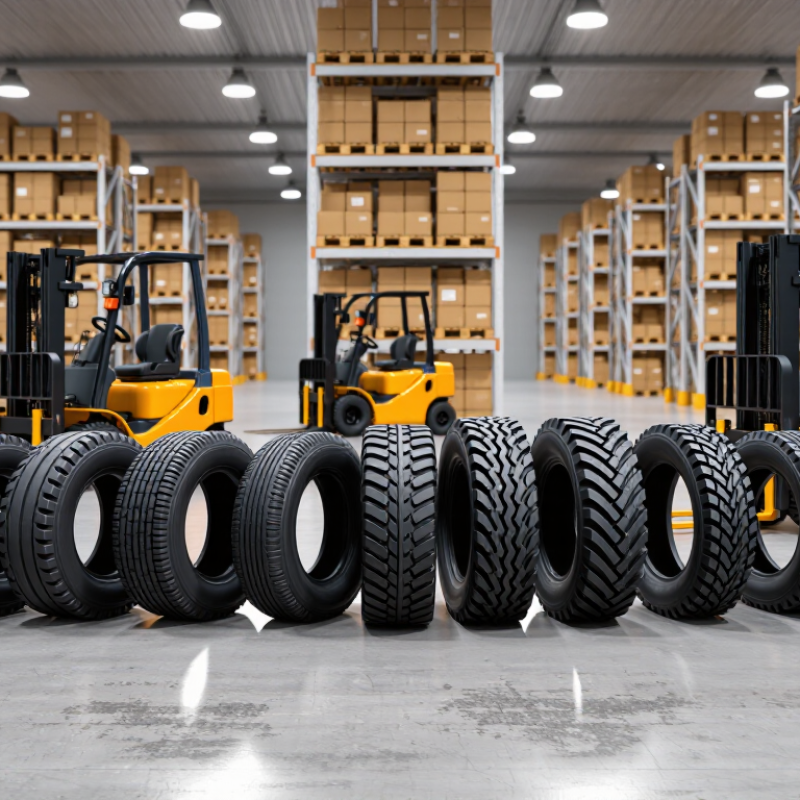
Understanding China’s Warehouse Forklift Tire Industry
China’s warehouse forklift tire industry follows the growth of industrial vehicles, but vehicle sales are only an indirect demand signal. China Industrial Truck Association statistics recorded 1,174,077 industrial vehicles sold in 2023, up 12.9% year on year. That figure covers more than warehouse forklifts, so it should not be treated as a tire-sales total. World Industrial Truck Statistics separates truck types, helping analysts distinguish warehouse equipment from counterbalanced forklifts. Still, shipment data cannot show how often fleets replace tires.
In daily warehouse use, tire choice depends on more than price. Smooth concrete floors favor different compounds from rough loading bays, while tight aisles and frequent turns can accelerate edge wear. Solid tires resist punctures; softer compounds may improve grip but can wear faster. Small differences matter. Buyers typically compare load ratings, dimensions, heat buildup, and floor-marking requirements against actual operating conditions. A tire that performs well on a clean floor may disappoint near dock plates or debris. This is where published market figures have limits: they describe equipment flows, not site-level wear. Facility managers should pair industry data with maintenance logs and regular inspections. The data is useful, but not the whole story.
Criteria for Evaluating Leading Forklift Tire Manufacturers
Choosing a warehouse forklift tire manufacturer requires more than comparing price lists. Start with operating conditions: truck capacity, daily hours, floor joints, ramps, and turning frequency. A tire that performs well on smooth concrete may wear quickly on rough dock plates. Fit matters. Check the load rating, dimensions, rim compatibility, and tire type, such as pneumatic, solid, or cushion. Ask for test records covering wear, heat buildup, and traction under clearly stated conditions. Numbers without test methods are hard to compare.
Experienced buyers also assess manufacturing consistency. Request batch inspection data, material specifications, and a clear process for handling defects. If possible, test samples on the same truck and route used in daily work. Record tread loss and operating temperature over time. Ask technical staff how compounds perform in cold rooms, oily areas, or frequent stop-start cycles. Their answers should be specific, not merely reassuring. Service matters. Confirm lead times, replacement availability, and whether the supplier can investigate premature wear using photos and operating records. A factory visit or independent inspection can add confidence, but neither guarantees every batch will perform perfectly. That limitation is worth stating. Compare evidence, not slogans, and keep a written record.
Profiles of 10 Notable Chinese Forklift Tire Manufacturers
Chinese forklift-tire manufacturing is diverse, and a useful comparison looks beyond production volume. These ten profiles represent different capabilities rather than a verified ranking. One producer may specialize in solid tires for indoor electric forklifts; another may focus on pneumatic tires for rough yards. A third may offer non-marking compounds for clean floors. Others may emphasize heat resistance, deep tread patterns, reinforced sidewalls, or custom dimensions. Fit comes first. Buyers should check load ratings and rim compatibility against the forklift’s actual operating conditions.
The remaining profiles highlight practical differences: a producer with broad size coverage can simplify fleet replacement; one with flexible molding may handle uncommon specifications; another may focus on consistent compound mixing. Some manufacturers serve export customers and provide detailed technical sheets, while others compete through shorter production runs or regional distribution. Ask about wear testing, batch traceability, and sample availability. These details matter. A tire that looks robust in a catalog may perform differently on a wet loading dock or over cracked concrete. Factory claims deserve careful checking, and public information is not always complete. Compare documented specifications, warranty terms, and field feedback before making a shortlist.
Comparing Tire Types, Applications, and Manufacturing Capabilities
Warehouse forklift tires differ by floor, load, and duty cycle. Cushion tires suit smooth indoor concrete, where tight turning matters. Solid pneumatic tires tolerate rougher yards without puncture downtime, while air-filled pneumatic tires add cushioning outdoors. Polyurethane wheels are common on pallet trucks and some reach equipment. Small details matter.
Grand View Research’s forklift-market outlook forecasts a 5.7% compound annual growth rate for 2024–2030. This points to continued equipment demand, but it does not prove equal demand for every tire type. Buyers should compare load rating, tread profile, heat buildup, rolling resistance, and floor marking. A hard compound may last longer, yet can transmit more vibration through the truck.
Manufacturing capability is visible in compound consistency, curing control, dimensional accuracy, and secure bonding between tire and wheel. Ask how batches are tested for hardness, runout, adhesion, and load performance. For example, a warehouse with narrow aisles and polished concrete needs different traction from a loading bay exposed to debris and rain. Specifications alone can mislead; real operating conditions should guide selection. Even a careful comparison may miss uneven floors or abrupt driving habits.
How to Choose a Forklift Tire Manufacturer in China
Choosing a forklift tire manufacturer in China starts with your floor, load, and shift pattern—not a catalog photo. Measure the wheel dimensions and check the truck’s rated load. Describe your surfaces: smooth concrete, dock plates, wet areas, or rough outdoor routes. A tire that runs quietly in a showroom may wear quickly under sharp turns and repeated braking. Ask whether the supplier can explain compound options, heat limits, and wear indicators in practical terms. Clear answers matter.
Request a sample or trial batch when possible, then compare it on the same truck and route. Record operating hours, tread loss, heat, and operator feedback. Check batch consistency, inspection records, lead times, and how complaints are handled. Ask for technical drawings and written specifications, not just verbal promises. A low quote can hide mismatched dimensions or a compound unsuited to your workload. One successful week is not proof; tire life can change with seasons and operator habits.
Tips: Send the manufacturer your forklift model, tire size, average load, daily hours, and floor photos. Ask for a written recommendation and confirm fit before ordering. Small details get missed. Keep a worn tire as a reference, but remember it may not show the original specification.
China Forklift Tire Manufacturers: Capacity Classes to Consider
Common rated load-capacity classes for forklifts (tonnes). Use your truck’s data plate and tire specifications to confirm the required capacity when comparing manufacturers.
These are representative forklift capacity classes, not manufacturer rankings or tire load ratings. Actual capacity depends on the forklift model, load center, and operating conditions.

