

China Top 10 Laser Machine Manufacturers for Global Buyers
Choosing a Laser Machine supplier in China is not only a price comparison. Buyers also need to weigh cutting accuracy, machine stability, available service, and the cost of replacement parts. A polished product page can look convincing; a steady cut on thick steel matters more. Small details count.
Theodore H. Maiman, the physicist credited with building the first working laser, is often associated with the observation, “A laser is a solution looking for a problem.” That line remains a useful reminder: technology should fit the job. A fiber system suited to sheet metal may not be the right choice for engraving wood or processing plastics. There is no universal winner.
This guide introduces ten Chinese manufacturers for global buyers and outlines practical points for comparing them. It considers product range, application fit, customization, technical documentation, and after-sales support. Buyers should confirm specifications directly, request sample results, and clarify installation and training arrangements before committing. Ask about the laser source, motion components, warranty terms, and response times. Get the details in writing.
A shortlist is not a verdict. Company capabilities and service coverage can change, and a machine that performs well in one workshop may disappoint in another. That is a limitation worth stating. Use the profiles as a starting point, then match each supplier’s claims against your material, production volume, budget, and local support needs. A careful comparison takes longer. It can prevent an expensive mismatch.
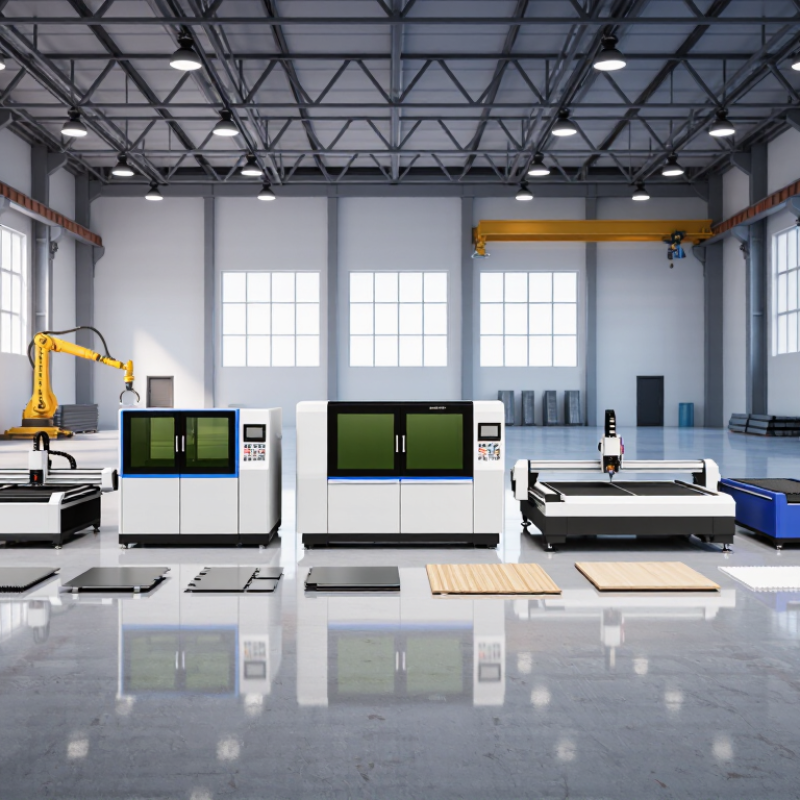
China’s Laser Manufacturing Landscape: Core Technologies and Market Segments
China’s laser manufacturing landscape spans fiber, CO2, and ultrafast systems, each suited to different materials and production demands. Fiber lasers are widely used for cutting and welding metals, from thin stainless-steel panels to heavier structural parts. CO2 machines remain relevant for processing wood, acrylic, and textiles. Ultrafast lasers serve precision applications where controlled heat input matters, such as fine marking or delicate component work.
The market also divides by machine format and level of integration. Buyers can compare compact engravers, large-format cutting tables, welding cells, and automated production lines. Some manufacturers focus on core laser sources, while others supply complete systems with motion control, software, and extraction equipment. That difference affects installation, training, and service needs. Details matter.
Technical specifications alone can be misleading. A high power rating does not guarantee clean edges on a buyer’s actual material, and quoted speeds may depend on thickness, gas, and settings. Ask for sample processing with the intended material, then inspect cut quality, repeatability, and setup time. Service coverage deserves equal attention. The picture is not perfectly tidy: testing can reveal inconsistent finishes, and comparing suppliers takes time. A factory visit or live production demonstration can clarify how machines perform beyond a polished specification sheet.
China Top 10 Laser Machine Manufacturers for Global Buyers - China’s Laser Manufacturing Landscape: Core Technologies and Market Segments
This segment-based overview describes common laser machine categories and technologies available from manufacturers in China. It is not a verified ranking of ten companies. Power ranges are indicative examples; specifications vary by machine configuration and application.
| No. | Machine Segment | Core Laser Technology | Typical Configuration or Power Range | Common Materials and Applications | Key Buyer Evaluation Points |
|---|---|---|---|---|---|
| 1 | Flat-Sheet Metal Cutting | Fiber laser, CNC motion control, assist-gas cutting | Common industrial systems range from a few kilowatts to tens of kilowatts; bed sizes vary by model. | Carbon steel, stainless steel, aluminum, and other sheet metals; fabrication and machinery parts. | Cut quality, rated power, bed size, nesting software, extraction, safety, and local service support. |
| 2 | Tube and Profile Cutting | Fiber laser with rotary chuck or multi-chuck feeding systems | Fiber sources commonly range from around 1 kW to over 10 kW, depending on material and production needs. | Round, square, and rectangular metal tubes; frames, furniture, construction, and vehicle components. | Tube diameter and length capacity, loading automation, chuck accuracy, remnant length, and software support. |
| 3 | Non-Metal CO₂ Cutting and Engraving | CO₂ gas laser with gantry motion control | Many small and mid-size systems use sources in the tens to several hundreds of watts; configurations vary widely. | Wood, acrylic, textiles, leather, paper, and some plastics; signage, crafts, packaging, and prototypes. | Working area, focus control, exhaust and cooling systems, material compatibility, and optical-component availability. |
| 4 | Fiber Laser Marking | Pulsed fiber laser; some systems use MOPA pulse control | 20–100 W is a common range for many general-purpose marking applications. | Metals and selected engineered materials; serial numbers, logos, codes, and product traceability. | Marking speed, field size, rotary options, code readability, enclosure class, and software integration. |
| 5 | UV Laser Marking and Microprocessing | Ultraviolet solid-state laser, commonly operating at 355 nm | Low-power pulsed systems are common; output depends on the required mark, material, and processing speed. | Electronics, glass, ceramics, selected plastics, and coated materials requiring fine or low-heat marking. | Spot size, pulse characteristics, thermal effect, repeatability, and compatibility with production-line vision systems. |
| 6 | Laser Welding | Fiber or diode laser with handheld, fixture-based, or robotic delivery | Systems range from lower-kilowatt handheld units to higher-power automated installations. | Metal joints in sheet fabrication, appliances, enclosures, automotive components, and precision assemblies. | Joint quality, wire-feeding options, process monitoring, operator safety, fixture design, and fume extraction. |
| 7 | Laser Cleaning | Pulsed or continuous-wave fiber laser, selected for the cleaning task | Portable and automated systems are available across a broad range of average powers and pulse formats. | Removal of rust, oxides, paint, oil, or surface residues from suitable metal components and tooling. | Substrate protection, cleaning rate, beam control, extraction, safety enclosure, and validation on sample parts. |
| 8 | Metal Additive Manufacturing | Laser powder bed fusion using one or more focused laser beams | Laser count, power, build volume, and scan strategy vary by machine and target material. | Metal powders for complex parts, prototypes, and specialized production in aerospace, medical, and industrial sectors. | Build volume, powder handling, process qualification, atmosphere control, material data, and post-processing needs. |
| 9 | Precision Micromachining | Picosecond or femtosecond ultrafast laser with precision motion stages | Configurations are application-specific; pulse duration, repetition rate, and beam quality are key parameters. | Fine drilling, scribing, texturing, and micro-cutting of metals, glass, ceramics, and electronic materials. | Positioning accuracy, pulse control, process stability, metrology, and demonstrated results on the target material. |
| 10 | Laser Cladding and Surface Hardening | High-power diode or fiber laser with powder or wire feeding, where applicable | Power and delivery configuration are selected according to coating width, material, and component geometry. | Repair, wear-resistant coatings, and surface modification of industrial parts and tooling. | Cladding consistency, dilution control, feedstock delivery, robotic reach, and metallurgical test results. |