What is All Water Jet Cutting and How Does It Work?
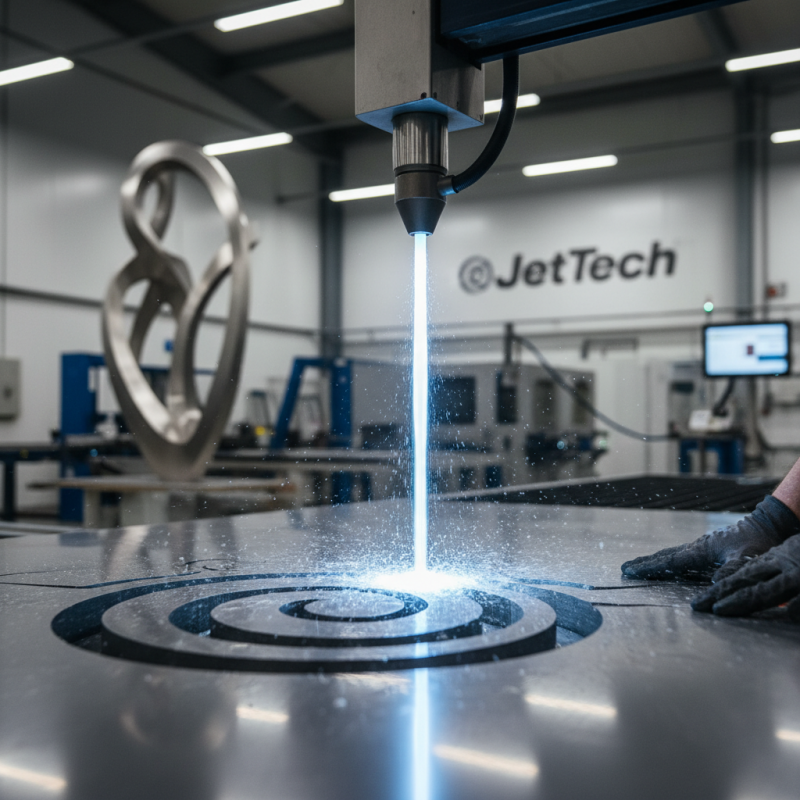
Water jet cutting is an innovative technique widely used in various industries. Expert John Smith from JetTech states, "All water jet cutting offers precision that traditional methods cannot match." This highlights its effectiveness in achieving intricate cuts.
In this process, high-pressure water jets mix with abrasive materials. The result is a powerful cutting stream capable of slicing through diverse materials, including metal, glass, and stone. Industries value all water jet cutting for its capacity to create complex designs swiftly.
Yet, challenges exist within this technology. The initial investment can be high, and operational costs need careful management. Not every company can easily adapt to this method. Understanding these aspects is crucial for successful implementation. The balance of benefits and challenges in all water jet cutting should prompt reflection among industry professionals.
What is Water Jet Cutting?
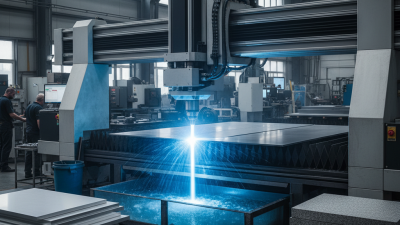
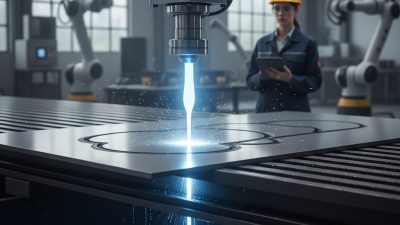
Water jet cutting is an innovative technology that uses high-pressure water to slice through materials. This technique can handle a variety of substances, including metal, glass, and stone. The cutting process involves a focused jet of water, often mixed with abrasive particles, which increases its effectiveness. The result is a clean, precise cut without the heat-affected zones typical of other cutting methods.
When considering water jet cutting, pay attention to the thickness of the material. Different materials require specific pressures and techniques. Properly preparing the workspace is crucial. Ensure you have adequate drainage and that electric equipment is safe from water exposure.
Tips: Always wear protective gear when operating water jet equipment. The high pressure can be dangerous. Understand the machine’s settings before starting your project. Improper settings can lead to unsatisfactory results and wasted materials. Regular maintenance of the cutting system can prevent unexpected breakdowns and ensure efficiency.
Principles Behind Water Jet Cutting Technology
Water jet cutting technology relies on high-pressure water jets to cut through various materials. The process begins by pressurizing water to over over 50,000 psi. This extreme pressure transforms the water into a precise cutting tool. A mixture of abrasive materials, like garnet, may be added to enhance cutting efficiency, particularly on hard materials. This method is increasingly popular across industries due to its versatility and precision.
A report from the International Waterjet Technology Association highlights that water jet cutting produces minimal kerf. The kerf can be as narrow as 0.04 inches, allowing for intricate designs without significant material waste. Additionally, water jet cutting generates less heat compared to other cutting methods, preventing warping or distortion of sensitive materials. However, setup costs can be higher than traditional methods, which may deter some small businesses from adopting this technology.
The environmental impact of water jet cutting is also worth considering. While it uses water efficiently, the disposal of waste materials, including abrasives, poses challenges. Manufacturers must find ways to handle these byproducts responsibly. Moreover, ongoing maintenance of equipment ensures optimal performance, which can be overlooked in rapidly changing manufacturing environments. A balance must be achieved between efficiency, cost, and environmental responsibility in the industry.
Components Involved in Water Jet Cutting Machines
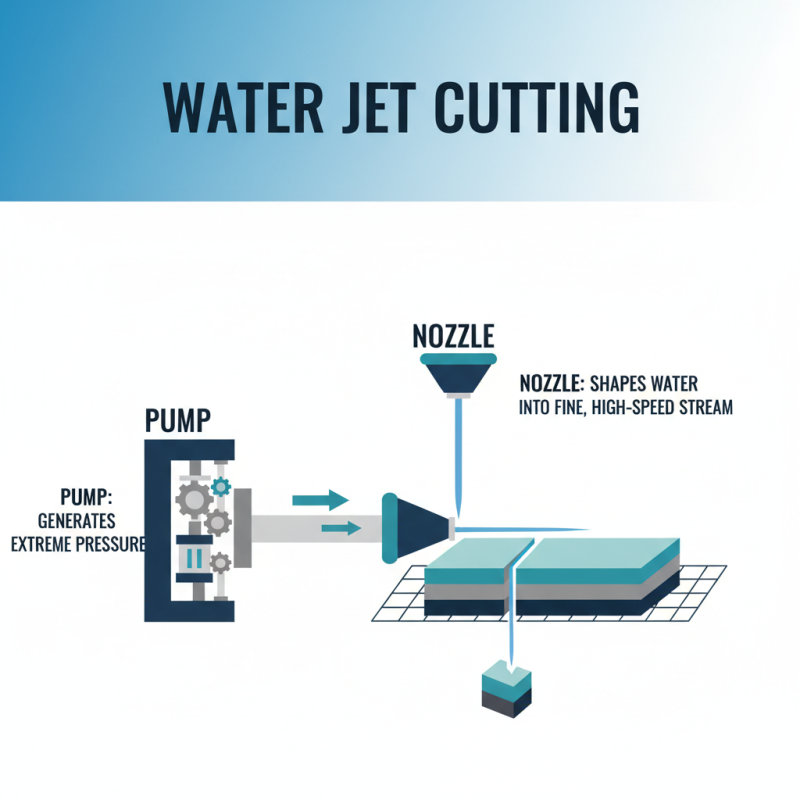
Water jet cutting is a versatile and efficient technique that utilizes high-pressure water to cut various materials. The machinery involves several key components. First, there is the pump, which generates extreme pressure to propel the water. This is typically achieved through a direct drive or intensifier pump. The nozzle then shapes the water jet. It narrows the water flow into a fine, high-speed stream.
Another critical component is the abrasive inlet. For tougher materials, abrasive particles mix with the water, enhancing the cutting capability. This combination allows the jet to slice through metals, stone, and glass with ease. The machine also houses a motion control system, which precisely guides the cutting head.
**Tip:** Regular maintenance of the pump is essential. Check for leaks or wear. This can prolong machine life.
When operating a water jet cutting machine, be aware of safety protocols. Water under high pressure can be dangerous. Always wear protective gear. Ensure that the workspace is clear and organized to prevent accidents.
**Tip:** Frequent training on machine operation can improve safety. It also boosts efficiency in cutting processes.
Applications of Water Jet Cutting Across Industries
Water jet cutting has found widespread applications across various industries. It uses high-pressure water to cut through materials. This method is especially effective for hard substances, such as metals and stone. In the aerospace sector, water jets are used to craft intricate components. Reports suggest that the global water jet cutting market is expected to grow by 7% annually.
Manufacturers utilize this technique for its precision. Unlike traditional cutting methods, water jet cutting minimizes wasted material. Industries often need precise cuts, especially in automotive manufacturing. Research indicates that using water jet technology can increase production efficiency by 25%. However, not all materials respond equally well to water jet cutting. Some composites can suffer from delamination.
In the food industry, water jet cutting ensures hygiene and safety. It eliminates the need for blades that can harbor bacteria. Yet, achieving proper pressure levels is crucial. If not carefully managed, the process can lead to improper cuts or damage. The medical device sector also benefits from this technology, tailoring components with high accuracy. Even with its advantages, water jet cutting still faces challenges in cost and maintenance, requiring ongoing reflection and improvement.
What is All Water Jet Cutting and How Does It Work? - Applications of Water Jet Cutting Across Industries
| Industry |
Applications |
Materials Used |
Advantages |
Challenges |
| Manufacturing |
Cutting metal sheets, shaping parts |
Steel, Aluminum |
Precision cutting, minimal heat affected zone |
Cost of equipment |
| Aerospace |
Cutting complex shapes, component manufacturing |
Composite materials, Titanium |
No material distortion |
Slower cutting speed |
| Construction |
Cutting stone, concrete, tiles |
Granite, Marble, Concrete |
Intricate designs |
Requires skilled operators |
| Automotive |
Manufacturing parts, cutting insulation |
Plastics, Metals |
High accuracy, versatility |
Initial setup time |
| Food Industry |
Cutting food products, shaping |
Fish, Vegetables |
Hygienic, reduced waste |
Water contamination concerns |
Advantages and Limitations of Water Jet Cutting Techniques
Water jet cutting is gaining traction across various industries for its precision and versatility. One key advantage is its ability to cut a wide range of materials. Reports indicate that water jet technology can process materials such as metals, ceramics, and composites without causing thermal distortion. This makes it ideal for applications where precision is paramount.
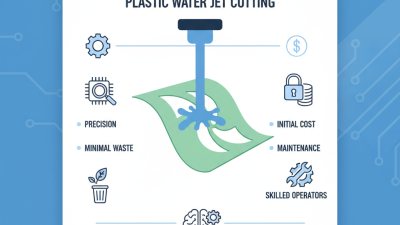
However, there are limitations to consider. The initial setup costs for water jet cutting equipment can be significant. A recent industry analysis noted that capital costs could be over 50% higher than traditional cutting methods. Additionally, while water jet cutting produces minimal waste, the process generates a considerable amount of water and abrasive residue that must be managed effectively. Companies must evaluate the environmental impact of these byproducts.
Moreover, the cutting speed can vary based on material thickness. Thicker materials require more time, which can lead to increased operational costs. Some users report that maintenance on high-pressure pumps can also be challenging. These factors must be weighed against the benefits when considering water jet cutting for production needs.