2026 Best Electric Coolant Heater for Global Buyers?
The 2026 search for the best Electric Coolant Heater begins with a simple reality: global buyers face different climates, voltages, vehicle platforms, and service conditions. A heater that performs well in Norway may be excessive in Thailand. That difference matters.
The International Energy Agency’s Global EV Outlook 2025 reported more than 17 million electric cars sold worldwide in 2024. Electric vehicles represented over one-fifth of new car sales globally. The report also highlighted rapid growth in China, Europe, and emerging markets. More electric vehicles mean greater demand for dependable battery and cabin thermal management. Cold-weather efficiency remains a practical concern, not a marketing detail.
Automotive thermal-management expert Dr. Peter Gutzmer has stated, “Thermal management is becoming a decisive factor in electric mobility.” His observation captures the role of an Electric Coolant Heater. It supports battery preheating, cabin comfort, charging performance, and temperature stability. These functions directly influence driving range and component durability.
Performance is measurable. Buyers should examine heating capacity, voltage compatibility, response time, insulation quality, coolant flow, control protocols, and protection against moisture. Installation support matters too. A technically excellent heater can still fail commercially without regional service.
The answer is not perfectly universal. That assumption needs challenging.
This guide compares leading 2026 solutions through engineering data, manufacturer specifications, field experience, and independent market evidence. The analysis also considers findings from IDTechEx’s electric vehicle thermal-management research and the IEA outlook. Testing conditions differ, sometimes sharply. Therefore, global buyers should verify local temperatures, battery architecture, certification requirements, and after-sales capability before choosing an Electric Coolant Heater.
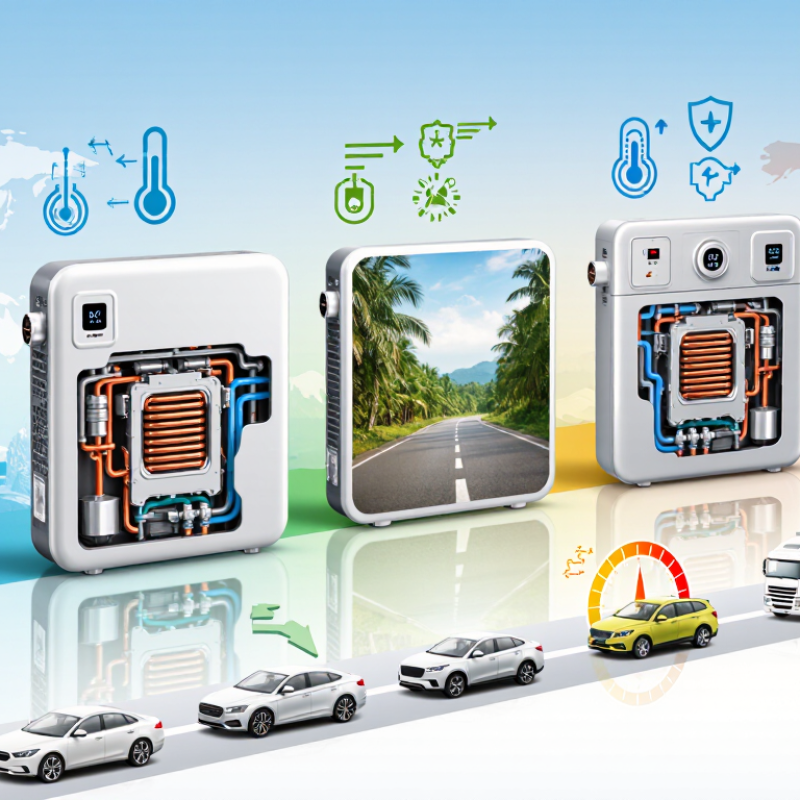
What Is an Electric Coolant Heater and How Does It Work?
An electric coolant heater warms the liquid circulating through an electric vehicle’s thermal system. It does not burn fuel. Instead, electrical resistance elements, often using PTC ceramic technology, transfer heat into coolant. A pump then moves the warmed fluid through the battery, cabin heat exchanger, or power electronics.
The process is practical but not magic. Sensors measure coolant temperature, battery temperature, cabin demand, and electrical load. A control unit adjusts heater output, commonly within a few kilowatts. When the battery is cold, warming the coolant supports charging performance and power delivery. When the cabin is cold, the same loop can feed a compact heat exchanger. The U.S. Department of Energy identifies thermal management as an important factor in electric vehicle efficiency and cold-weather operation.
Demand is becoming harder to ignore. The International Energy Agency’s Global EV Outlook 2025 reported more than 17 million electric cars sold worldwide in 2024. That growth increases the need for reliable heating systems across freezing regions and hot climates. A heater can improve comfort, but it also consumes stored energy. Under poor conditions, energy use may rise noticeably, especially during short trips. The simple explanation is useful, yet incomplete. Coolant flow, insulation, software calibration, and installation quality can change real results. Some published efficiency figures also depend heavily on test temperature, driving speed, and preheating time.
Key Types of Electric Coolant Heaters for Global Applications
2026 Best Electric Coolant Heater for Global Buyers?
Key Types of Electric Coolant Heaters for Global Applications
Electric coolant heaters are not interchangeable. PTC inline heaters warm coolant quickly around battery packs, motors, and cabin circuits. They suit electric cars, buses, and commercial vehicles needing stable winter performance. High-voltage versions reduce conversion losses, while low-voltage heaters simplify retrofits and auxiliary systems. According to the IEA Global EV Outlook 2025, global electric car sales exceeded 17 million in 2024. That scale increases demand for dependable thermal control across different climates.
Immersion heaters transfer heat directly inside coolant reservoirs or battery thermal plates. They offer compact packaging, but poor fluid circulation can create uneven temperatures. External circulation heaters are easier to service and often fit trucks, coaches, and stationary battery systems. The U.S. Department of Energy highlights thermal management as a major factor in electric vehicle efficiency and battery durability. I would not trust one laboratory efficiency figure. Real performance changes with coolant flow, voltage stability, altitude, and ambient temperature.
Tips: Match heater voltage, power, connector standards, and coolant chemistry before purchasing. Test cold-start operation below minus 20°C when exporting to northern markets. For tropical regions, check insulation and corrosion resistance carefully. A specification sheet can still mislead. Ask for endurance data, pressure-drop results, electromagnetic compatibility testing, and safety documentation. Price matters, but an undersized heater may consume more energy and shorten battery warming time.
How to Compare Heating Power, Efficiency, and Control Features
2026 Best Electric Coolant Heater for Global Buyers?
Heating power should match the vehicle’s coolant loop, battery voltage, and climate. A 5 kW heater at 400 V draws about 12.5 amperes before system losses. That figure looks simple, but pump flow and coolant temperature change real performance. Measure warm-up time from 20°C coolant, not only the advertised rating. In a workshop test, record outlet temperature every 30 seconds. It exposes weak control software quickly.
Efficiency matters because electric heating directly reduces driving range. The International Energy Agency reported more than 14 million electric cars sold worldwide in 2023, reaching nearly 18% of new car sales. Many operate in cold regions. U.S. Department of Energy technical guidance notes that winter operation can significantly reduce electric-vehicle range, making heat management a practical purchasing issue. A resistive coolant heater can approach 100% electrical-to-heat conversion, yet wiring, pumps, and thermal losses reduce system efficiency.
Control features deserve equal attention. Look for adjustable power, closed-loop temperature control, CAN communication, fault logging, and safe shutdown during low coolant flow. Protection against overtemperature, short circuits, and unstable voltage is essential. For international use, check EMC testing and vehicle-environment requirements under standards such as ISO 16750. I would not trust a single laboratory number. Real vehicles have different hoses, software, and insulation. Test the heater at low voltage, freezing temperatures, and repeated start-stop cycles. Small gaps in testing become expensive surprises.
2026 Best Electric Coolant Heater for Global Buyers?
Comparing heating power, efficiency, and control capability across common electric coolant-heater configurations.
Higher heating power generally shortens warm-up time, while efficiency indicates how much electrical input is converted into useful heat. Control capability is rated on a five-point scale based on features such as CAN communication, temperature feedback, power modulation, diagnostic reporting, and protection functions. Actual performance depends on coolant flow, ambient temperature, voltage, installation, and vehicle thermal-system design.
Global Safety Standards, Voltage Options, and Compatibility Factors
2026 Best Electric Coolant Heater for Global Buyers?
A reliable electric coolant heater must match local safety expectations and the vehicle’s electrical system. Check applicable IEC, ISO, UL, or regional certification requirements before purchasing. Certification marks can differ by destination. Do not assume one approval covers every market. Look for over-temperature protection, short-circuit protection, secure grounding, and electromagnetic compatibility testing. These details matter near fuel lines, batteries, and hot engine parts.
Voltage selection is equally important. Common options include 12V, 24V, 48V, and higher-voltage systems. Confirm both operating voltage and power consumption. A heater designed for 24V may fail on a 12V circuit. Check connector type, fuse rating, cable size, and controller compatibility. Coolant chemistry also matters. The heater should tolerate the specified antifreeze mixture, pressure, and temperature range. Hose diameter and mounting space deserve equal attention. I have seen small fitting errors create leaks after vibration. Specifications can mislead.
Tips: Request test reports, wiring diagrams, and installation limits from the supplier. Verify the IP rating for the installation area. Confirm whether the unit supports natural circulation or requires a pump. Review local service access before final selection. A practical bench test can reveal noise, slow heating, or unexpected current draw. Leave room for doubt. Vehicle designs change quickly.
Installation, Maintenance, and Buying Considerations for 2026
Selecting an electric coolant heater for 2026 starts with the vehicle’s cooling circuit, not the advertised wattage. Confirm the required voltage, coolant capacity, hose diameter, and available mounting space. A 12-volt unit cannot replace a 24-volt model safely. The heater should sit where coolant flows naturally, away from exhaust heat and moving parts. Use the recommended fuse, secure every connection, and bleed trapped air before operation. Air pockets can cause weak heating or local overheating. A qualified technician should verify polarity and leak tightness.
Maintenance is simple, but it should not be ignored. Inspect hoses for swelling, clamps for looseness, and electrical terminals for corrosion. Check the coolant level when the system is cold. Test the heater before winter, listening for unusual buzzing or checking for repeated fuse failure. Do not open a hot cooling system. Replace damaged wiring immediately. Small faults become expensive.
Buying decisions require practical comparison. Check power output, temperature control, dry-run protection, ingress resistance, warranty terms, and replacement-part availability. Confirm that the product meets safety requirements in the destination market. Global buyers should also check plug, voltage, installation instructions, and service support. More power is not always better. It may increase battery demand and stress the cooling system. A compact heater can be attractive, yet difficult to service. I still question specifications that omit coolant-flow limits. Clear technical data matters more than polished claims.